



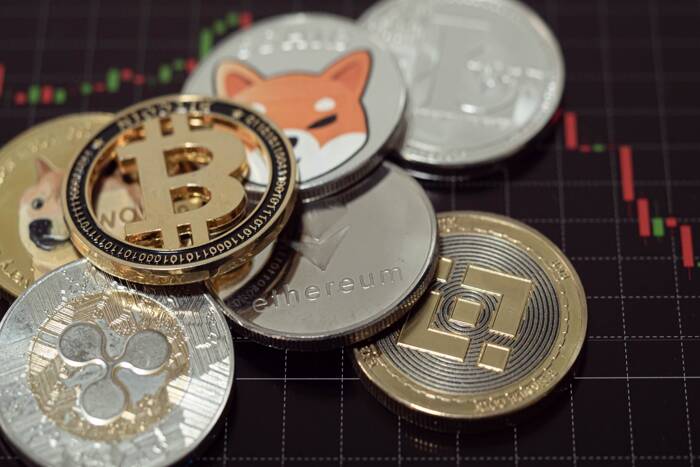
Establishing a favourable legal regime is crucial for the development of the Indian financial market, especially as the middle class is expected to reach 90% of the population by 2039.
Financial market regulation involves state control, which conflicts with the decentralized nature of blockchain technology (DLT). The challenge is to balance freedom of transactions with state oversight, as issuing money is a sovereign function.
Current Uses of Blockchain Technology in the Cryptocurrency Market
1. Cryptocurrency payments between users, which can be made through wallets, cryptocurrency exchanges and brokers, including operations with stablecoins.
2. Trade and invest on centralized cryptocurrency exchanges.
3. Fundraising for projects through Initial Coin Offerings (ICOs) and Initial DEX Offerings (IDOs).
4. Trading in derivative financial instruments based on cryptocurrency assets.
5. Transactions with non-fungible tokens (NFTs) and confirmation of ownership of unique digital objects, such as images, videos, audio files or game items.
6. The use of crypto applications and platforms based on decentralized finance (DeFi).
Regulatory framework for cryptocurrencies
In March 2020, the Supreme Court of India lifted the ban on cryptocurrencies. Following this, the government introduced the Cryptocurrencies and Regulation of Official Digital Currency Bill, 2021. The bill, which is currently under revision, seeks to recognize cryptocurrencies as regulated assets under the Securities Exchange Board of India (SEBI).
The current regulatory status remains undefined. On behalf of the Ministry of Finance, Minister of State for Finance, Shri Pankaj Chaudhary said, “Crypto assets are by definition borderless and require international collaboration to avoid regulatory arbitrage. Therefore, any legislation on the subject can only be effective with meaningful international collaboration on assessing risks and benefits, and developing a common taxonomy and standards.”
The main objectives of establishing a favorable legal regime are, on the one hand, to ensure the protection of the rights and legitimate interests of investors who use DLT technology for financial transactions and, on the other hand, to protect the state from the use of cryptocurrencies to finance terrorism, tax evasion and other illegal activities. Therefore, the regulator must develop a framework that meets the following tasks:
1. Define the legal status of cryptocurrencies, which may include categorization into securities, commodities, etc.
2. Establish a licensing mechanism for cryptocurrency exchanges and payment systems that would provide strong protection to investors against fraud.
3. Implement transparent procedures for customer identification and compliance with anti-money laundering regulations.
4. Develop a favorable and competitive tax regime with other jurisdictions, making India attractive for launching crypto startups and projects.
According to Kar Yong Ang, financial market analyst at Octa Broker, “The most important issue that the regulator needs to consider is the regime for digital assets that include cryptocurrencies. If the tax rates are high (over 5%), most people transacting with cryptocurrencies will continue to remain in the gray area, which will on the one hand reduce tax revenues and on the other hand increase the risk of scams and fraud for crypto users.”
About Octa
Octa is an international broker that has been offering online trading services worldwide since 2011. It offers commission-free access to financial markets and a variety of services already used by clients from 180 countries with over 52 million trading accounts. To help its clients achieve their investment goals, Octa offers free educational webinars, articles and analysis tools.
The company is involved in a wide network of charitable and humanitarian initiatives, including improving educational infrastructure and short-term relief projects supporting local communities.
Octa has won over 70 awards since its founding, including AllForexRating’s “Best Forex Broker 2023” and Global Brand Magazine’s “Best Mobile Trading Platform 2024”.


