



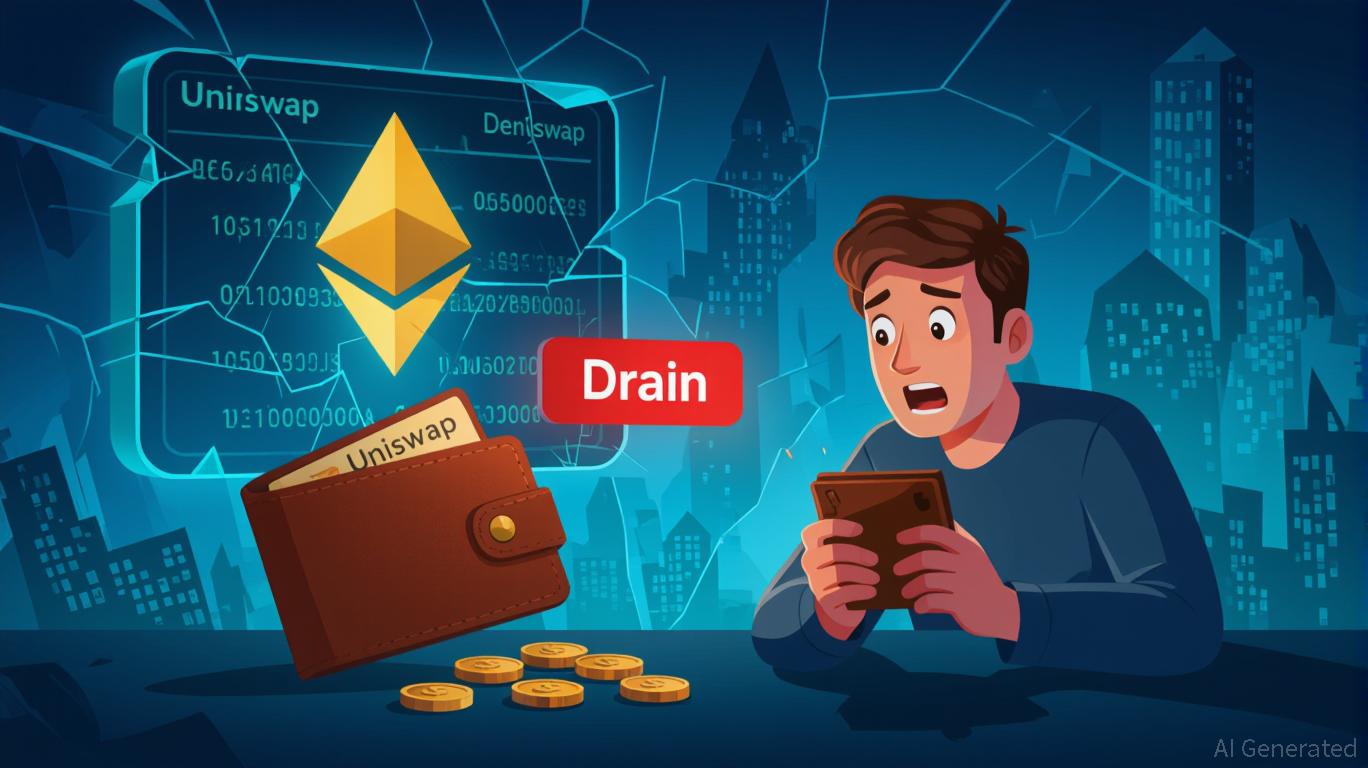
The Ethereum Blockchain Pectra Hardfork in May 2025 introduced EIP-7702, a revolutionary upgrade designed to rationalize user interactions by allowing accounts belonging to the outside (EOAS) to delegate the execution rights to intelligent contracts temporarily. Although this innovation has promised to simplify batch transactions and gas sponsorship, it inadvertently created a phishing vulnerability of 2.5 million dollars which has become a gold mine for cybercriminals. For institutional investors, the challenges are higher than ever: the same technical features that improve the user experience are now used as a vector of sophisticated attacks which exploit both code and human behavior.
The technical and behavioral vulnerabilities of the EIP-7702
The EIP-7702 allows the EOA to act as intelligent contracts for limited periods, granting delegated contracts the power to carry out operations in the context of the EOA. This includes token transfers, NFT approvals and transactions sponsored by gas. However, this delegation model was armed by phishing groups like #infernodrainer and #PinkDrainer. The attackers create false DEFI interfaces imitating platforms like Uniswap, encouraging users to approve transactions which seem legitimate but contain a hidden malicious logic. Once approved, these contracts bother portfolios via delegation operations, often in a few seconds.
An example: a loss of 1.54 million dollars in May 2025, where a victim authorized a united “routine” exchange which secretly sparked an Ethereum drainage contract (Wsteth), wrapped Bitcoin (CBBTC) and other tokens. Wintermute and Goplus Security report that more than 90% of the EIP-7702 delegations observed are linked to malicious activity, with automated sweeper contracts scanning vulnerable portfolios. The problem is aggravated by the ignorance of users with the mechanics of the EIP-7702, which makes phishing attacks more difficult to detect.
Institutional risk management: a multilayer defense
Institutional investors must adopt a proactive and multilayer approach to mitigate these risks. Here are the key strategies:
-
Verification of the intelligent contract and white list
Delegate only the rights of execution to audited and non-model contracts. Tools such as Sniffer scam and the verification of the Etherscan contract can report a malicious code. Portfolios like Metamask now restrict the delegation to white list contracts (for example, the delegate official contract in 0x63C0C19A282A1B52B07DD5A65B58948A07DAE32B), reducing the attack surface. -
Multi-Signature Portfolios (Multi-Sig)
Multi-Sigeon portfolios require several cryptographic approvals for critical actions, preventing unique point failures. Even with the convenience with a single signature of the EIP-7702, the institutions should apply several GIS for high-value assets. -
Audits of approval and delegation of tokens
Regularly audit of tokens authorizations and delegations using tools such as DEFI Saver or tokens approvals. More than 90% of EIP-7702 delegations are malicious, so revoking unnecessary authorizations is essential. -
Hot / cold wallet segmentation
Use the EIP-7702 compatible delegation only for hot wallets holding operational funds. Store larger active ingredients in cold or multi-sigules portfolios without delegation capacities. This “hot / hot / cold” model limits exposure to the risks of EIP-7702. -
Real -time and compliance fraud detection tools
Integrate business quality tools with end-to-end encryption and multi-factory authentication. These systems can detect abnormal transactions, such as unexpected token transfers or nonce chaos, before causing irreversible damage.
The urgent need for proactive compliance
Regulatory organizations such as the Cry Crypto Working Group and EU LMA executives have not yet committed specific risks to EIP-7702, leaving institutions to fill the gap. Compliance teams must prioritize user education, guaranteeing stakeholders the implications of the delegation. For example, many users do not know that the approval of a “prizes exchange” could grant access to a contract to the entire portfolio.
In addition, institutions should avoid inherited portfolios without EIP-7702 guarantees, such as storage collision protections. These portfolios are vulnerable to attacks on racing and initialization, as shown in the Hack bybit, where a malicious contract has bypassed multisig security via Delegatecall.
Investment advice for a post-EIP-7702 world
For investors, the lesson is clear: convenience should never prevail over security. Here’s how to protect Crypto Holders of great value:
– Avoid approvals of wide or unlimited tokens. Always specify the exact scope of delegations.
– Use portfolios with EIP-7702 guaranteesLike Metamask or Okx Wallet, which applies the white list.
– Monitor token approvals in real time Use of tools like Etherscan or SCAM SNIFFER.
– Segment the active workers in hot, hot and cold walletsReserving the EIP-7702 functionalities for low-risk operations.
The DEFI ecosystem evolves quickly and EIP-7702 is a double-edged sword. Although it improves the user experience, it also requires a rensation of safety paradigms. The institutions that adopt these strategies not only to alleviate the risks but are also positioned to capitalize on Ethereum innovation without being the victim of its involuntary vulnerabilities.
In the end, the future of Defi lies in the balance of innovation with vigilance. As phishing attacks become more sophisticated, the institutions that prosper will be those which will deal with security not as a reflection after the fact but as a central component of their investment strategy.


