



The Twin Cities are home to 17 Fortune 500 companies. But when it comes to blockchain and cryptocurrency, the industry is much more hidden.
Although it has been making headlines for years, blockchain technology remains a mystery to some. At its core, blockchain is a system for recording and verifying transactions without relying on a central authority such as a bank. It is essentially a shared digital database that is transparent and extremely difficult to modify. Cryptocurrencies, on the other hand, are transferable digital assets whose ownership is recorded on the blockchain.
“It’s really just a database,” said Brandon Ferdig, co-founder of the Minnesota Blockchain Initiative. “Blockchain is a way to know who owns what. And it’s a revolution because it’s more decentralized, which is good for security.”
Ferdig added that crypto technology has the advantage of transparency and efficiency that traditional currency lacks.
“Anyone can look at the blockchain and see who owns what, and you don’t have to wait for a check to clear or a credit card payment to go through a bank,” Ferdig said.
For Ferdig, blockchain is much more than cryptocurrency trading, speculation or hype cycles. He said he sees it as a form of digital infrastructure and a foundational technology that could change the way Minnesotans manage records and build trust online.
The blockchain scene in the Twin Cities
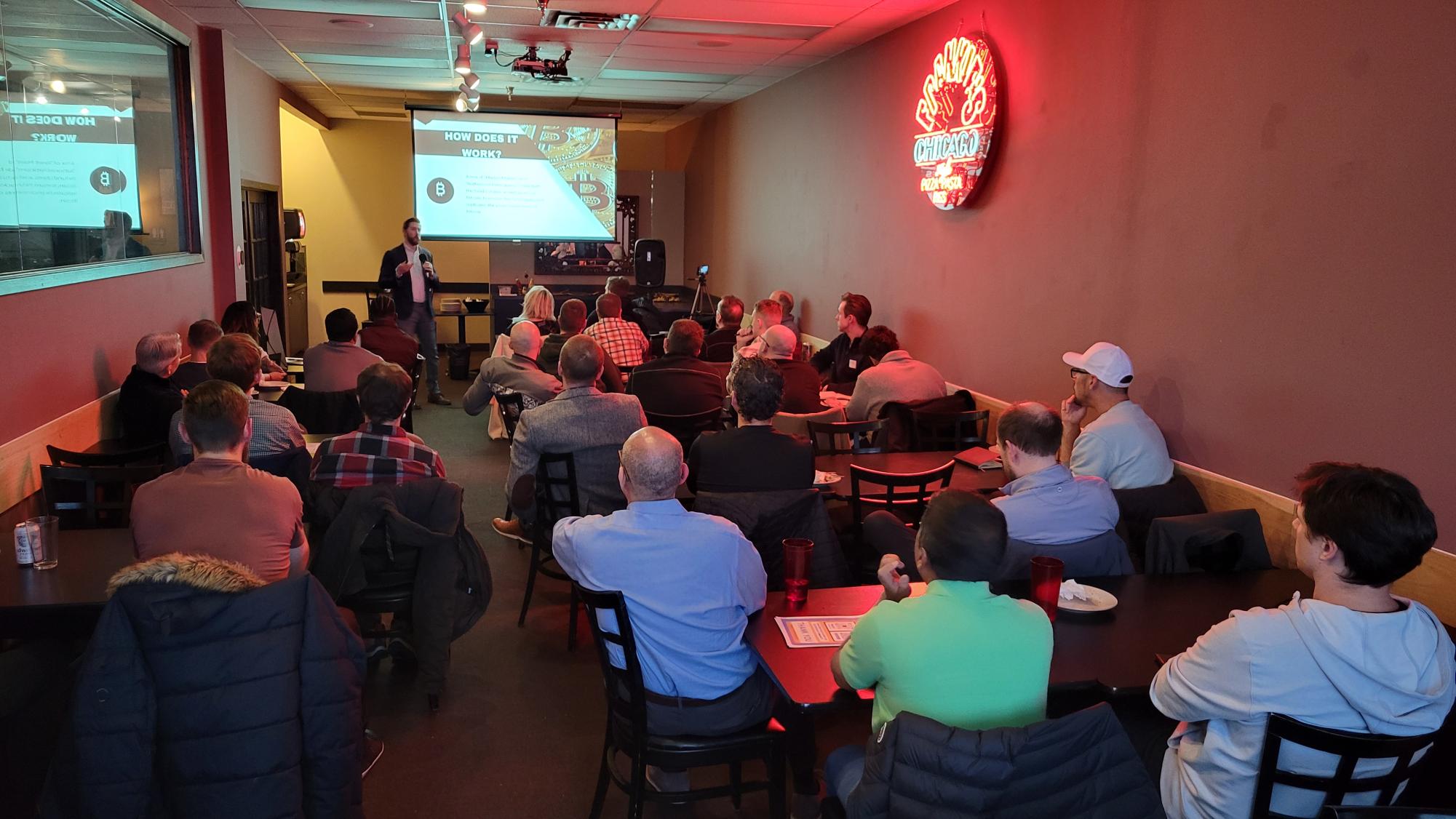
The Minnesota Blockchain Initiative, founded in 2018, grew organically based on community interest.
Today, the group hosts monthly Twin Cities meetups, runs a podcast, maintains an active Slack channel, and collaborates with a multitude of stakeholders, including the University of St. Thomas Law School, where they have hosted large events in recent years.
“We see education as a fundamental application of blockchain,” Ferdig said. “We teach this, do seminars. A lot of lawyers come to our events.”
He compared Minnesota’s emerging blockchain community to the state’s traditional industries that prioritize steady, long-term growth over flashy trends. Ferdig said blockchain can be more than just cryptocurrencies and non-fungible tokens (NFTs), interchangeable digital assets and, in the future, become a fundamental technology.
“Minnesota is known for its wheat, iron ore and lumber, as well as its medical technology and 3M Post-it Notes,” he said. “We’ve quietly built a very good society here with these core industries. They’re not flashy, but they’re crucial.”
Ferdig admitted that the local ecosystem is young and has not yet fully taken off.
While there are a handful of blockchain-related startups in the state, such as Kigo and Just For Krypto, most development is happening remotely or in coastal hubs like San Francisco and New York.
University of Minnesota Blockchain Club President Daigan Berger said he agrees.
“I would say the Twin Cities are underdeveloped for blockchain,” Berger said. “But many blockchain jobs are remote, so there are still opportunities for Minnesota graduates to work in the industry.”
The UMN Blockchain Club draws members primarily from computer science and business students, Berger said. However, they aim to remain open to anyone curious about technology.
“Our meetings are part lecture and part discussion,” Berger said. “We cover everything from programming topics to blockchain fundamentals. It builds week by week, but we try to make it beginner-friendly.”
The club’s goal is to help students explore the potential of technology and connect with a growing industry.
“We want to show students what the opportunities and jobs are in the industry,” Berger said.
For Berger, their efforts seem to be paying off.
“One of our alumni interned at Coinbase and is now joining full-time,” Berger said. “Others went on to hold crypto-related positions at startups in New York.”
Stigma and skepticism
Berger said that despite growing interest, the public image of blockchain remains complicated, especially on campuses.
“I would say most students perceive it in a pretty negative way,” Berger said. “People read headlines about scams or lost investments and assume that’s what it’s about.”
Berger said he often finds himself clarifying that the club is focused on technology, not business.
“We never tell people to invest in anything,” Berger said. “We’re just teaching how the systems work. There’s no cost to learning the technology, and I think people would appreciate blockchain more if they learned how it actually works and how to interact with it.”
Ferdig acknowledged that skepticism extends beyond universities. Much of it, he said, comes from environmental concerns, crypto scams and the hype surrounding NFTs.
“This kind of criticism always follows new technologies,” Ferdig said. “Now a lot of people hate AI, for the same reason they were wary of blockchain: they think it’s corporate greed and it’s going to hurt the user experience.”
Reflecting on the argument that bitcoin mining causes environmental damage, Ferdig said seeing critics move from one thing to another takes away their legitimacy.
“I don’t take these concerns very seriously,” Ferdig said. “I see how fickle they are.”
Ferdig added that blockchain art, like other creative uses of technology, can evolve beyond its initial missteps.
“There is real resistance to AI in art, video games and films today,” he said. “We have to move past that and keep an open mind.”
Look forward to
The Minnesota Blockchain Initiative and the UMN Blockchain Club view education as the key to future growth. Berger said the club hopes to grow and eventually split into specialized groups focused on development, governance and finance.
“For now, we’re keeping it general so everyone can follow along,” Berger said. “But as we grow, we want our members to actually build projects and engage in the sector of the industry that interests them most.”
Berger believes that the market is not yet ripe for a complete blockchain takeover.
“One of the biggest problems in this industry is understanding how Blockchain can be used to make business easier or increase revenue, or somehow be better than Web2 (Internet) or a current alternative that exists,” Berger said. “I think until this problem is resolved, it will be more of a niche community.”
Ferdig said government and regulation would also play a role.
“Yes, cryptocurrency gives people more freedom, but that also means less government control,” Ferdig said. “But the benefits of a more secure and efficient system far outweigh that.”
For Minnesotans curious about blockchain, especially University of Minnesota students, Ferdig and Berger share the same advice: stay open-minded.
“Many students see the benefits of AI when they write a paper, but there are also costs, like jobs that might not exist once they graduate,” Ferdig said. “It’s the same with cryptography. The key is understanding how these systems work and how to use them wisely.”


