



Crypto investment funds reportedly saw $952 million disappear in a single week as large investors reacted to delays related to the US Clarity Act and other political concerns.
Prices did not collapse instantly, but this type of quiet outflow of funds happens often. Before you see the pain on regular spot charts. This is the latest chapter in a longer story in which U.S. regulation and macroeconomic policy continues to undermine confidence in Bitcoin, Ethereum, and the market as a whole.
Regulatory delays spark $952 million exodus from US crypto funds
►– Decrypt (@DecryptMedia) December 22, 2025
What exactly happened with the $952 million crypto outflow?
Let’s translate this into normal language. CoinShares tracks money flowing in and out of crypto exchange-traded products (ETPs) and funds around the world. In their latest report, they reported net outflows of around $952 million in a week, and linked it to delays and uncertainty around the US Clarity Act and broader political fears.
As shown in Coin Sharesthis is not a one-off event. Previous spikes included about $508 million in outflows due to concerns over tariffs and monetary policy, as well as a separate wave of about $2 billion when macroeconomic fear and big “whale” sales hit the market simultaneously.
Think of these crypto funds and ETPs as “crypto wrappers” for regular brokerage accounts. Instead of buying Bitcoin directly on an exchange, institutions and many ordinary investors buy shares of these products. When they sell these shares, it results in capital outflows: money goes out. So when you see almost a billion dollars going out the door in a week, you get a glimpse of how nervous big investors are about regulation and politics.
James Butterfill, head of research at CoinShares, often associates these flows with U.S. political or legislative noise, not just price. This is important because regulatory headlines typically hit professional managers first and then trickle down to retail traders. By the time your favorite influencer “explains the dump,” the funds have already moved.
DISCOVER: 16+ New and Upcoming Binance Listings in 2025
Why do delays in US policy scare Bitcoin and Ethereum holders the most?
These outgoing flows are rarely distributed uniformly. According to CoinShares Fund DataU.S.-based products typically show the largest capital outflows during crises, while Germany and Canada sometimes show the opposite, modest capital inflows. American policy therefore often sets the tone, but not everyone follows.
Bitcoin and Ethereum are almost always the most affected. When regulations seem complicated, funds sell the most liquid and established assets first, those they can exit quickly without blowing up the price. It sounds backwards, but it works like first selling your Apple or Microsoft stock during a tech crisis, because there is always a buyer. So if your BTC or ETH bag seems shaky during these weeks, you’re feeling the ripple effect of institutional risk management, not just the “weak hands.”
Meanwhile, multi-asset crypto ETPs, funds that spread money across a basket of coins, often see inflows as investors move into defensive mode. As analysts pointed out after a previous bout of $2 billion capital flight, this type of move looks more like fear and repositioning than a long-term market top. Big players move from concentrated, high-conviction bets to diversified baskets when they expect tough conditions.
DISCOVER: 10+ upcoming coins at 100X in 2025
What does this mean for your crypto strategy?
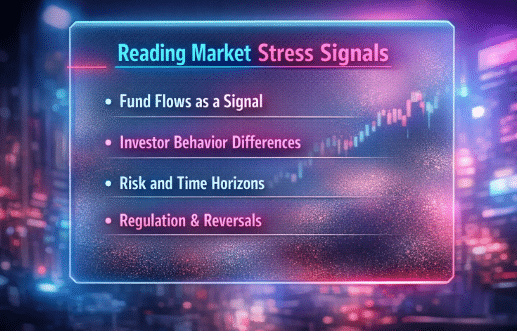
First, treat fund flow data as a early warning systemno background noise. When you see headlines about hundreds of millions of people leaving crypto funds, that tells you that professional money managers are reducing risk. Before volatility hits the mainstream market. This is a signal to check your own risk, not to panic sell on emotion.
During weeks like this, investors may find it helpful to review their portfolios from multiple perspectives. For example, consider the degree of exposure to highly liquid coins such as Bitcoin and Ethereum, how much of the portfolio is borrowed funds or high-risk transactions (as discussed in our article on increased leverage risks), and whether the current allocation is within your comfort level if prices were to fall 20-30%. These considerations are intended for informational purposes and to help understand market dynamics, and not as personalized financial advice.
Second, observe the reaction of different investor groups. US funds could empty out, while other regions buy quietly, and “whales” could even intervene in the decline, as we saw in past Bitcoin movements. This split often creates short-term difficulties but long-term opportunities for patient buyers who use simple rules: no leverage, no rent, and a time horizon of years, not weeks.
Finally, remember that regulatory fears tend to evolve quickly. We’ve seen big outflows during macroeconomic crises, followed by sharp reversals when policy becomes clearer or markets realize things haven’t broken. In the meantime, focus on position sizing, use basic risk tools like stop-loss levels or ladder buying, and view each scare headline as a test of your plan, not your mettle.
If lawmakers continue to drag their feet, we could see more weeks like this. The investors who come out on top will be those who treat fund flows like a weather report: Prepare for the storm, but don’t abandon the trip every time it rains.
DISCOVER: 9+ Best High Risk, High Reward Cryptocurrencies to Buy in 2025
Join the 99Bitcoins News Discord here for the latest market updates
The post Investors Withdraw $952 Million From Crypto Funds As US Politics Worries Spike appeared first on 99Bitcoins.


