




The Pi Coin price is struggling to recover after its recent breakout attempt failed. The token is trading near $0.16 after failing to sustain its gains above $0.19, a level it reached during an attempted bull flag breakout on February 17. This breakout predicted a nearly 60% rally, but the move quickly stalled.
Since then, Pi has drifted lower, raising concerns that the broader downtrend is still intact. However, behind this weakness, a technical signal suggests that a rebound attempt could still develop. The bigger question is whether retail buyers can sustain it alone.
Hidden Bullish Divergence Maintains Hopes for a Rebound
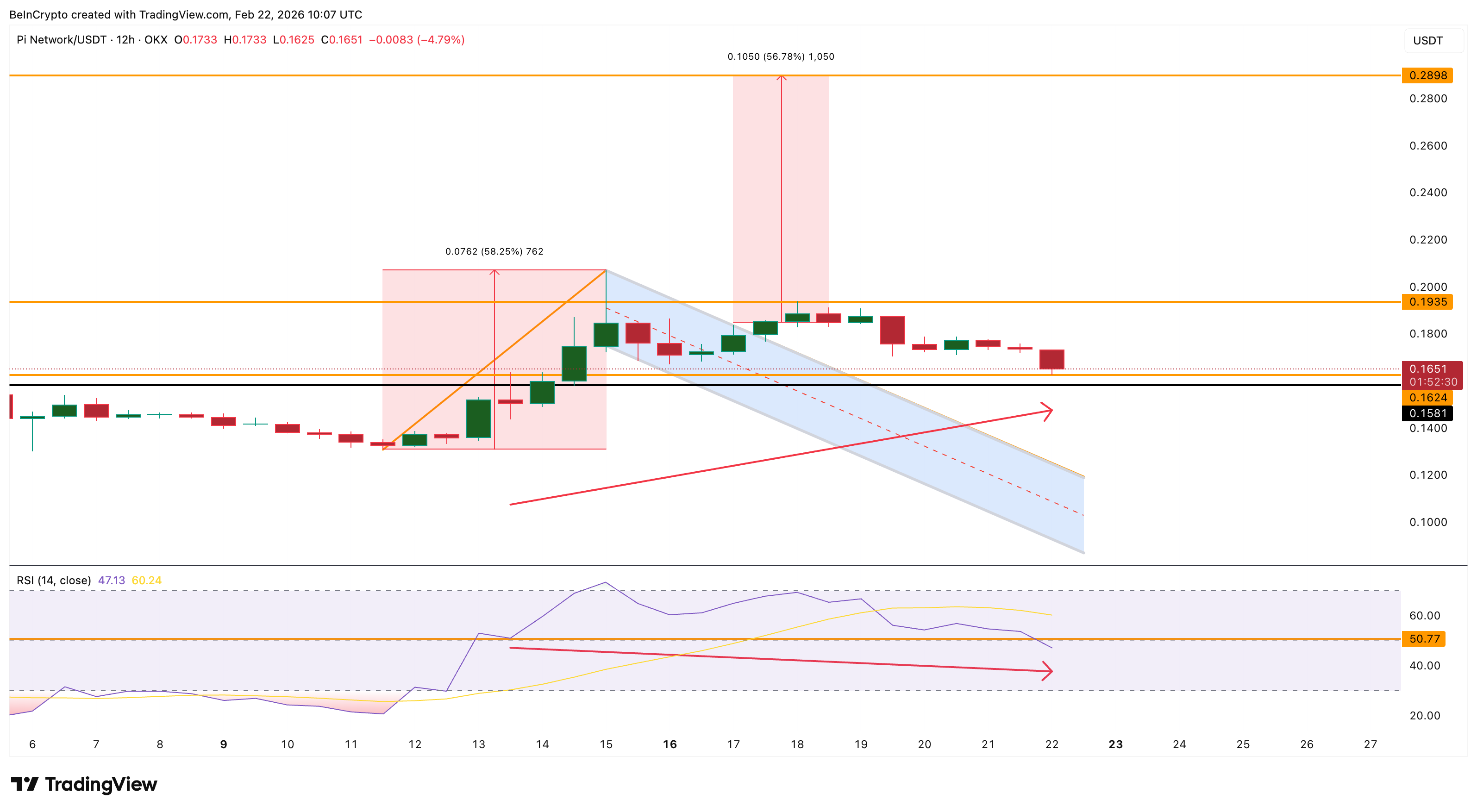
The recent decline of Pi Network has formed an interesting structure on the chart.
Between February 13 and 22, price appears to be forming a higher low, while the Relative Strength Index (RSI) has formed a lower low.
RSI is a momentum indicator that measures buying and selling strength. This pattern, called hidden bullish divergence, often signals a temporary rebound within a broader downtrend.
Want more token information like this? Sign up for publisher Harsh Notariya’s daily crypto newsletter here.
This explains why Pi Coin managed to stabilize near $0.16 despite failing to breakout. However, this signal remains extremely weak. For divergence to be validated, PI must hold above the $0.16 support level ($0.162 to be exact). A fall below this level would momentarily weaken the hidden bullish structure and expose the price to greater losses.
But momentum alone is not enough. The real test is whether participation supports the rebound.
Social interest and the collapse of monetary flows
While the RSI shows potential for an early rebound, other indicators show weakening sentiment.
Social volume, which tracks how often Pi Coin is discussed on social platforms, has fallen sharply. It went from a monthly high score of 18 on February 16 to just 3 on February 22. This represents an 83% drop in attention.
This decline is significant because the previous breakup attempt was motivated by growing social interest. With fewer participants talking about Pi, the demand needed to support the rallies fades.
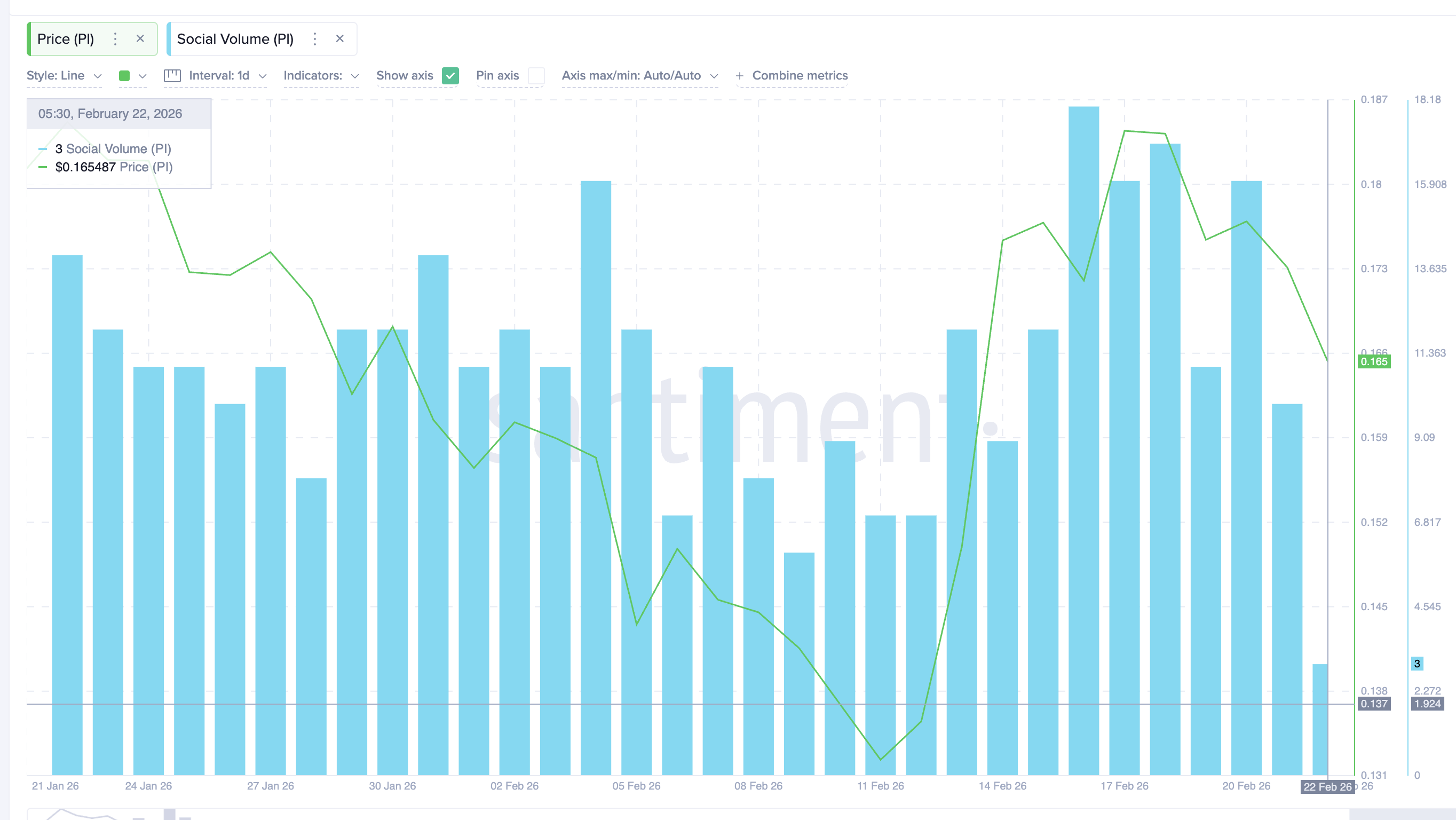
The last time social volume dropped to similar levels was on February 9 (the monthly low at the time), when the score dropped to 6. Over the next two days, Pi Network price crashed to its all-time low, near $0.13.
With social interest now even lower at 3, this waning attention could once again weaken price support and increase downside risk.
Data on capital flows tell a similar story. The Chaikin Money Flow (CMF), which tracks the buying and selling of large investors, has been in steady decline since February 18, as has the price. It also remains below zero, showing that money continues to flow out of the Pi network rather than into it.
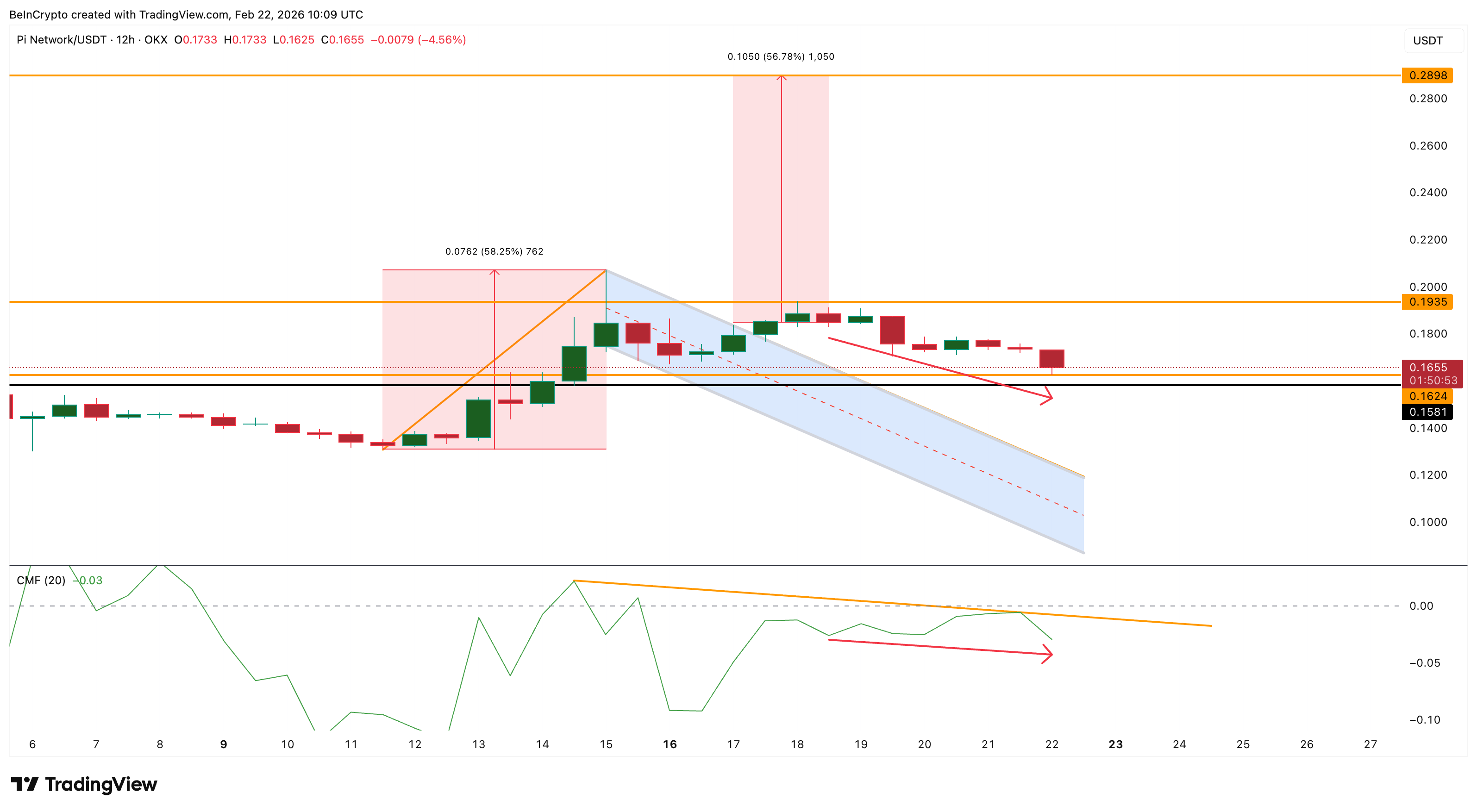
This lack of capital support helps explain why the 60% breakout failed and why the recovery remains weak. Without greater capital inflows, rebounds tend to stall even when the RSI signals a rebound.
Retail purchases increase, but may not be enough
However, one group still shows signs of accumulation.
On-balance volume (OBV), which tracks cumulative buying and selling pressure and is often used as an indicator of retail activity, has been rising since February 16, even though the price has fallen. This suggests that retail investors are buying the dip.
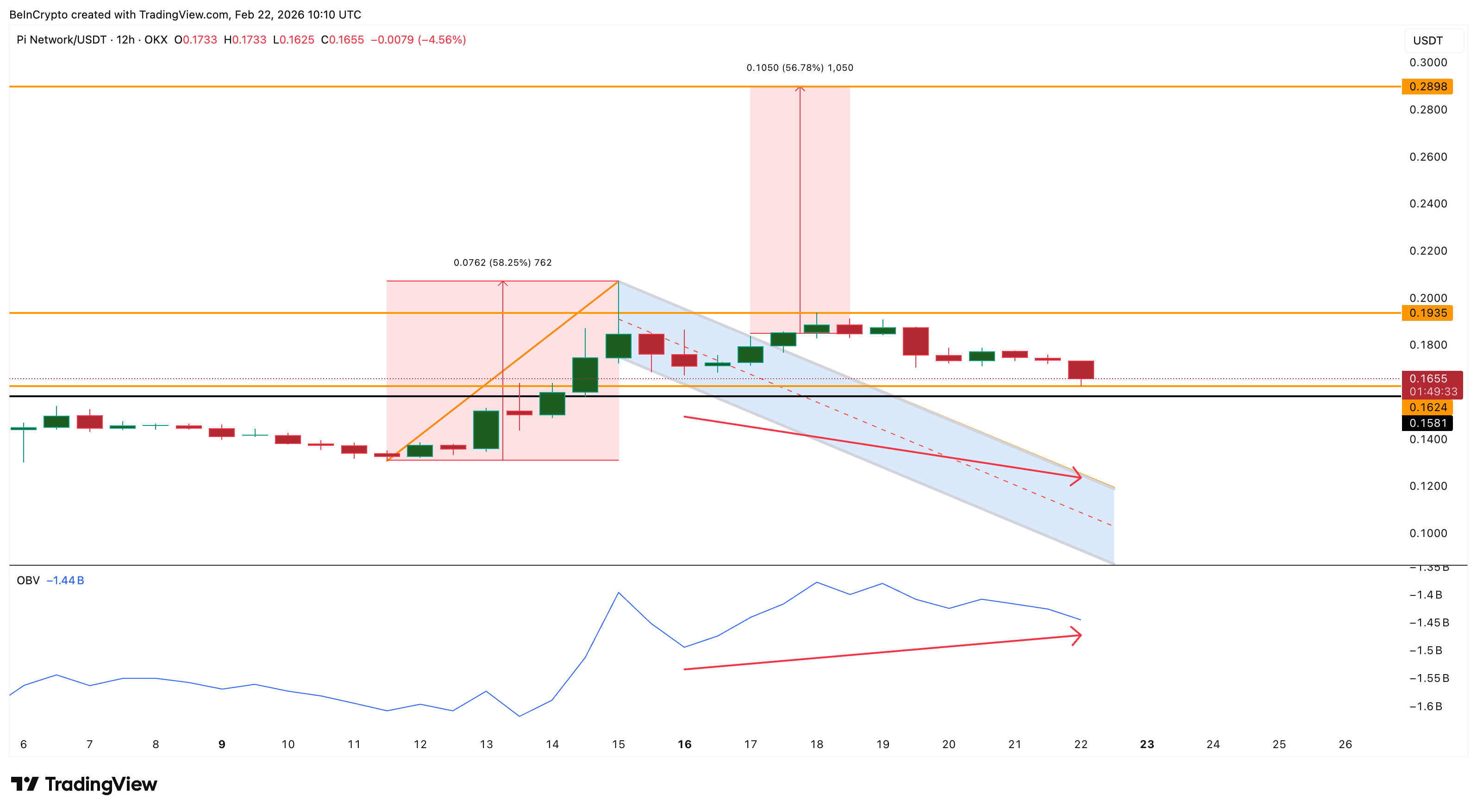
This retail participation will likely help the Pi Coin price hold above its critical support levels for now. But retail alone rarely drives lasting recoveries. Without the support of larger investors and greater capital inflows, price rebounds often fail.
This leaves Pi Network in a vulnerable position. If PI holds above $0.16, the rebound attempt could continue towards $0.18 and potentially $0.20, one of the most critical levels.
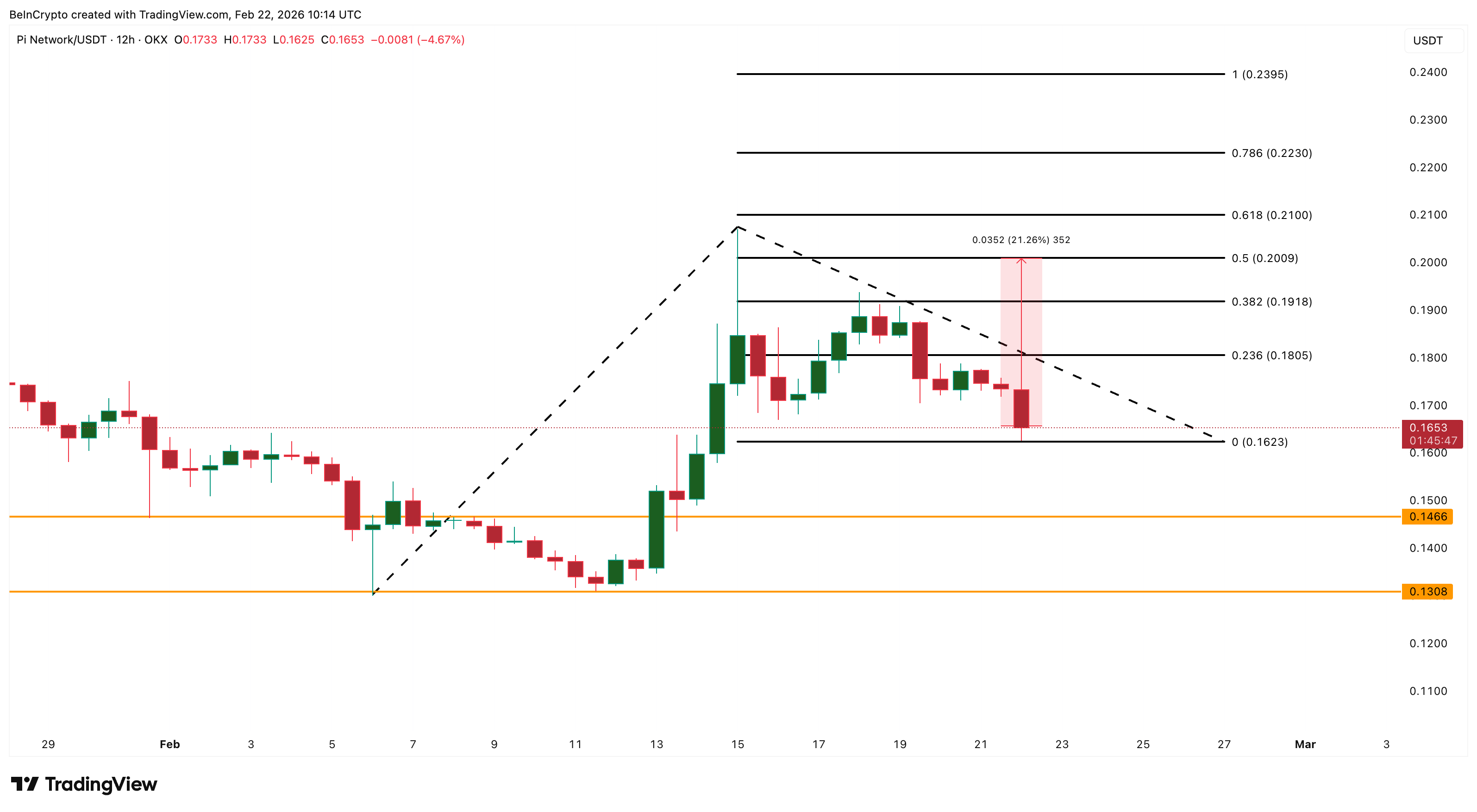
However, if support falls below $0.16, the failed breakout could trigger a deeper decline towards $0.14 and ultimately its all-time low near $0.13. For now, Pi Network appears caught between fading institutional interest and persistence of retail buying.


