



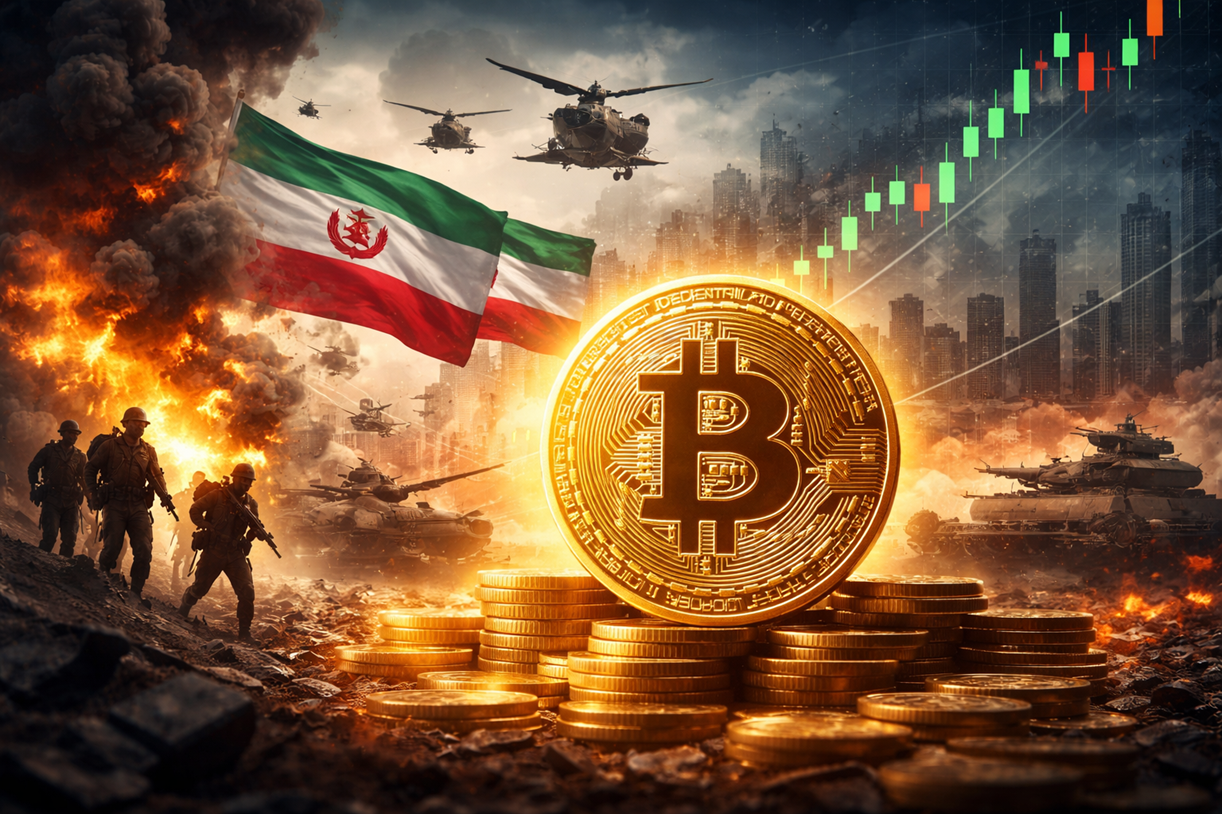

Arthur Hayes argues that a deeper conflict between the United States and Iran could ultimately become a bullish macro setup for Bitcoin, not because war is constructive for markets, but because it could push the Federal Reserve toward a cheaper, more abundant currency.
Why Bitcoin Could Rise
In his March 2 iOS Warfare essay, the BitMEX co-founder lays out a simple thesis: If President Donald Trump engages the United States in a prolonged and costly Iran-related campaign, political and fiscal tensions could increase the chances of monetary easing. For Hayes, that matters more than the conflict itself. “The longer Trump engages in the extremely expensive activity of Iranian nation-building,” he wrote, “the more likely it is that the Fed will lower prices and increase the quantity of money to support the latest episode of Pax Americana adventurism in the Middle East.” »
Hayes’ argument relies on a historical model rather than a direct prediction about oil, geopolitics, or battlefield outcomes. He discusses previous US military engagements in the Middle East and argues that major conflicts were followed, or accompanied, by looser monetary policy. According to him, wars do not just damage confidence and put a strain on public finances; they also create conditions where the Fed has a cushion to reduce rates, support liquidity, and help stabilize asset markets.
To support this view, Hayes cites several episodes dating back to 1990. After the Gulf War began, he notes, the Fed initially stayed put, but signaled that deteriorating conditions might force a change. From the FOMC discussion of August 21, 1990, he quotes: “The increased uncertainties and potentially less satisfactory performance of the economy resulting from events in the Middle East have greatly complicated the formulation of effective monetary policy. In the view of several members, events appeared likely to proceed in a direction that would require an easing of policy at some point to counter the weakening trends in the economy that were underway before the hike oil prices.”
He also highlights the Fed’s response after the September 2001 attacks and the launch of the global war on terrorism. At an emergency meeting, then-President Alan Greenspan said, “It is clear that the events of the past week, at a minimum, have created a heightened degree of fear and uncertainty that is placing considerable downward pressure on asset prices, increasing the likelihood of asset price deflation, with its obvious impact on the economy. Therefore, I am proposing a 50 basis point reduction in the federal funds rate target.”
For Hayes, these episodes show that geopolitical shocks can turn into monetary events. His message is direct: when war shakes confidence, threatens growth or puts pressure on markets, the policy response tends to be lower rates and more liquidity. According to him, this is the backdrop that tends to favor Bitcoin.
Still, Hayes is not calling for an immediate risky trade. He says the market doesn’t yet know how long Trump will remain committed to reshaping Iran, or how much economic or political pain the administration can absorb before changing course. For this reason, he argues that cleaner trading is about waiting for policy confirmation rather than advancing the thesis too early.
“The prudent action is to wait and see,” Hayes wrote. “Now is the time to turn back and buy high-quality Bitcoin and shitcoins like HYPE, immediately after the Fed cuts rates or prints money to support government goals in Iran.”
At press time, Bitcoin was trading at $66,218.
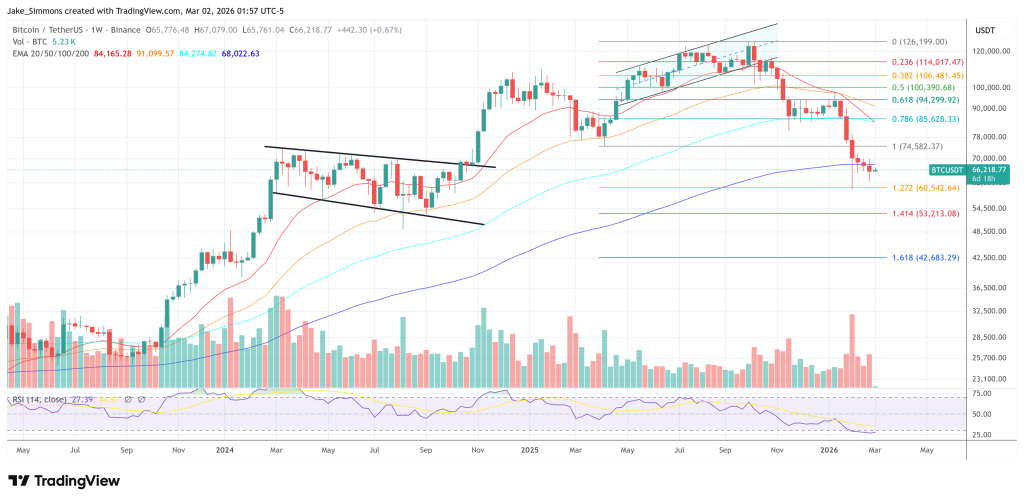
Featured image created with DALL.E, chart from TradingView.com
Editorial process as Bitcoinist focuses on providing thoroughly researched, accurate and unbiased content. We follow strict sourcing standards and every page undergoes careful review by our team of top technology experts and seasoned editors. This process ensures the integrity, relevance and value of our content to our readers.


