




Fraudsters are targeting contributors to the viral AI project OpenClaw with a sophisticated phishing campaign aimed at emptying crypto wallets.
By exploiting GitHub’s trusted notification system, attackers lure developers with a fake $5,000 airdrop that leads directly to a wallet-draining script.
Fake $5,000 airdrop targets OpenClaw developers
Scammers used fake GitHub tags to lure users to a cloned site with a hidden wallet login.
The accounts disappeared within hours. No confirmed casualties yet.
Stay vigilant
– Bitinning (@bitinning) March 19, 2026
 Fake $5,000 airdrop targets OpenClaw developers

There are no smart contract exploits involved here. Just social engineering, taking advantage of the hype around AI agents and unsuspecting users falling for it.
This comes as the broader crypto market suffered an overnight collapse, with the total market capitalization falling 4% to $2.5 trillion, with 24-hour trading volume sitting at just over $125 billion.
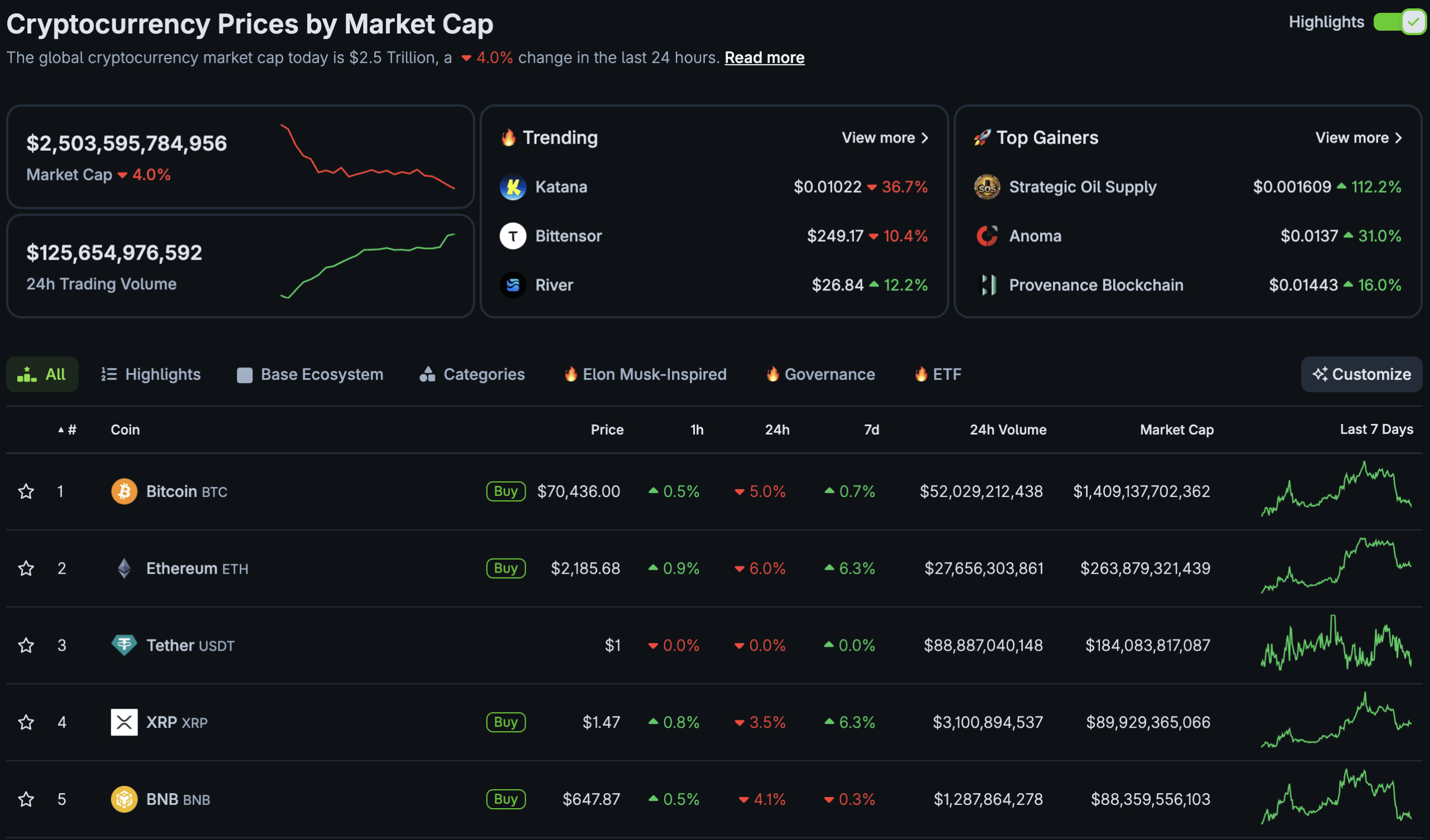
(SOURCE: CoinGecko)
The Lure: fake contributions and hidden scripts
According to a report from OX Security, bad actors are creating fraudulent GitHub accounts and opening threads in repositories they control. They then tag dozens of genuine OpenClaw developers in these threads.
The message is flattering. It claims: “Appreciate your contributions on GitHub. We analyzed the profiles and chose the developers to get the OpenClaw allocation.” Scammers promise $CLAW tokens worth $5,000 and direct their targets to a website that strangely mimics the official openclaw.ai domain.
Once on the site, users are prompted to “Connect your wallet” to claim the funds. That’s the trap. The site runs a login prompt designed to drain assets, powered by a heavily obfuscated JavaScript file hidden in the site’s code named “onze.js”.
Moshe Siman Tov Bustan, a researcher at OX Security, noted that the campaign is very similar to previous attacks targeting the Solana ecosystem on GitHub.
DISCOVER: The next crypto gem 1000x before listing on exchanges
Why OpenClaw and why now?
Peter Steinberger joins OpenAI to pilot the next generation of personal agents. He’s a genius with many amazing ideas about the future of very intelligent agents interacting with each other to do very useful things for people. We hope this will quickly become the core of our…
–Sam Altman (@sama) February 15, 2026
OpenClaw is one of the hottest tech properties right now. The project evolved from a development tool to a consumer AI asset, particularly after OpenAI CEO Sam Altman tapped creator Peter Steinberger to lead the company’s push into personal AI agents.
This legitimacy makes it dangerous. The scammers know that the developers are currently paying special attention to the project. They also know that developers are likely to hold cryptocurrencies and are comfortable with Web3 wallets.
This incident highlights a growing trend of legitimate tools being used as vectors for theft. This echoes Vitalik Buterin’s concerns about the intersection of AI and wallet security. As AI tools become essential to the crypto workflow, the line between useful automation and malicious mining blurs.
The attackers even appear to be using GitHub’s “star” feature to create their target lists, ensuring they go after users who have actively interacted with OpenClaw repositories.
Visualize the threat: immediate protective measures
If you are a developer or active GitHub user, you should lock down your workflow immediately. The sophistication of these clones means that visual inspection is often not sufficient.
- Check the URL: Never click on links in GitHub threads from repositories you don’t recognize. Always type the official domain manually.
- Verify repository owner: Official airdrops will come from the project’s main repository, not some random user’s fork. If the repository has few stars or was recently created, it is a trap.
- Use a Burner wallet: Never connect your primary holding wallet (cold storage) to a dApp or claims site. If you interact with a simplified protocol or airdrop, use a hot wallet with minimal funds.
- Ignore unexpected tags: If you are tagged in a thread by a user you don’t know, instantly treat it as spam. Real projects announce allocations on their official X (Twitter) or Discord channels, not via mass tagging in random numbers.
DISCOVER: The Best Crypto Presales to Watch Now
Follow 99Bitcoins on X (Twitter) For the latest market updates and subscribe on YouTube for daily market analysis from experts.
The article OpenClaw Developers Hit by GitHub Phishing Attack: How to Protect Your Wallet appeared first on 99Bitcoins.


