




Key points to remember:
- The S&P 500 gained 0.4% on Monday but remains 4% below pre-conflict levels as Iranian tensions persist.
- Trump’s Tuesday deadline for Iran to reopen the Strait of Hormuz is keeping oil near $103 per barrel (WTI).
- Jamie Dimon, CEO of JPMorgan Chase, reported inflation risks ahead of Friday’s March CPI report.
S&P 500 rises for fourth straight day on Iranian standoff in Strait of Hormuz
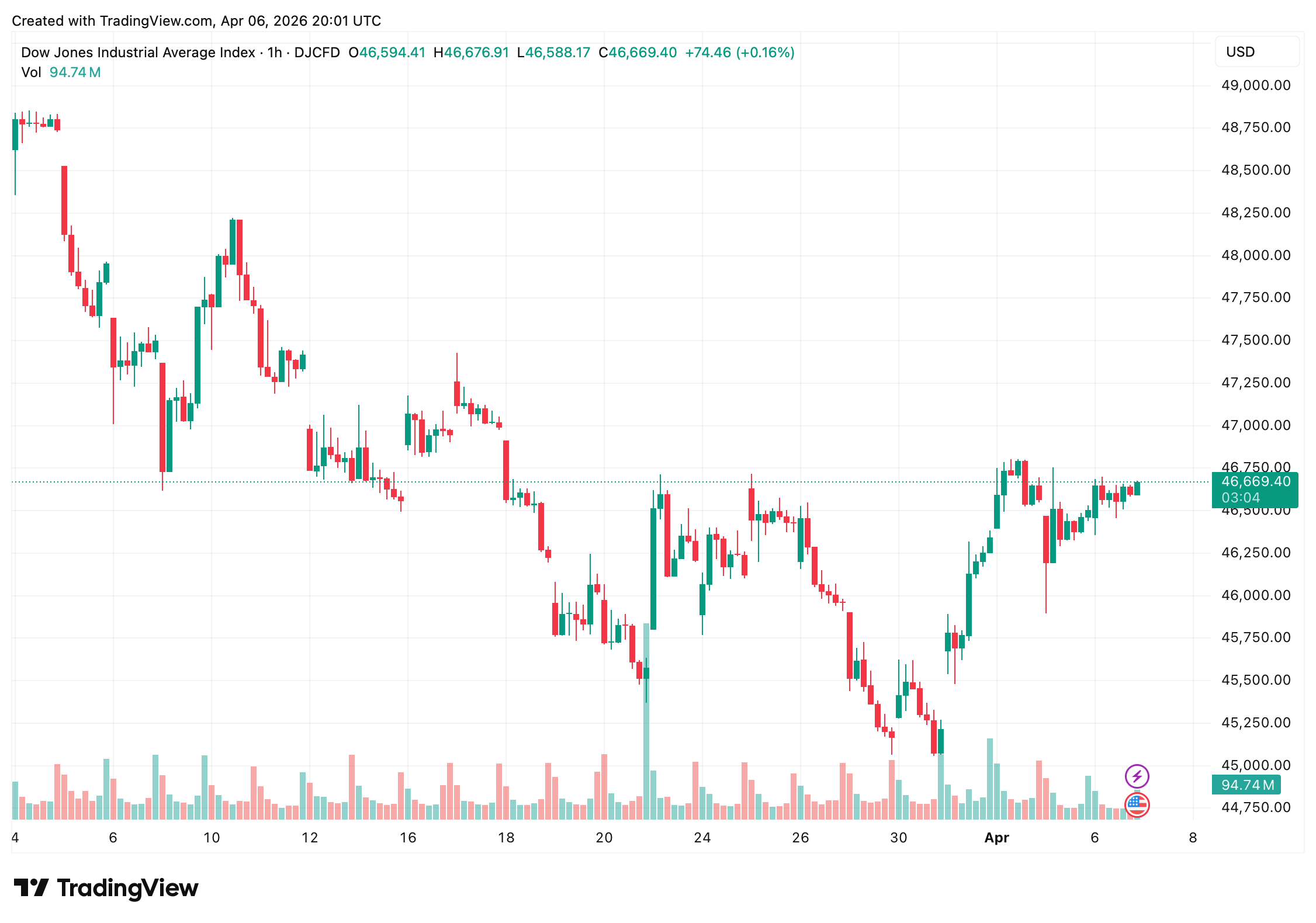
The Dow Jones Industrial Average climbed 137 points, or 0.3%, while the S&P 500 gained 0.4% and the Nasdaq Composite added 0.5%. The S&P 500 extended its fourth straight day of gains, but remains about 4% below levels seen before the escalation of the U.S.-Iran conflict.
Egyptian, Pakistani and Turkish mediators presented truce proposals over the weekend, including a 45-day ceasefire and a plan to reopen the Strait of Hormuz. Conflicting reports indicate that Iran has signaled a willingness to negotiate access through the waterway, which handles about a fifth of the world’s trade in oil and liquefied natural gas. Other reports indicate that ceasefire talks have been rejected.
Trump called Iran an “active and willing participant” in the negotiations, but said its counterproposal fell short. He reiterated threats on Monday that the United States could strike Iran’s infrastructure and warned that the country could be eliminated “overnight” if the strait remained closed beyond the deadline.
West Texas Intermediate crude settled near $103 a barrel and Brent crude near $109. Oil prices oscillated throughout the session before closing with modest gains, as traders weighed the risks of supply disruptions against any prospects of de-escalation.
Technology and consumer staples led the sector’s gains. Ciena Corp., Lumentum, Seagate Technology and Netflix all made gains. Utilities including CMS Energy and Entergy hit new 52-week highs. Energy stocks rose on continued concerns over supply disruptions. Discretionary consumption is lagging and Keurig Dr Pepper hit a 52-week low.
The CBOE Volatility Index held above 24, signaling that traders were not ready to fully price in downside risk.
The Institute for Supply Management’s services PMI for March fell to 54.0 from 56.1 in February, missing the economists’ consensus of 55.4. The prices paid index rose to 70.7, its highest level since October 2022. The employment component fell to 45.2, its lowest level since December 2023.
No Federal Reserve news or other high-impact data was on the calendar to start the week. The focus remained squarely on the Middle East. At the same time, Jamie Dimon, CEO of JPMorgan Chase, warned of broader inflation risks linked to the conflict.
Other analysts pointed to strong hiring numbers from the March jobs report and productivity gains in the tech sector as potential offsets. Investors will be closely watching Trump’s deadline on Tuesday. Any escalation that keeps oil prices at current levels could complicate the Federal Reserve’s rate path ahead of Friday’s release of the March Consumer Price Index report.

Bitcoin recovers $70,000 despite geopolitical unrest; Expert alert on market vulnerability
Despite rising geopolitical tensions in the Middle East, bitcoin regained the $70,000 mark on Monday, supported by Strategy’s latest acquisition…
Read now


Bitcoin recovers $70,000 despite geopolitical unrest; Expert alert on market vulnerability
Despite rising geopolitical tensions in the Middle East, bitcoin regained the $70,000 mark on Monday, supported by Strategy’s latest acquisition…
Read now
Bitcoin recovers $70,000 despite geopolitical unrest; Expert alert on market vulnerability
Read now
Despite rising geopolitical tensions in the Middle East, bitcoin regained the $70,000 mark on Monday, supported by Strategy’s latest acquisition…
The Federal Open Market Committee (FOMC) releases the minutes of its March meeting on Wednesday. Delta Air Lines and Constellation Brands are among the companies expected to report earnings later this week, providing an early test of how U.S. companies are absorbing rising energy costs.
Markets remain reactive rather than driven by conviction. Until the Strait of Hormuz situation resolves or inflation data changes expectations, near-term direction depends on factors outside of business fundamentals.


