




Ethereum displayed its strongest buying pressure in derivatives markets since the 2022 bear market, according to CryptoQuant analyst Darkfost, a change that could matter after months of continued sell-side dominance throughout this cycle. This change does not, in itself, confirm a complete reversal of the trend. But this marks a notable break from the trend that weighed on ETH during the main attempts to rise.
Ethereum Sends Early Recovery Signal
In an article shared on X on April 18, Darkfost claimed that Ethereum had spent most of the cycle battling “unusually strong selling pressure in derivatives markets.” He pointed to net taker volume, a measure of the imbalance between buy and sell orders on derivatives exchanges, which he said “remained almost consistently negative” throughout the period.
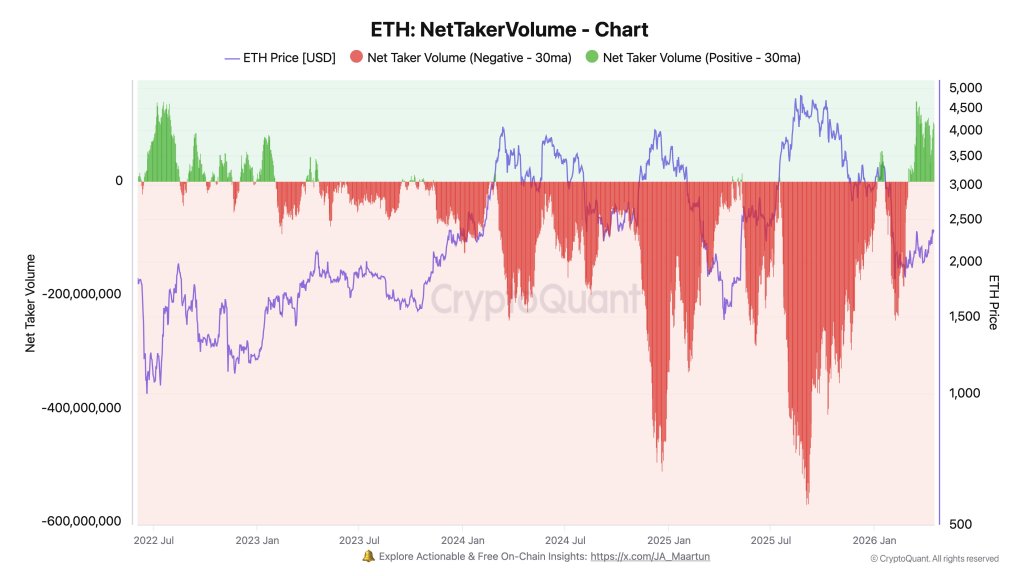
This pressure was especially visible during ETH’s attempts to enter a higher price zone. Darkfost wrote: “This was especially noticeable when ETH attempted to reach a new all-time high above $4,000 in December 2024. At that time, net taker volume fell to -$511 million. This became even more extreme when ETH then printed its all-time high just below $5,000, as pressure from the sell side heavily dominated with -$568 million in volume net takers.
Related reading
According to Darkfost, even when ETH was heading towards local highs, aggressive sellers of derivatives were still overwhelming buyers. This helps explain why bullish momentum has struggled to translate into a cleaner breakout environment. Strong spot talk or bullish sentiment alone was not enough if the derivatives complex continued to tilt the other way.
That dynamic, he said, has now begun to change. “Since March, buy-side volumes have finally taken control, with +$102 million recorded today,” writes Darkfost. “The last time Ethereum saw such a strong level of buying pressure in derivatives markets was during the previous bear market in 2022, when ETH was trading around the $1,000 zone.”
Related reading
The comparison with 2022 is noteworthy because it views the current movement less as routine positioning noise than as a rare change in flow regime. On the chart, the positive green net taker volume bars reappeared after a long period in which negative red readings dominated. For traders monitoring ETH structure, this is important because a sustained positive flow of buyers suggests that buyers are increasingly willing to raise bids rather than passively wait for lower prices.
Yet Darkfost did not go so far as to call for a confirmed reversal. His argument is conditional. “If this trend manages to persist and buyers continue to absorb the selling pressure, this could mark the first stages of a stronger structural recovery for Ethereum,” he wrote. This caveat is at the heart of the thesis: a strong number does not erase the equivalent of a cycle of negative pressure, but persistence would.
At press time, ETH was trading at $2,288.
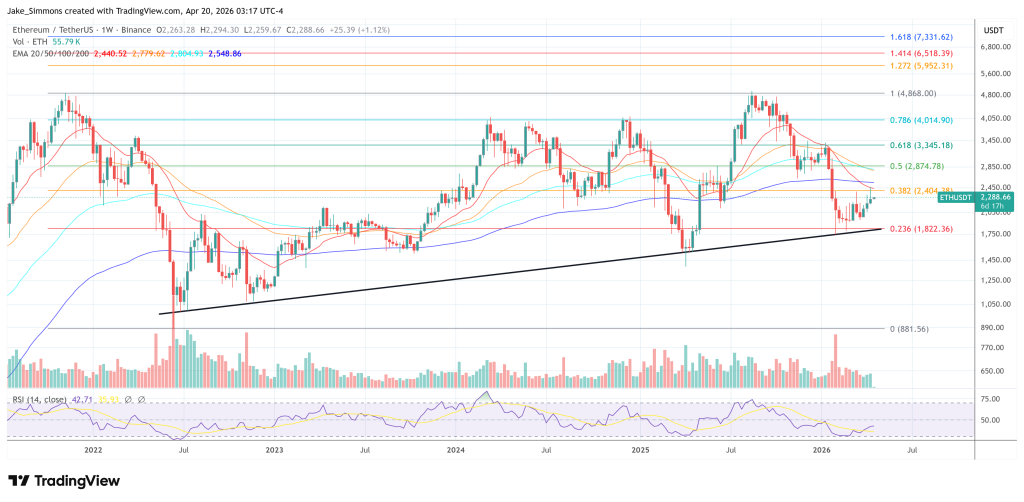
Featured image created with DALL.E, chart from TradingView.com


