



AFP Protección, Colombia’s second largest pension fund administrator, managing approximately $55 billion for more than 8.5 million clients, has launched a new portfolio product that includes exposure to Colombian Bitcoin, becoming the second major Colombian pension institution to make this move in less than a year.
The detail missing from most headlines, however, is that this is not a fund that simply buys Bitcoin. It is a carefully secured product that requires personalized counseling sessions and individualized risk assessments before a client can allocate even a modest percentage to BTC.
Colombia’s largest pension fund launches into Bitcoin via BlackRock’s IBIT
According to CriptoNoticias, Porvenir, Colombia’s largest pension fund manager, has launched a crypto wallet that offers indirect exposure to Bitcoin through IBIT. The product is limited to voluntary pension… pic.twitter.com/FLH5aNz7VT
-Wu Blockchain (@WuBlockchain) April 28, 2026
This follows Skandia Administradora de Fondos de Pensiones y Cesantías, which became the first Colombian pension administrator to introduce exposure to Bitcoin in September 2025.
Two major players in the pensions sector in the same country moving in the same direction within months of each other is no coincidence. It’s a structural signal, not just a title.
Bitcoin Adoption in Colombia: What AFP Protección’s BTC Exhibition Really Means
The addition of Bitcoin doesn’t mean retirees suddenly have half their savings in crypto. The president of AFP Protección explicitly presented the move as diversification, with traditional fixed income and equities continuing to dominate the fund’s overall composition.
Access to the Bitcoin allocation requires customers to go through a personalized counseling process and meet specific eligibility criteria. You can’t just log in and flip a switch. This is structurally similar to how Goldman Sachs packaged Bitcoin for conservative, long-term investors through structured products – the asset is included, but surrounded by guardrails designed for investors with low risk tolerance, not traders.
Colombia’s mandatory retirement system held 527.3 trillion Colombian pesos (about $144 billion) as of November 2025, almost half of which was already invested internationally. This existing offshore infrastructure has made adding a non-domestic digital asset much less operationally complex than it might seem.
What this could mean for Bitcoin demand
(SOURCE: CoinGlass)
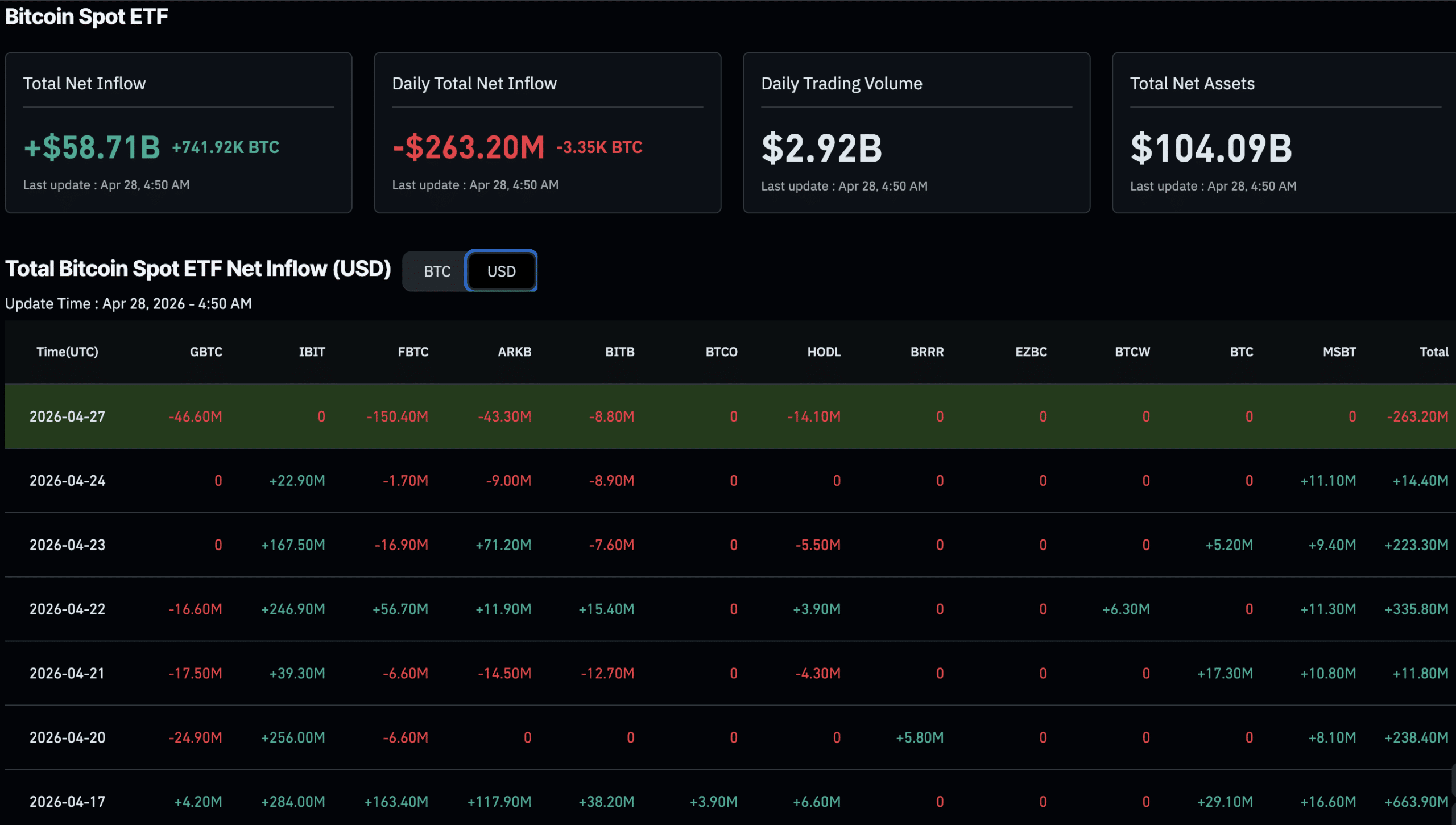
Pension fund allocations behave very differently from retail or even hedge fund purchases. Retirement money moves slowly, sits around for years or decades, and rarely panics in times of volatility. This long-term horizon means that Bitcoins held in retirement products effectively leave circulation for an extended period of time – a demand dynamic that quietly compounds rather than creating a single dramatic price rise.
AFP Protección’s $55 billion in assets under management is the scale to remember here. Even a small percentage allocated to Bitcoin on this basis represents significant and persistent demand.
If the trend extends to other Colombian administrators and Colombia’s $144 billion mandatory retirement system is the context in which this possibility should be measured, the cumulative effect on long-term BTC demand could be significant.
Three scenarios are worth considering: In a bullish scenario, AFP Protección’s move triggers a broader regional wave among Latin American pension administrators, adding a new category of long-term institutional buyers to an already supply-constrained market.
In a base case scenario, adoption remains gradual and limited, generating modest but steady demand that reinforces Bitcoin’s status as a legitimate portfolio diversifier.
In a bearish case, the regulatory reluctance of the Colombian financial authority, which simultaneously strengthens crypto reporting requirements through the DIAN tax authority, slows or caps pension fund exposure before it scales.
EXCLUSIVE: 99Bitcoin Readers – Earn $10 USDC when you sign up for Binance
Why Latin America’s adoption of pensions signals something different
Strategy acquired 3,273 BTC for ~$255.0 million at ~$77,906 per bitcoin and achieved a BTC yield of 9.6% since the start of 2026. As of 04/26/2026 we held 818,334 $BTC acquired for ~$61.81 billion at ~$75,537 per bitcoin. $MSTR $STRC
– Strategy (@Strategy) April 27, 2026
When a US hedge fund buys Bitcoin, it signals that it is looking for opportunities. When a Latin American pension fund adds Bitcoin, it signals something closer to necessity, a search for assets that can hold value in economies with historically volatile currencies and inflationary pressures. This is a qualitatively different type of institutional validation.
This is also happening in the same environment where institutional accumulators like Strategy have made multi-billion dollar purchases of Bitcoin, strengthening Bitcoin’s position as a treasury asset across multiple investor categories.
The fact that emerging market pension funds are adding exposure to the same asset that U.S. Treasuries are accumulating represents a convergence that the market has not yet fully priced in.
Colombia Bitcoin now has two pension administrators deeply involved in this trend. The question worth examining is not whether this was significant – quite the contrary. It’s a question of whether Colombia’s remaining administrators will follow suit and whether regulators will let them.
EXPLORE: Best Crypto Presales with Staking Rewards
Follow 99Bitcoins on XYouTube and Telegram for more crypto news and analysis.
The article Colombia Bitcoin: Largest Pension Fund Adds BTC Exposure appeared first on 99Bitcoins.


