




Arthur Hayes arrived at Consensus Miami 2026 with another crypto news headline: $125,000. The BitMEX co-founder and CIO of Maelstrom used his speech at CoinDesk’s flagship crypto press conference, which took place May 5-7 in Miami, to present a liquidity-focused bullish thesis for Bitcoin that ran counter to the cautious tone dominating broader markets this year.
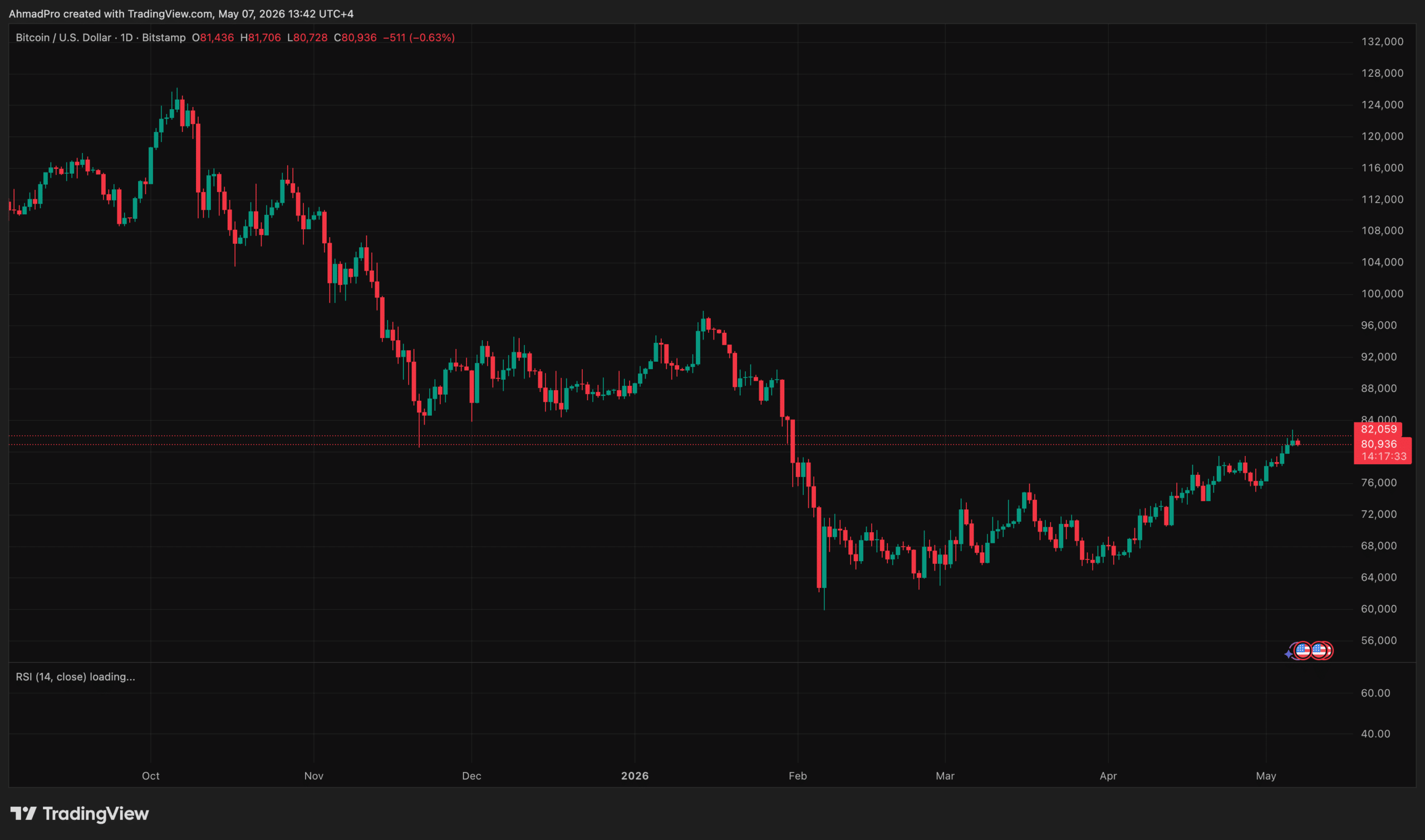
Bitcoin is trading in a consolidation range around the $70,000 to $80,000 band, with analysts viewing these levels as the immediate battleground between the bulls and bears.
Hayes argued that the first quarter of 2026 amounted to what he called a “no-trade zone,” shaped by a decline in U.S. technology stocks, particularly SaaS stocks, and a shockwave in the AI sector.
🔥 BIG: TO #Consensus2026Arthur Hayes says Bitcoin is heading towards $125,000 soon.@CryptoHayes pic.twitter.com/4eXtzIGgHk
– Crypto Times (@CryptoTimes_io) May 5, 2026
The turning point, according to him, came on February 28: a conflict between the United States and Israel with Iran triggered a policy of monetary easing, and Bitcoin outperformed both the Nasdaq and gold from that date. Hayes also warned that 99% of altcoins could go to zero, while simultaneously defending their long-term role, a seemingly contradictory position that prompted pointed questions from the public.
Its broader macroeconomic framework links military spending, money printing, and demand for physical assets in a way that mainstream analysts tend to resist. The central question as the second day of consensus approaches is whether this thesis is valid.
Crypto News: Can Bitcoin Price Reach $125,000 Following Hayes Consensus Call?
Bitcoin’s technical setup at the start of the conference week shows a market in controlled consolidation rather than distress. The price held above psychological support at $80,000, a level that served as a post-halving base in analyst frameworks, while $85,000 remains the immediate resistance ceiling and the most cited threshold for a retest at an all-time high.
The volume context is thin during the lecture itself, which is typical; Major directional moves tend to follow, not accompany, high-profile events.
Hayes’ $125,000 target loosely aligns with the macroeconomically driven bullish scenarios that have circulated around Fed pivot expectations, although its specific catalyst, war-driven fiscal expansion, is less conventional. Three scenarios seem plausible based on the current configuration:
Source: Tradingview
The Bull Case is that fiat liquidity increases significantly in the second half of 2026, BTC clears $85,000 then $90,000 in volume and heads towards a new all-time high at $125,000 over the following weeks.
If an extension of the geopolitical ceasefire materializes, it could invalidate the bullish thesis. $80,000 becomes the downside benchmark if this support cracks on significant volume.
Bitcoin Hyper seeks greater gains than Bitcoin, is this possible?
Here’s the uncomfortable arithmetic for BTC spot buyers at current levels: Even a net run up to $125,000 represents a gain of about 25-35% from the consolidation range. That’s significant, but it’s the kind of return that early-stage infrastructure can compress into days rather than months, with the risks that entails.
For investors who find the BTC spot risk/reward less attractive at five-digit prices, Bitcoin Hyper represents a structurally different entry point.

Bitcoin Hyper ($HYPER) is positioned as the first Bitcoin Layer 2 to integrate the Solana Virtual Machine (SVM), a combination that the project says provides faster throughput than Solana itself while preserving Bitcoin’s underlying security model.
Presale increased $32,618,815.37 at the current symbolic price of $0.0136797with staking available at a high APY for early participants. The core infrastructure includes a decentralized canonical bridge for BTC transfers and extremely low-latency transaction execution, the type of programmability that Bitcoin’s base layer has historically lacked.
Visit Bitcoin HYPER here
following
Disclaimer: Coinspeaker is committed to providing unbiased and transparent reporting. This article is intended to provide accurate and current information, but should not be considered financial or investment advice. Because market conditions can change quickly, we encourage you to verify the information for yourself and consult a professional before making any decisions based on this content.

Daniel Frances is a technical writer and Web3 educator specializing in macroeconomics and DeFi mechanics. Hailing from crypto since 2017, Daniel leverages his experience in on-chain analytics to write evidence-based reports and in-depth guides. He holds certifications from the Blockchain Council and is dedicated to providing “insight gain” that overcomes market hype to find real utility for blockchain.


