



Key takeaways
- Ripple ranked 16th as CNBC highlighted disruptors in finance, AI and enterprise software.
- Institutional demand for integrated custody, compliance, staking, and payment tools has strengthened Ripple’s position.
- Prediction market companies have also emerged, showing broader crypto-related infrastructure gaining selective recognition.
Ripple’s CNBC Rankings Highlights Cryptocurrency Role of infrastructure
Ripple said on May 19 that CNBC ranked the company 16th on its Disruptor 50 2026 list. The ranking places the crypto infrastructure company among companies identified by CNBC as reshaping finance, artificial intelligence, cybersecurity, healthcare and enterprise software.
CNBC released its 14th annual rankings on May 19, led by Anthropic, OpenAI and Databricks, as venture capital investment in artificial intelligence accelerates in the startup sector. The top five companies on the list had a combined valuation of nearly $500 billion, reflecting the scale of capital flowing into AI-focused companies and emerging infrastructure companies. Ripple ranked between Cognite and Samsara Eco.
This recognition follows Ripple’s expansion into payments, custody, compliance, staking and institutional market infrastructure, as CNBC highlighted how new technology models continue to reshape industries beyond traditional software. THE crypto the company wrote on social media platform X:
“Ripple is #16 on the CNBC Disruptor 50 2026, representing the role crypto infrastructure plays a role blockchain in real-world finance.
Recent product moves additional context to this location. Ripple Custody extended to partnerships with Securosys and Figmentadding security, compliance and staking tools for regulated institutions. The platform has also integrated Chainalysis tools for real-time transaction monitoring and policy enforcement before asset movement.
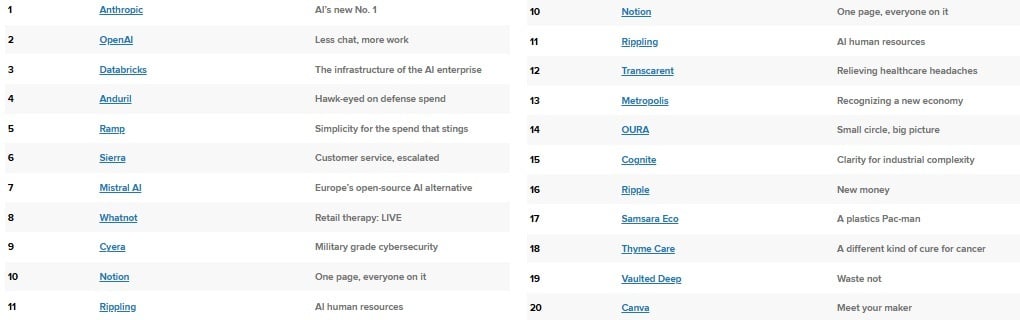
Cryptocurrency Infrastructure gains wider prominence as a disruptor
Ripple Payments has expanded into over 60 markets, combining messaging, liquidity procurement, compliance and settlement infrastructure. XRP serves as a liquidity bridge within Ripple’s payments ecosystem, connecting the asset more directly to cross-border institutional settlement use cases.
Among crypto-related companies, Ripple was the most clearly infrastructure-focused company on the 2026 list. Polymarket ranked #48, adding a crypto-related prediction market name. Kalshi ranked #43, giving the ranking another prediction market company, although its business is broader than crypto. Digital asset companies have appeared on previous Disruptor 50 lists, but the category has remained selective. Moonpay ranked No. 21 in 2025 and described itself as the only crypto-native company on that year’s list.
Ripple executive Cassie Craddock recently said:
“Financial institutions aren’t looking for standalone solutions: they want a true end-to-end infrastructure partner they can build with. »

Why is XRP unique? Ripple CEO explains what sets XRP apart
Ripple CEO Brad Garlinghouse explained why he considers XRP unique, highlighting its speed, low cost, scalability and long lifespan…
Read now


Why is XRP unique? Ripple CEO explains what sets XRP apart
Ripple CEO Brad Garlinghouse explained why he considers XRP unique, highlighting its speed, low cost, scalability and long lifespan…
Read now
Why is XRP unique? Ripple CEO explains what sets XRP apart
Read now
Ripple CEO Brad Garlinghouse explained why he considers XRP unique, highlighting its speed, low cost, scalability and long lifespan…


