




Key takeaways
- HYPE ETFs outperformed Bitcoin ETFs in three of their first six trading days.
- HYPE ETF issuers purchased 2.5x more tokens than Hyperliquid’s burn fund withdrew.
- Solana dominated ETF adjusted inflows as institutions expanded beyond bitcoin and ether.
HYPE ETF Gains Ground as Investors Look Beyond Bitcoin and the ether
The first spot exchange-traded funds (ETFs) linked to Hyperliquid’s HYPE token are showing early signs of institutional traction, adding a new source of demand to a market already shaped by aggressive token buybacks and cash accumulation strategies.
According to an X post from Aletheia, a crypto analyst at Bitcoin Switzerland AG and HYPE ETFs attracted larger relative inflows than Bitcoin ETF in three of the first six trading sessions and exceeded ether ETF flows on five of those days.
Only Solana-related products consistently saw stronger market cap-adjusted demand, outperforming hyperliquid ETFs in four of six sessions.
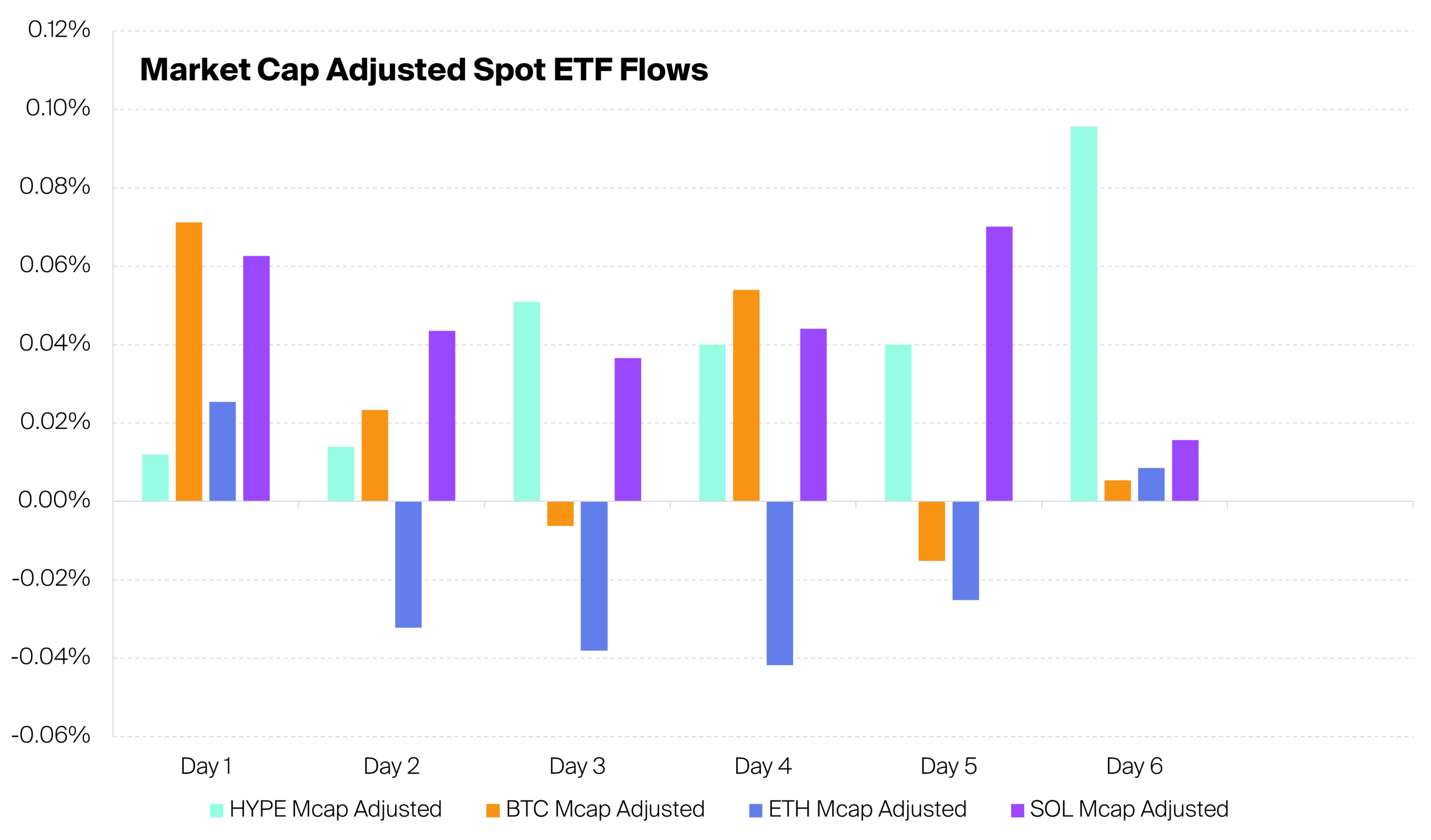
The strongest signal came on the sixth trading day, when HYPE spot ETFs reportedly saw significantly greater cash flows than their competitors. crypto ETF Products. While it is too early to determine whether this pace is sustainable, early numbers suggest that institutional investors are starting to view Hyperliquid as more than a niche trading protocol.
The launch of the ETF comes at a particularly sensitive time for HYPE’s market structure.
Much of the circulating token supply has already been absorbed by treasury vehicles and ecosystem-bound buyers, while previous holders appear to have had the opportunity to distribute their positions before passive investment products entered the market. This dynamic can reduce the risk often associated with ETF launches, where new institutional demand is met by existing heavy selling pressure.
One of the most closely watched developments is the interaction between ETF inflows and the Hyperliquid Support Fund, the mechanism responsible for buying and burning HYPE tokens in the market.
During the first six trading days, ETF issuers reportedly purchased approximately 2.5 times more HYPE than the Relief Fund had acquired and withdrawn from circulation during the same period.
While the long-term effect of the Relief Fund is highly dependent on continued token burning, ETF demand introduces an additional layer of sustained spot buying pressure that could materially alter supply dynamics if inflows continue.
The emergence of spot ETFs linked to alternatives crypto assets reflects a broader shift in institutional markets. Bitcoin and Ether products opened the door to regulated exposure to digital assets through traditional brokerage accounts, but newer products are increasingly targeting ecosystems related to decentralized finance, derivatives infrastructure, and high-performance trading networks.
Hyperliquide has become one of the most prominent names in this category, largely thanks to its decentralized perpetual futures platform and growing on-chain liquidity. The first week of ETF HYPE suggests that investors are ready to allocate capital beyond bitcoin and ether when liquidity, trading infrastructure and market narratives align.


