



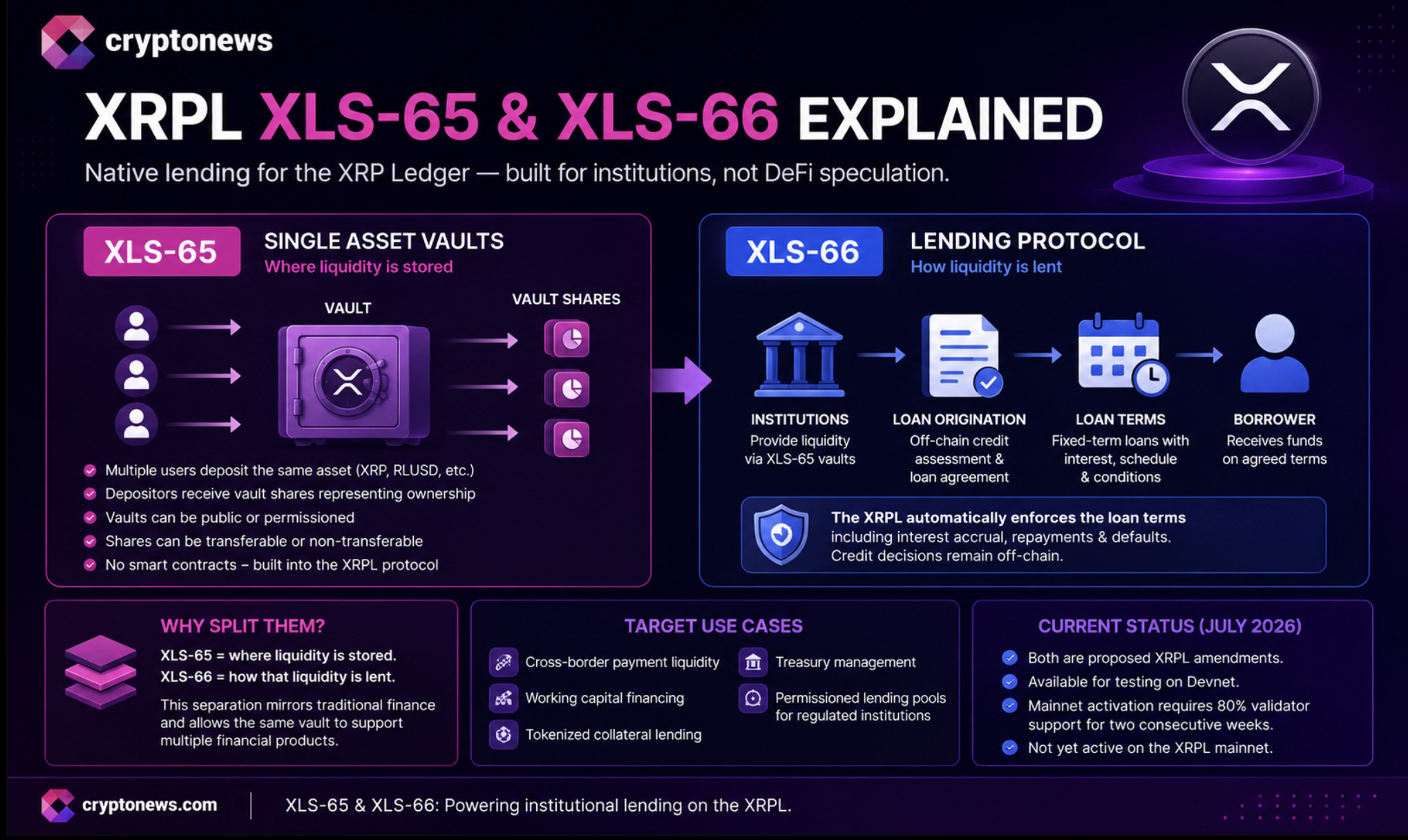
Ripple has officially proposed two XRPL amendments, XLS-65 and XLS-66, which would integrate fixed-term institutional credit infrastructure directly into the XRP Ledger. With this launch, validator voting is also now active following the release of Rippled v3.1.0 at the end of January 2026.
The framework targets unsecured underwritten loans for regulated financial institutions, positioning XRPL as a credit layer rather than a payment rail. This is a structural change that depends entirely on the ability of the amendments to reach a consensus threshold of 80% of validators.
Don’t miss our $1,000 USDT airdrop on ByBit
This threshold remains the critical unknown. In recent monitoring, XLS-65 had about 8 yes votes from validators, or only 22.86%, while XLS-66 had about 7, or 20%. Both numbers are well below the 80% sustained support required over two consecutive weeks for mainnet activation.
Discover: The best crypto to diversify your portfolio
Single Asset Vaults and Lending Protocol Mechanisms
The two amendments operate as a linked system. XLS-65 introduces Single Asset Vaults, permissioned pools into which liquidity providers deposit a single token. It contains tokenized RLUSD, XRP, US Treasuries or other tokenized assets, which are held directly by the vault structure itself. Revision XLS-65d simplified this model by eliminating two previously required transactions, thereby reducing depositor overhead and redemption flows.
XLS-66 builds the XRPL lending protocol on top of these vaults, specifying the ledger mechanisms for loan origination, interest accrual, amortized repayment, and default enforcement via ReadyTogether, LoanPayAnd ReadyDelete transactions. It is important to note that underwriting and borrower credit assessment remains off-chain.
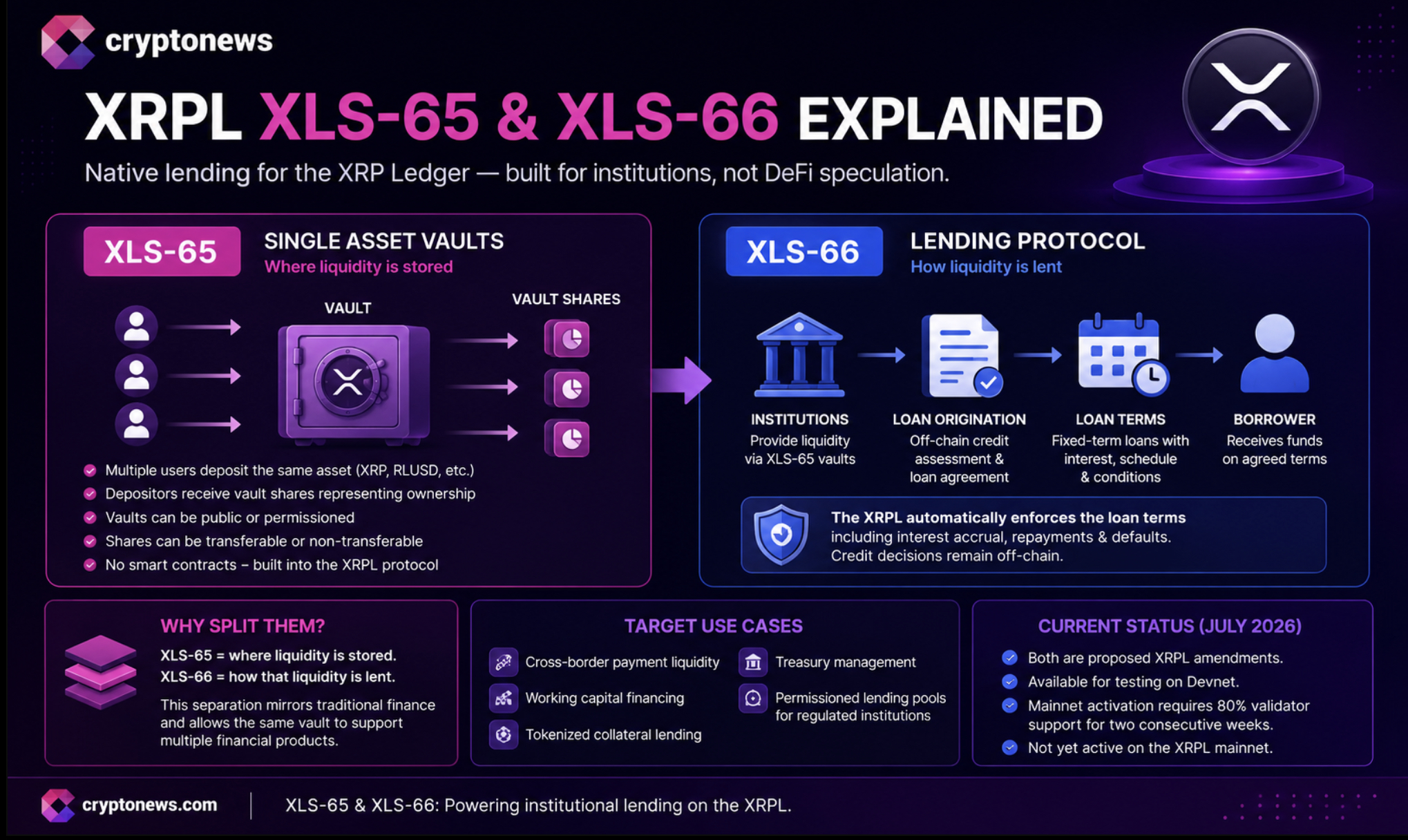
Thus, institutional credit bureaus manage the risk assessment while XRPL manages the execution and lifecycle of the loan. These are not over-collateralized loans like Aave; This is a fixed-term loan granted to accredited counterparties.
The compliance architecture runs through XRPL’s existing authorized domains, credential verification, recovery mechanisms, and freeze functionality. Vault operators can restrict participation to KYC/AML compliant entities at the protocol level, which is precisely what differentiates it from Open DeFi.
Discover: the best token presales
XRP at $1.00: What Activation Would and Would Not Prove
XRP is trading near the $1.00 level, a psychologically significant threshold that has attracted the attention of technical analysts who follow a coiled triangle pattern with progressively higher lows against flat resistance.
Enabling XLS-65 and XLS-66 would confirm XRPL as a viable credit infrastructure layer, but the demand signal that actually moves prices is institutional adoption. Price action will depend on whether regulated entities deploy capital into RLUSD-funded vaults at scale.

Changes are currently testable on Devnet, and developers can onboard the ready stack before mainnet activation. The performance of the XRP market in the short term will be determined more by the acceleration of validator momentum towards this 80% threshold than by a single technical level. The setting is credible; the activation path is not yet assured.
Discover: The best crypto to diversify your portfolio
The post XRP Ledger Lending Changes Faces 80% Validation Hurdle as Institutional Credit Layer Takes Shape appeared first on Cryptonews.


