




Block Inc (NYSE: XYZ), the fintech payments company led by Jack Dorsey, announced a massive downsizing on Thursday, cutting about 40% of its staff as part of a shift toward AI. The restructuring will reduce the company’s workforce from more than 10,000 employees to fewer than 6,000, a drastic measure that Dorsey described as necessary to create a smaller, flatter and more agile organization.
The reduction affects nearly 4,000 positions across the company’s entire portfolio, which includes Cash App, Square and its Bitcoin-focused initiatives like Spiral. Following the announcement, Block shares jumped more than 20% in extended trading, reflecting the strong speculation behind aggressive cost-cutting measures despite the human cost of the decision.
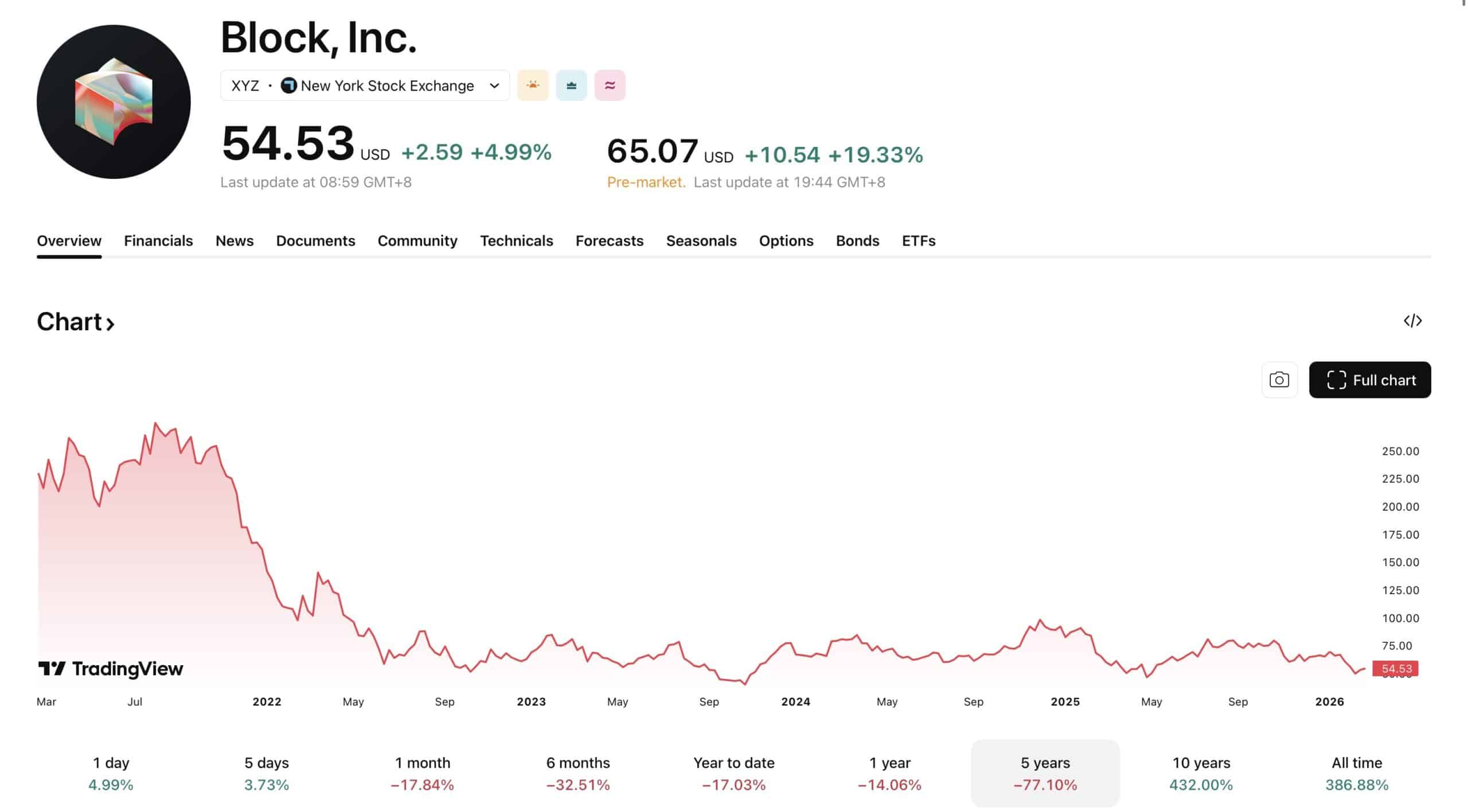
Block, Inc. 5-year chart Source: TradingView
The move marks the third and largest round of layoffs for the company in two years, signaling the definitive end to the era of growth at all costs in the fintech industry.
EXPLORE: Best New Cryptocurrencies in 2026 – Watchlist of Recently Launched Coins and Investments
Block Inc. and Dorsey’s ‘pressure test’ go AI
The layoffs are the culmination of what Dorsey calls an internal “pressure test” of the company’s operations, designed to identify layoffs and streamline decision-making. In a memo to staff, the CEO noted that the company had become too complex, hampering the speed of execution required to compete in the evolving AI landscape. He says the restructuring is not simply a financial exercise but a functional overhaul, consolidating engineering talent and disbanding the TBD division to refocus resources on core products and Bitcoin mining initiatives.
we do @blocs smaller today. here is my note to the company.
####
Today we are making one of the most difficult decisions in our company’s history: we are reducing our organization by almost half, from more than 10,000 people to just under 6,000 people. that means more than 4,000 of you are…
– jack (@jack) February 26, 2026
While the immediate goal is to reduce operating expenses, the long-term play suggests a fundamental shift in how Block Inc values human capital over automated systems.
By capping headcount below 6,000, Dorsey is betting that AI integration can offset the loss of nearly half of its workforce. Only time will tell if this bet will be a winner or a total disaster.
DISCOVER: What is the next crypto to explode in 2026?
Institutional tension in the Fintech sector
Block Inc.’s drastic restructuring toward AI highlights the immense pressure that publicly traded, crypto-aligned companies face to generate profitability in uneven market conditions. The move stands in stark contrast to the aggressive hiring of 2021, suggesting the industry is still grappling with the efficiency demands that emerged when the crypto winter began.
The struggle to reconcile innovation and balance sheet health is vast. As Block cuts costs to increase margins, other major players have been severely punished by the market for financial missteps. For example, Galaxy Digital stock collapsed following large quarterly losses, illustrating the volatility inherent in this sector. Likewise, purely Bitcoin-focused strategies remain high risk, as evidenced by MSTR stock’s 17% drop after reporting billions in value losses.
Block’s decision to prioritize margin expansion over headcount aligns it with Wall Street’s broader expectations, but it also exposes the company to operational risks if the remaining workforce cannot support the platform’s massive trading volumes.
DISCOVER: Best Crypto Presales to Watch in 2026
following
Disclaimer: Coinspeaker is committed to providing unbiased and transparent reporting. This article is intended to provide accurate and current information, but should not be considered financial or investment advice. Because market conditions can change quickly, we encourage you to verify the information for yourself and consult a professional before making any decisions based on this content.

Daniel Frances is a technical writer and Web3 educator specializing in macroeconomics and DeFi mechanics. Hailing from crypto since 2017, Daniel leverages his experience in on-chain analytics to write evidence-based reports and in-depth guides. He holds certifications from the Blockchain Council and is dedicated to providing “insight gain” that overcomes market hype to find real utility for blockchain.


