




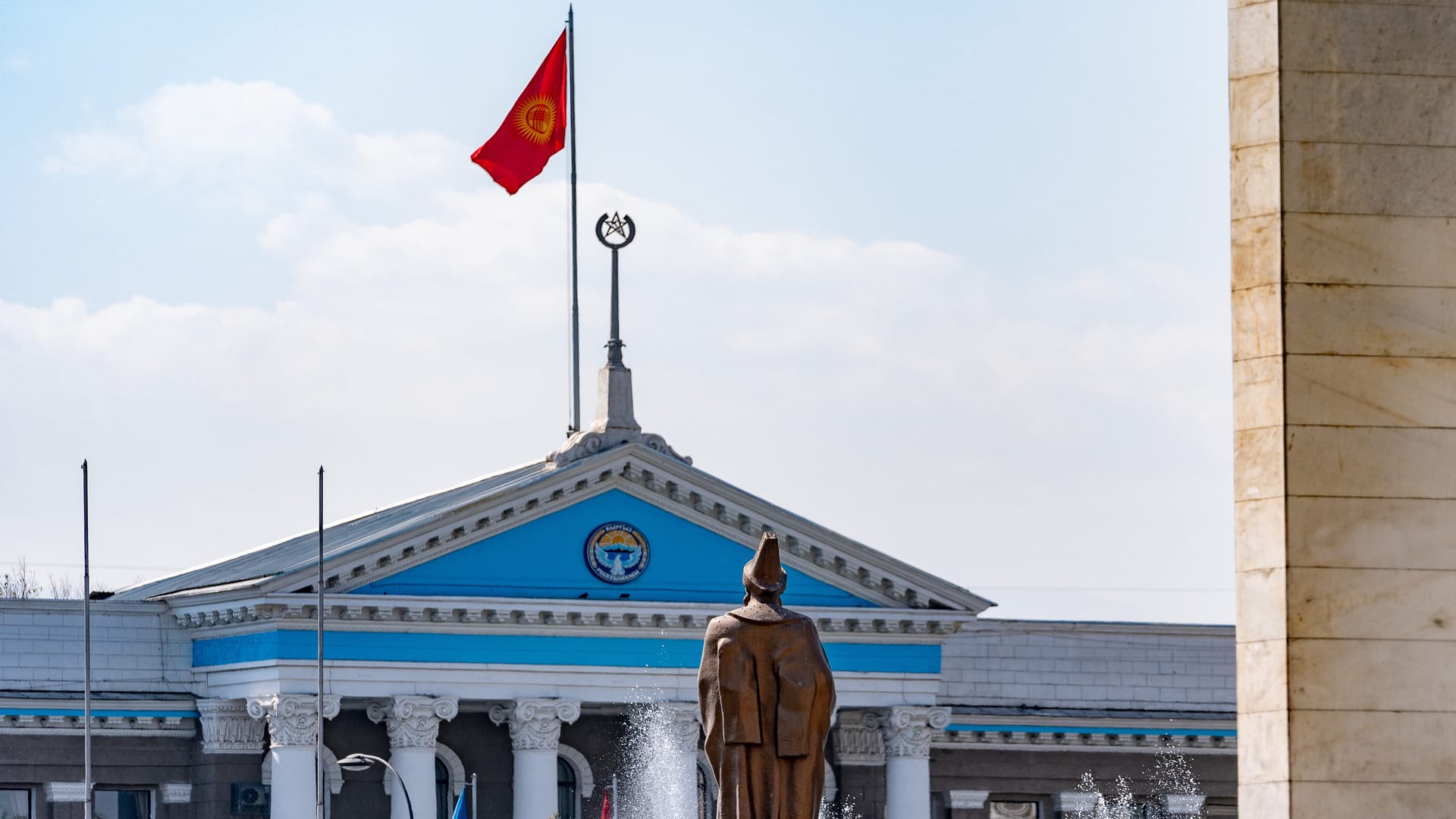
Anadolu / Contributor
perspective

Last week I went to Dubai. I didn’t like it very much; Dubai feels like its goal was to build a city, but leave out everything that makes it great. Then again, I was there for a crypto conference. And my general impression was this: if Western sanctions are indeed excluding Russians from the global economy, someone should tell the Russians.
The free ice cream at the door was sponsored by a crypto company promising seamless exchanges between rubles and the dollar stablecoin USDT; an exhibitor offered to deliver money to you in an hour when you transferred crypto to them; and the title sponsor was A7A5, freshly sanctioned by the European Union, but very much alive, kicking and happily handing out stickers to people who spun his wheel of fortune.
The center of the room was dominated by a crypto trading competition, in which a number of people sat behind screens and sought to make profits against the clock. Despite the efforts of two chatty Russian MCs, as a spectator sport it had all the charm of watching an HR department finish the month’s paycheck. Yet it was the competition that attracted the biggest crowds simply due to a lack of other events.
None of the whales that might once have attended a crypto conference in Dubai were in attendance, now all the action has spectacularly moved to Washington, DC. Check out this Reuters investigation into how much money the Trump Organization made in the first six months of 2025 alone: ”The U.S. president’s family raked in more than $800 million from crypto asset sales in the first half of 2025 alone,” with “potentially billions more in unrealized ‘on paper’ gains,” mostly from foreign sources.
Those who traveled to Dubai intoned the usual truths about crypto ushering in a new era of freedom, despite the enormous contradictions surrounding them. Particularly disconcerting was the panel featuring Vít Jedlička, a Czech libertarian and founder of the “start-up nation” Liberland, alongside Nabil Arnous, whose job is to attract investment into “Innovation City,” a new AI-powered free trade zone in the absolute monarchy of Ras Al Khaimah, one of the seven emirates that make up the United Arab Emirates. Blockchain is indeed powerful if it can unite people from supposedly opposing political poles.
But what blew my mind even more was the presentation by Reeve Collins, co-founder of Tether and an early advocate of all things crypto. He came to Dubai to pitch his idea for “white label” stablecoins that would allow companies to put their name on a dollar-pegged cryptocurrency while leaving all the hard work of managing the blockchain to someone else.
Why might companies want to do this? Because every time they sell something, they collect even more data on their customers than they already do, and also make a profit by issuing money that currently goes to the government.
“Because it’s programmable money, you get real data on all the users and you understand who the power users are, who deserves more, who deserves to be rewarded,” Collins said. “That’s loyalty points multiplied by a thousand. This will really boost what businesses are able to offer to their users, so they can extract more value.”
I kept expecting someone to speak up and point out how far their vision had moved away from cryptocurrencies as a tool for individual empowerment, rather than a tool for the world’s biggest corporations to destroy humanity even harder than they are now. But no one did it. Instead, the conference moved toward a panel about how governments couldn’t be trusted.
At some point the music will stop, none of us will have a chair, and there will be an almighty explosion. This prospect terrifies me a little.
Kyrgyzstan’s crypto constraint
For now, though, the music keeps playing. Particularly in countries like Kyrgyzstan, which seems to be doubling down on its efforts to become a “crypture” like El Salvador. Binance founder Changpeng Zhao, the crypto billionaire who pleaded guilty to violating US anti-money laundering laws and was recently pardoned by Trump – although the US president claimed not to know Zhao – traveled to Bishkek to talk about his transformation. “I had a great time in Kyrgyzstan over the past two days. I encourage more crypto companies to explore the country as well,” he said.
There are already a number of crypto companies in Bishkek, including sanctioned company A7A5, and their close ties to the Kyrgyz government are of great interest to journalists in the country. However, given that Kyrgyzstan’s top investigative media outlets – Kloop, Temirov Live and Ayt Ayt Dese – have just been labeled extremist, it will be difficult for journalists to draw attention to their findings.
“This is the first time in the history of Kyrgyzstan that media outlets have been described as extremist,” Kloop said in a statement. “It is now dangerous to like, share, or distribute media material. All of this could be considered support for extremist organizations and the circulation of extremist material.” At least “watching and reading it is currently safe.”
There was once something admirable in Kyrgyzstan’s bloody refusal to become a dictatorship like the other Central Asian republics. There is now something grotesque about the fact that it is the allure of cryptography, a technology meant to enhance freedoms, that helps cement autocracy. The country is holding early legislative elections on November 30. Unsurprisingly, the president’s party is expected to perform very well.
Watching Kyrgyzstan move toward autocracy reminds us that the only plausible long-term solution to kleptocracy is for rich countries to stop enabling it. If Westerners started living up to their stated values and stopping scammers from buying property and laundering money in the West, it would reduce the appeal of being a part of it.
A version of this story appeared in this week’s Oligarchy newsletter. Register here.


