



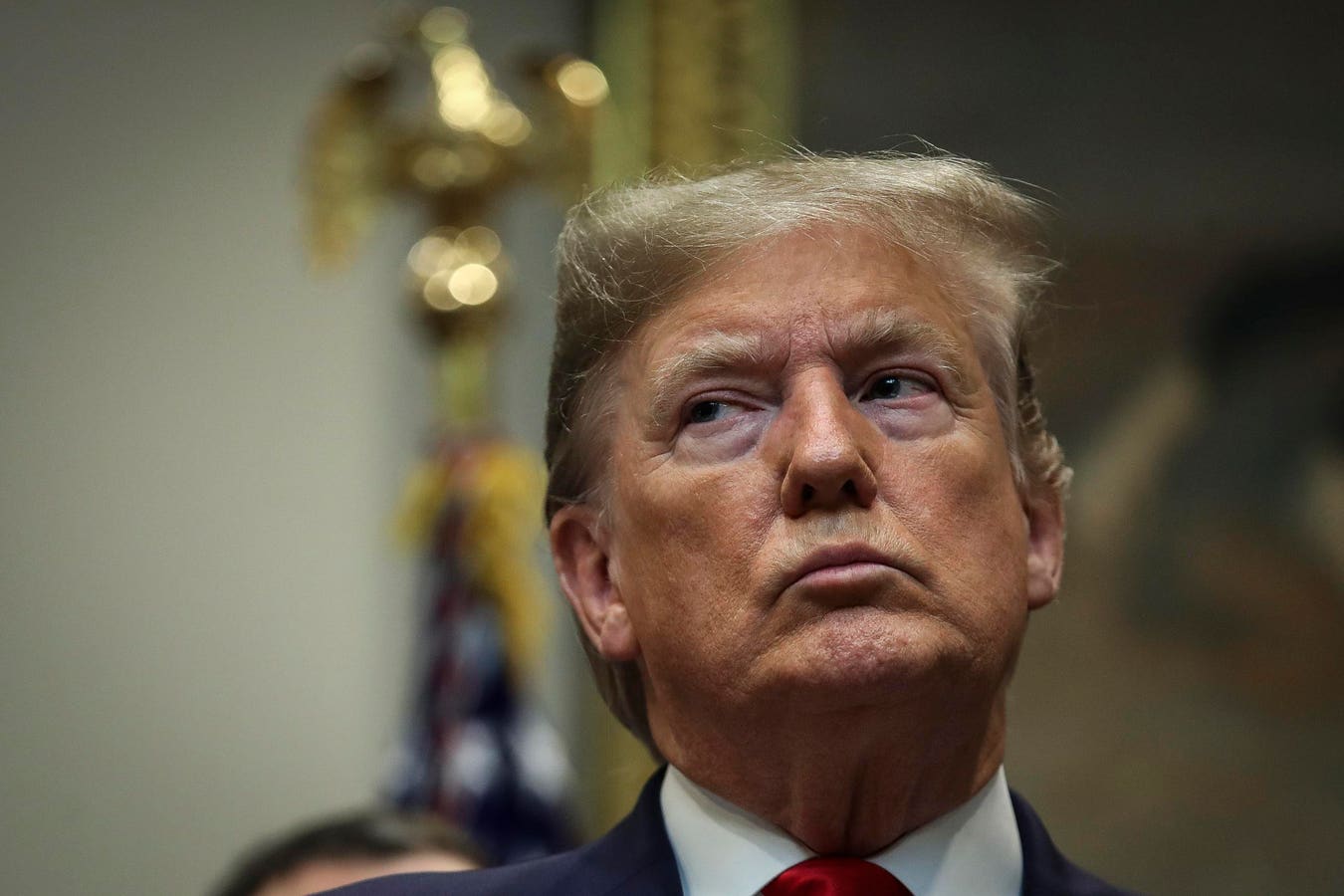
WASHINGTON, DC, JANUARY 9: US President Donald Trump attends an unveiling event … (+)
Donald Trump will soon return to the White House, riding a wave of unprecedented promises and financial support from a well-organized and equally well-funded cryptocurrency industry. Trump declared his intention at Bitcoin 2024 to transform the United States into the “crypto capital of the world.” These pro-crypto promises generated over $135 million in campaign contributions. At the heart of this promise is the firing of Securities and Exchange Commission Chairman Gary Gensler and the lifting of the regulatory fog hanging over the digital asset space.
But Trump’s bold promises collide with the reality of governance – a process that is often slow, complex and resistant to political opportunism. Checks and balances. A governance feature, not a bug. The stakes couldn’t be higher, not only for the crypto industry, but also for the credibility of its administration. To achieve results quickly, we will have to deal with legal constraints, bureaucratic inertia and the impatience of a donor base. Here’s how Trump could start delivering on the promises that fueled the crypto industry’s fundraising frenzy.
The difficult task of removing Gary Gensler
Gensler has become a polarizing figure in the crypto world. Known for his aggressive enforcement tactics, he is both celebrated and criticized for his regulatory approach. Crypto enthusiasts blame his leadership for the lack of clear compliance pathways, a sentiment echoed by SEC Commissioner Hester Peirce. In a recent talk at Wharton, Peirce described the SEC as fostering “instability, uncertainty and fear” under Gensler, stifling innovation and driving companies overseas.
Trump’s promise to fire SEC Chairman Gary Gensler on ‘day one’ is legally impossible under the Securities Exchange Act of 1934, which protects commissioners from removal without cause, such as inefficiency or malfeasance , none of which apply to Gensler. Although unlikely, even if demoted, Gensler could remain SEC commissioner until 2026, which could block significant progress.
Interim leadership, a Trumpian shortcut
During his first term, Trump often used interim appointments as a shortcut to avoid Senate confirmation battles. With more than 30 acting agency heads during his first presidency, this strategy allowed him to quickly install loyalists. Under the Federal Vacancy Reform Act (FVRA), acting appointments are limited to 210 days.
Although acting officials provide some flexibility, they often lack the legitimacy and authority of Senate-confirmed leaders. This may compromise their ability to implement lasting reforms. Additionally, decisions made by sitting leaders are more likely to be subject to legal challenges, further complicating efforts to advance a pro-crypto agenda.
The U.S. federal government has approximately 4,000 political appointees made by the president. Of these, about 1,200 positions require Senate confirmation, accounting for about 30 percent of all presidential nominations. With Republicans now in control of the Senate – the chamber responsible for confirming many presidential nominees – Trump may this time face fewer obstacles to securing confirmation. However, the crypto industry’s demand for immediate action could make interim appointments an attractive interim solution while waiting for permanent candidates to be finalized.
Why playdates miss the mark
In a November 10 Truth Social article, Trump floated the idea of using Senate recess appointments to bypass confirmation requirements for key positions. Recess appointments allow temporary placement in roles during Senate recess, but have significant drawbacks. Lacking Senate approval, appointees often face diminished authority, reduced legitimacy, and a temporary term that ends in the next Senate session or sooner if the nominee is rejected. This instability can harm the agency’s effectiveness, morale, and external confidence. Additionally, holiday appointments are controversial and subject to legal challenges, adding to the uncertainty. For critical roles like SEC Chairman, this approach prioritizes speed over stability, making it an unreliable solution for lasting reforms.
Can a decree solve the problem?
The short answer is no. An executive order cannot grant the president the authority to remove Gensler or other heads of independent agencies. For example, Executive Order 13957, issued by Trump in 2020 and then repealed by President Biden, sought to reclassify certain federal positions in order to more easily eliminate them. However, it could not – and did not – override statutory protections protecting independent regulatory agencies like the SEC.
Legislation and landmark Supreme Court decisions, such as Humphrey’s Executor v. United States (1935), ensured that agency heads like Gensler could only be removed from office for cause, such as inefficiency, neglect of duty, or malfeasance. These legal safeguards protect the independence of regulators, making it very unlikely that an executive order could circumvent them. Even if Trump were to reissue a similar directive, it would face significant legal challenges and likely be overturned. His promise to “fire Gensler on day one” remains more campaign rhetoric than concrete reality.
A high-stakes gamble for the crypto industry
The crypto industry is no stranger to big bets. No risk, no reward. The unprecedented financial support provided by the crypto industry during the 2024 election cycle highlights its high expectations. Industry leaders expect a pro-crypto shift, clear regulation, and policies that encourage innovation rather than stifle it. Coinbase CEO Brian Armstrong called the new Congress “the most pro-crypto conference ever,” reflecting industry optimism about its influence.
Trump has fueled these expectations with bold and bombastic proposals, including creating a US strategic Bitcoin reserve and prioritizing domestic Bitcoin mining. “If crypto is going to define the future, I want it to be mined, minted and manufactured in the United States,” Trump said at the Bitcoin 2024 conference. But lofty promises alone won’t satisfy a demanding donor base. As Commissioner Peirce warned, effective reform requires more than rhetoric; this requires structured policy frameworks and formal rules under the Administrative Procedure Act (APA). This process involves public participation, transparency and the possibility of legal challenges, all of which take time.
And then Can Does Trump do it?
Given legal and procedural constraints, the Trump administration must explore alternative strategies to implement its crypto agenda.
Appoint crypto-friendly commissioners
As positions open up at the SEC, Trump can appoint commissioners aligned with his vision for the crypto industry. By reshaping the SEC’s internal dynamics, this approach could gradually move policy in a more industry-friendly direction.
Pushing for legislative reforms
Proposals such as the SEC Stabilization Act, which would restructure the agency by replacing the role of chairman with a bipartisan executive committee, offer a more lasting solution. Republican control of Congress would increase the likelihood that such reforms will be enacted.
Promote regulatory experimentation
Peirce’s concept of “regulatory sandboxes” could allow crypto companies to innovate under defined conditions without fear of enforcement action. This approach balances monitoring with the flexibility necessary for technological advancement.
Promises versus process
The crypto industry’s demand for rapid action often clashes with slow governance. Project 2025, the Heritage Foundation’s roadmap for a conservative administration, sets ambitious goals for Trump’s first 180 days, including reclassifying digital assets as commodities rather than securities. However, achieving such reforms requires significant legislative and administrative coordination, which is inherently time-consuming.
Similarly, Agenda 47, Trump’s broader policy platform, emphasizes reducing regulatory burdens but offers little detail on the SEC. While these frameworks highlight priorities, they lack concrete action plans, leaving much up in the air until Trump takes office.
Even under a unified government, enduring regulation through the Administrative Procedure Act (APA) requires agencies like the SEC to solicit public input, consider comments, and withstand legal scrutiny, extending often times beyond industry expectations.
A moment of judgment
Trump’s promises to fire Gensler and reorganize the SEC underscore his brash leadership style, but also reveal governance constraints. While the crypto industry, emboldened by its record campaign investments, expects quick results, the incremental nature of regulatory processes may frustrate an industry that is long on Bitcoin but short on patience.
Ultimately, the path forward requires a combination of strategic appointments and legislative collaboration. For Trump, the key lesson is that bold promises must give way to the realities of governance, where lasting change depends on overcoming legal and procedural hurdles. For the crypto industry, the takeaway is that while supportive administration is crucial, lasting progress will be shaped by the processes that turn promises into concrete policies.


