



A quiet brawl between two of the most powerful names in finance broke out last week. In a letter to the Securities and Exchange Commission, Citadel Securities complained that crypto interests are poised to harm the U.S. stock market and consumer protections with a pell-mell rush toward decentralized finance (DeFi). The company has not directly clarified who it considers responsible for this state of affairs, but one can only guess from the footnotes, which refer to venture capital giant Andreessen Horowitz more than ten times.
The source of the dispute is the rapidly growing world of tokenized stocks, which allow users to trade shares of popular companies, but in a blockchain package. Companies like Robinhood, Kraken, and even BlackRock are all dabbling with the technology, whose benefits include easy 24/7 trading and instant settlement. Holding shares on a blockchain also reduces middlemen and expands the possibilities for deploying share-based collateral.
So, what’s not to like? According to Citadel, the problem comes from DeFi platforms like Uniswap. Right now, traders are using them to trade billions of dollars of crypto every day – and soon large volumes of tokenized Nvidia or Apple stocks could also be circulating on these platforms. And if the SEC grants certain exemptions sought by Andreessen and its DeFi allies, Uniswap and others will be able to operate as de facto brokerages, without taking on the legal responsibilities that come with it. This includes displaying the price of each transaction or ensuring that customers get the best price. Citadel also warns of “liquidity fragmentation” as equity investment is split between two parallel systems.
In response to the letter, the founder of Uniswap (one of Andreessen’s blue wallet companies) took to X to accuse Citadel of slandering DeFi in order to protect its lucrative role as “king of shady trading market makers.” Other prominent names in the crypto industry have also piled in, accusing the company of trying to stifle innovation.
At first glance, it appears that both sides are right. If trading tokenized stocks becomes mainstream, it would threaten Citadel’s business model of paying companies like Robinhood for their orders and using that volume to make trading profits. The company’s letter to the SEC is therefore clearly based on self-interest. That said, Citadel’s concerns about liquidity aren’t unreasonable: If the U.S. stock pool is split into two separate pools, doesn’t that make trading more expensive for everyone? Likewise, it is fair to ask whether the SEC would be wise to grant exemptions to investor protection rules that have historically served the public very well.
Reading the letter, it’s remarkable to read its claims that automated AMMs, block builders, validators, and layer 2 blockchains are essentially brokers – less for the argument itself than for the fact that Citadel and the SEC are discussing this sort of thing. Not long ago, only a handful of crypto enthusiasts knew what these terms meant. Today, they have become common enough to be part of a non-crypto company’s correspondence with the SEC, and there is no doubt that they are here to stay.
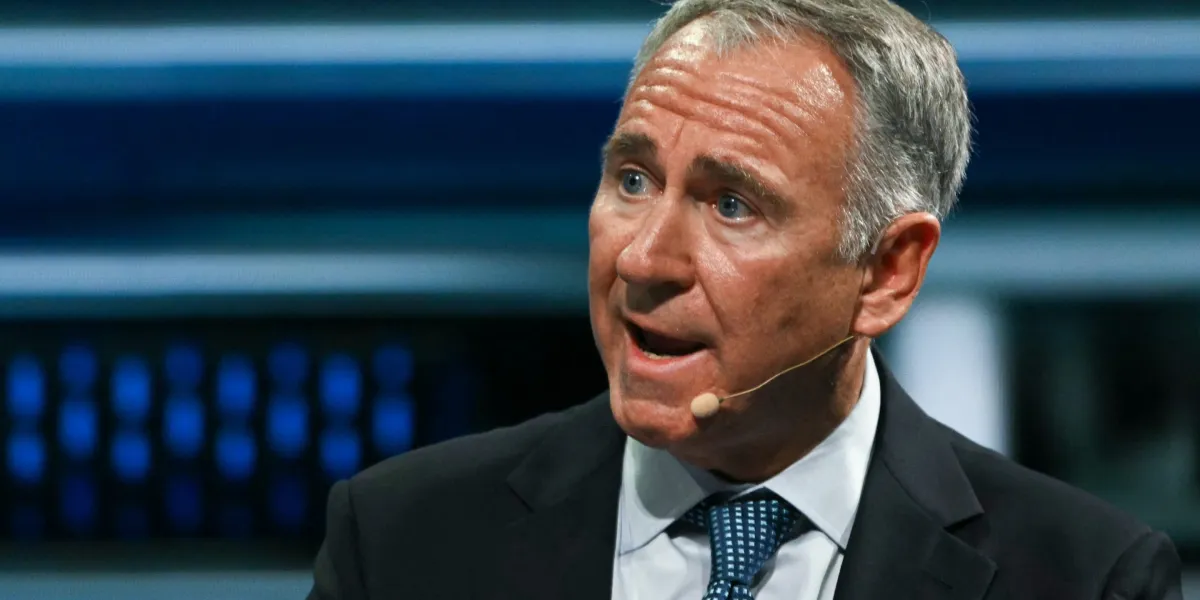
As for which side will win, it should be noted that the fight is between two of the most powerful companies in the country. On one side, there’s Citadel, which is owned by Ken Griffin, one of the richest and most combative people in the country. On the other is Andreessen, an influential venture capital firm that doubles as a public relations firm and lobbying agency with immense influence in Washington, DC. For now, it appears that Griffin will be able to slow the spread of token stocks, but, as with any superior technology, he won’t be able to stop it.
Jeff John Roberts
jeff.roberts@fortune.com
@jeffjohnroberts
DECENTRALIZED NEWS
The new look of Binance: The largest cryptocurrency exchange in the world announcement Yi He as co-CEO, confirming her status as the most powerful woman in the crypto industry, while also establishing a de facto headquarters via major licensing in Abu Dhabi for the first time. (Fortune)
Alt-corner winter: The recent economic downturn has put a strain on the sector, with the sector losing $200 billion since the market peak. Memecoins have been particularly hard hit, partly because of their large numbers, but also because they compete with a growing number of other speculative opportunities such as prediction markets. (Bloomberg)
If at first you don’t succeed: Coinbase plans to relaunch in India early next year. It opened in 2022, but was forced to withdraw a year later in the face of hostile regulators who blocked its access to the country’s national payments network. (TechCrunch)
Mining misdeeds: The Malaysian government is using drones and an inter-agency task force to track down thousands of illegal Bitcoin mining operations that are moving from location to location and have stolen more than $1 billion in electricity. (Bloomberg)
Saylor sells? The tense world of DATs became more difficult when Strategy said it might sell Bitcoin as a last resort. The move comes as Strategy’s share price has fallen below mNAV as the company faces looming dividend obligations – but there is also a case where the magic of Saylor’s corporate strategy means the company will do just fine. (Fortune)
MAIN CHARACTER OF THE WEEK

Samsul Said—Bloomberg/Getty Images
CZ wins the title of main character this week, as his debate with goldbug Peter Schiff helped draw a flood of social media attention around the Binance founder looking way back in the crypto game.
EVEN WHERE
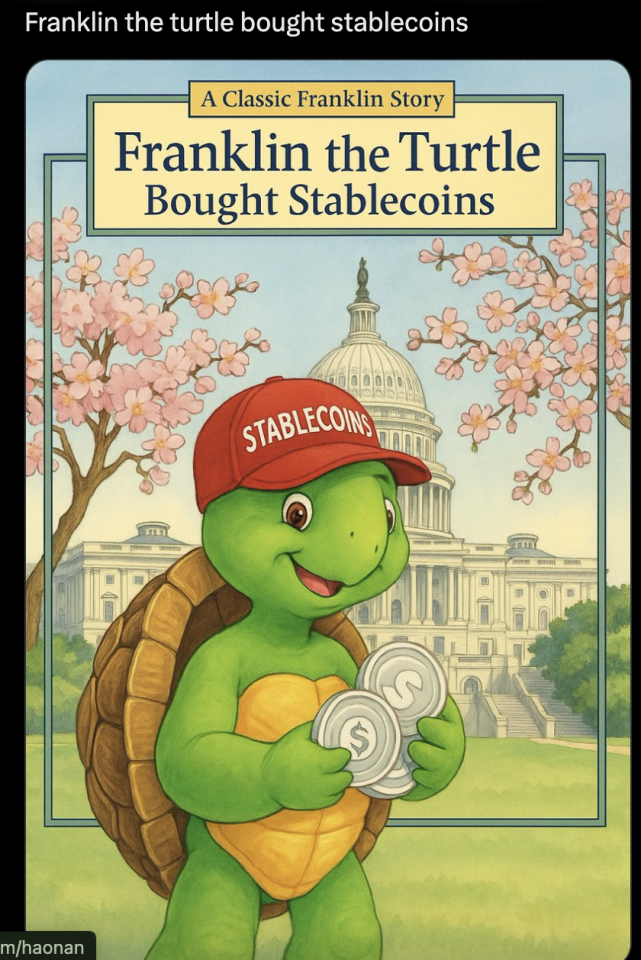
@haonan
After U.S. Treasury Secretary Bessent co-opted the beloved children’s character, Franklin the Turtle, to launch Treasuries, it didn’t take long for CT to expand the meme to stablecoins.


