




Coinbase CEO Brian Armstrong said late Tuesday that the company can no longer support the U.S. Senate’s version of the Crypto Market Structure bill after lawmakers introduced sweeping changes to the CLARITY Act.
He said the Senate Banking Committee’s plan “breaks key elements of market structure” and creates risks for tokenized stocks, DeFi, stablecoins and open crypto markets.
Sponsored
The CLARITY law has just changed
Coinbase withdrew its support just hours before the Senate moved the bill to committee.
At the same time, sources on Capitol Hill are circulating unconfirmed reports that the markup planned for tomorrow could be removed following Coinbase’s decision.
These reports remain rumors, but they highlight the growing political risk around the bill.
Armstrong highlighted four main concerns in his statement. THE de facto ban on tokenized actions means that blockchain-based stocks and financial instruments cannot be freely traded on crypto infrastructure.
Coinbase CEO Thinks Bill Expands government access to DeFi transaction data by inserting decentralized protocols into banking secrecy law and anti-money laundering regimes.
Sponsored
In particular, the latest changes give the Broader control of the SEC in crypto markets. This could potentially bring back the problems of the Gensler era to the industry.
Finally, he declared that the project contained stablecoin and banking arrangements which allow banks to restrict competition and limit crypto-native rewards.
What changed in the Senate rewrite
The Senate Banking Committee is not voting on the House-passed CLARITY Act. Instead, it uses a complete rewrite known as “replacement amendment”.
Sponsored
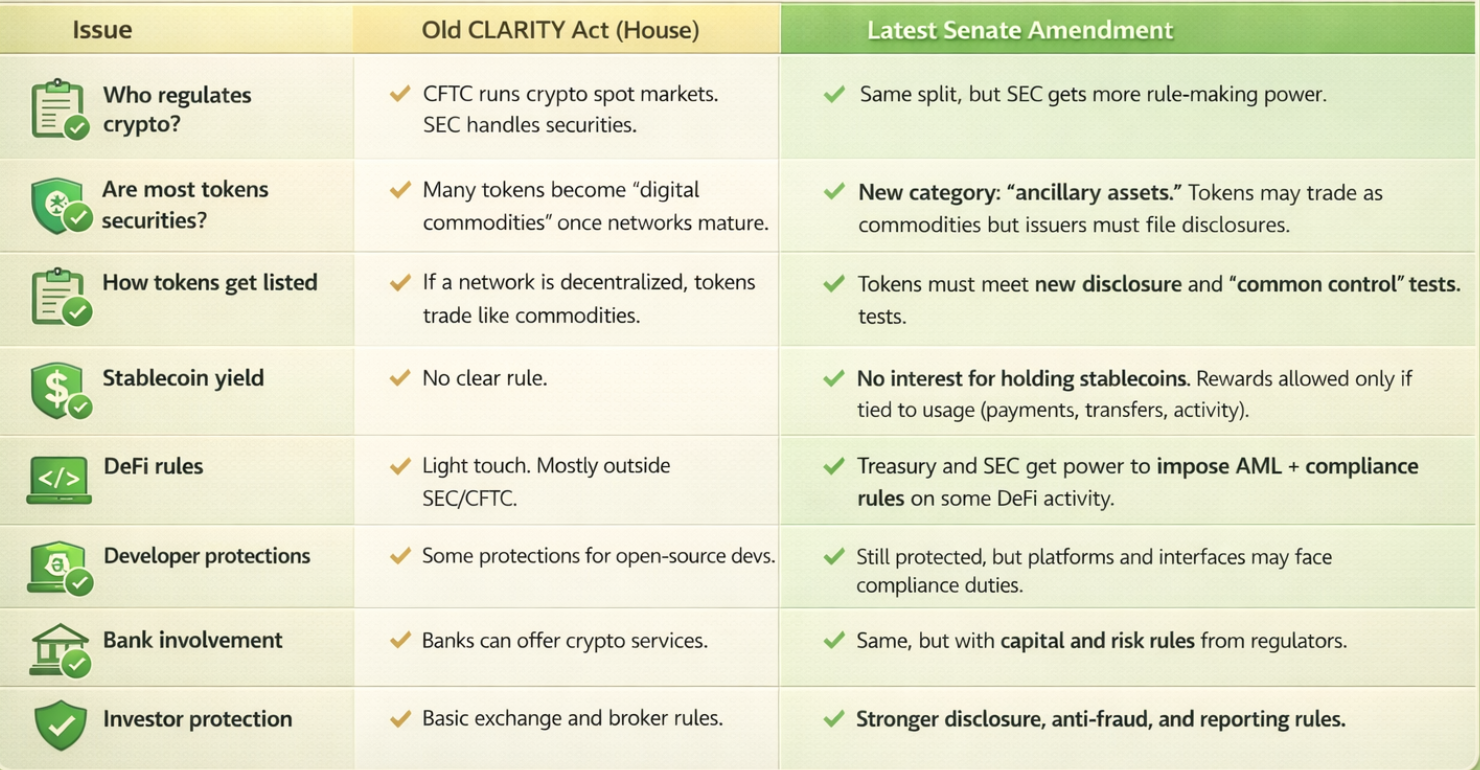
This draft makes several major changes to how US crypto markets would be regulated.
Here’s a simple side-by-side chart of what’s changed.
Coinbase is the largest regulated cryptocurrency exchange in the United States and one of the industry’s most active political voices in Washington.
Sponsored
Its public withdrawal signals to lawmakers that the bill may no longer have industry support at a critical time.
This is important because the Senate Banking and Agriculture Committees need bipartisan support to advance the bill.
What happens next for the CLARITY Act?
The Senate was to begin marking up committees this week. This is when lawmakers formally debate and vote on amendments.
However, following Coinbase’s statement, some policymakers are now saying leaders could delay or scale back the markup to avoid a collapse in public support.
For now, the bill remains in progress. But the fight over who controls crypto, stablecoins and DeFi in the United States has clearly entered its most fragile phase yet.


