



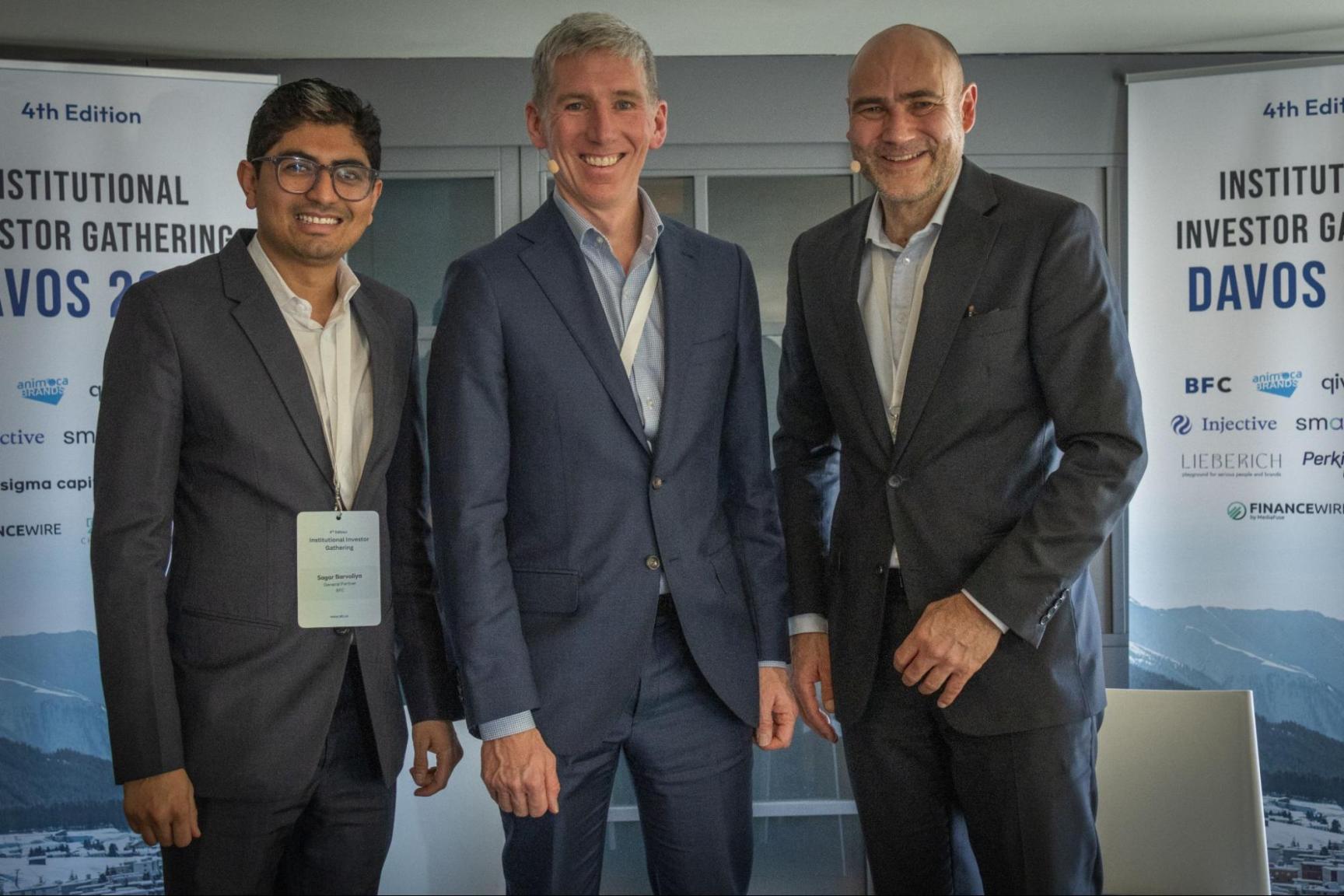
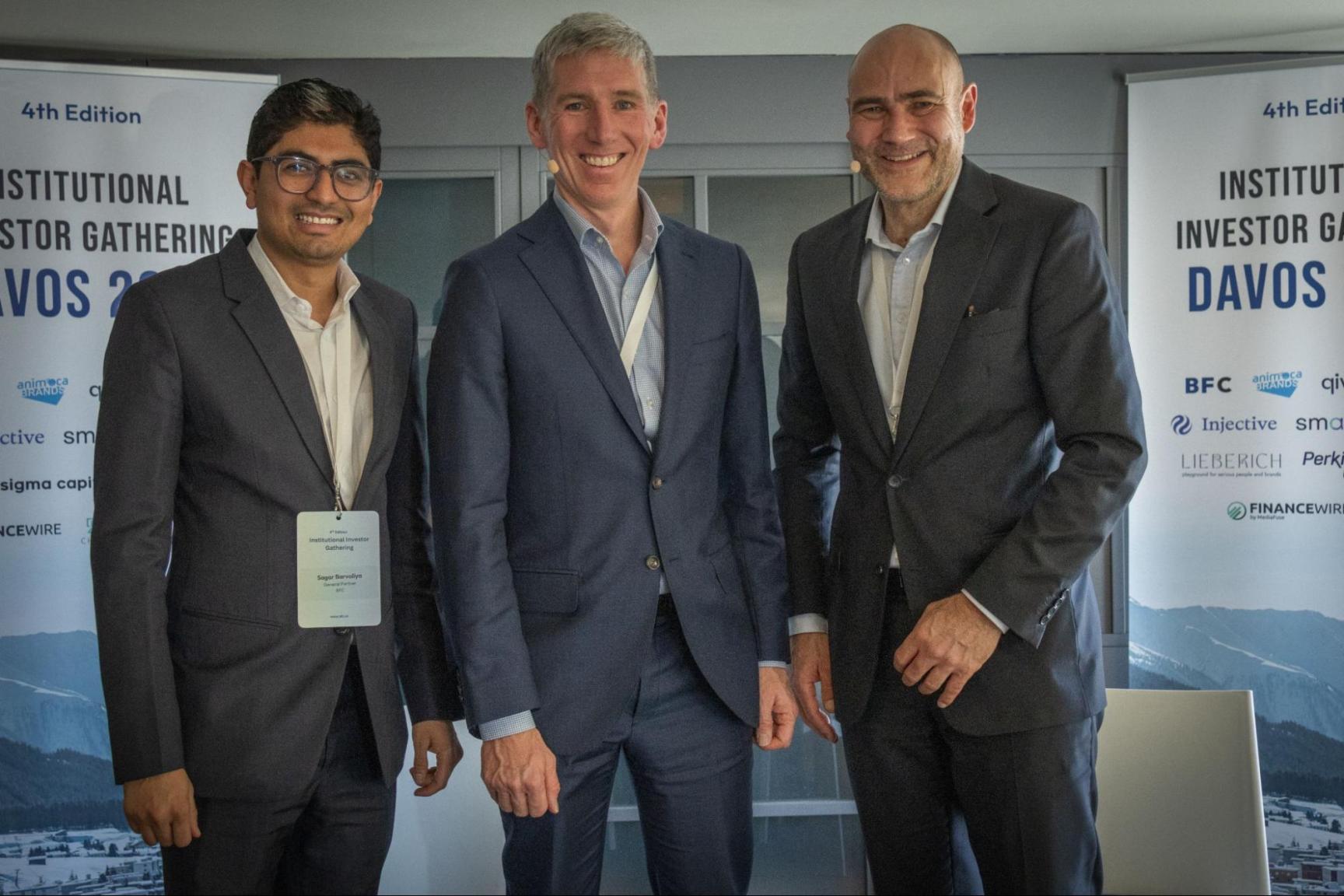
Davos, Switzerland, January 29, 2026, Chainwire
The 4th edition of the Institutional Investor Gathering, an exclusive invitation-only forum hosted by Sagar Barvaliya, Blockchain Founders Capital (BFC), brought together global leaders from politics, finance and the digital asset ecosystem to discuss an issue that is increasingly defining the future of markets: how blockchain, tokenization and regulation are converging to reshape the global financial system.
Sagar Barvaliya, Host and General Partner at Blockchain Founders Capital, said: “One of the clearest signals from Davos is that the speculation phase of crypto is maturing. What comes next looks much more like traditional finance: disciplined capital, conservative risk frameworks, and real-world use cases. As tokenization advances, digital assets will no longer seem experimental; they will simply become part of how global markets work.”
Antoine Scaramucci argued that, despite the noise of American politics, significant progress was being made. “Despite some reality TV series that are still part of a Trump presidency, this administration has been much better than the Biden administration,” he said, specifically emphasizing the importance of passing the Clarity Act. According to Scaramucci, enabling yield-bearing stablecoins is essential for U.S. competitiveness, even as banks lobby against them to protect their margins. “Like Uber – something no one wanted in the first place – yielding stablecoins are simply better instruments. If the US doesn’t move, China will.”
Understanding such structural changes requires the ability to translate complexity – something Matt Hougan goes back to philosophy. “Philosophy is basically reading an incomprehensible text and translating it into simple English,” he said. “That’s exactly what we do in crypto.” Hougan argued that philosophical training – which delves deeper into fundamentals – helps investors identify long-term opportunities in an industry often obscured by jargon and speculation.
From theory, the discussion turned to real-world implementation. David BurtPrime Minister of Bermuda, reflected on how early regulatory conviction can create lasting impact. He recalled Davos 2019, when Bermuda first presented its roadmap for a digital asset regulatory framework. “Today,” Burt noted, “Bermuda is home to some of the largest and most influential digital asset finance companies in the world,” including Coinbase, Circle and Kraken, proof that regulatory clarity is attracting serious builders.
Ownership and incentives emerged as a recurring theme throughout the day. Yat Siupresident of Animoca Brands, described tokenization as inevitable. “The world will be tokenized – everything will be tokenized,” he said, positioning Bitcoin as “digital gold” and altcoins as the frontier economy of the internet. Drawing parallels with the early days of the web, Siu warned that selecting winners will remain difficult, but essential. He also shared Animoca’s volatile journey, from the unicorn’s valuation to a low of €40 million after its delisting in Australia, and back to multi-billion dollar valuations more recently. “When you don’t own your digital assets,” he warned, “you are at the mercy of the platforms that decide whether you exist or not.”
Siu also highlighted a cultural gap that is holding Europe back. “When I grew up in Austria, I never learned anything about money,” he said. “It’s one of Europe’s biggest problems. In places like Hong Kong, people talk openly about money from a young age, and they’re not afraid of it.”
These themes were brought together during the round table “The institutional stack: tokenization, liquidity and on-chain settlement”, moderated by Clara Tao from the Filecoin Foundation. Panelists explored how institutions are navigating a rapidly evolving technology landscape.
Christopher Hock described the moment as a rare convergence of disruptive forces. “We are in an extremely disruptive environment,” he said, citing blockchain, AI and quantum technology. Hock noted that digital asset companies are now achieving valuations that rival – or exceed – those of traditional financial institutions, signaling that the transformation is already underway.
Yet adoption remains uneven. Philip Zentner argued that much of the industry is still stuck in experimentation. “We are living in a proof-of-concept phase,” he said. “Banks are not really interested in open technology: they prefer to lock their customers into proprietary platforms. »
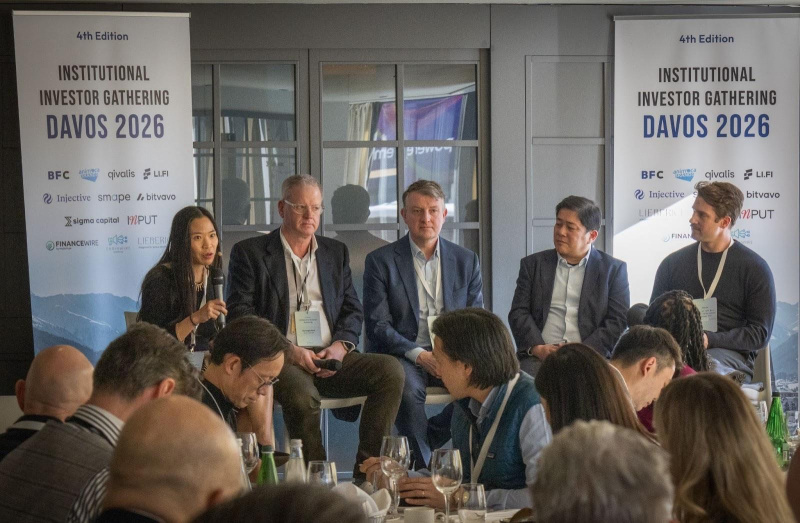 However, progress is visible. Jan Sell highlighted how much the conversation has evolved. “The fact that banks are even considering launching stablecoins is already a big step forward,” he said, pointing to Qivalis, a banking consortium issuing stablecoins. “These banks are serious.”
Regulation, however, remains the stimulating factor. Jean Medel warned of the uncertainty of the American political process. “There is concern that the US Senate will fail to pass Project Clarity and that a future administration could reverse course,” he said. At the same time, he recognized the emergence of a consensus: “Technology will always evolve faster than regulation. »
Notably, Hock added that regulators are increasingly accepting public blockchains, which is an important signal for institutional adoption.
Overall, the Davos discussions painted a clear picture: digital assets are no longer a fringe experience. This is a philosophical challenge, a regulatory test and an institutional reality unfolding in real time. The only open question is which jurisdictions – and which institutions – will act quickly enough to shape the future.
About Blockchain Founders Capital
Blockchain Founders Capital is a Germany-based early-stage venture fund focused on supporting mission-driven founders at the intersection of Web2, Web3, and digital finance. The fund has made 22 investments to date and operates under an equal partnership model, aligning long-term interests between founders and investors. BFC invests mainly in the United States and Europe.
For more information, users can visit www.bfc.vc
Contact
Director of Public Relations
Alnoura Belyalova
Global ENTRY
alnura@input.global


