





Ethereum has reclaimed the $2,250 level as the broader cryptocurrency market shows signs of a near-term bullish recovery after weeks of volatility and downward pressure. The recent rise suggests that buyers are gradually regaining control of the market, with traders closely monitoring whether ETH can maintain its momentum above this key technical level.
Beyond price action, new on-chain developments are also attracting attention in the Ethereum ecosystem. According to data from blockchain analytics platform Arkham, the Ethereum Foundation first staked ETH about three weeks ago, marking a notable change in how the organization manages some of its treasury.
Historically, the Ethereum Foundation has primarily held its assets or periodically sold a portion of its holdings to fund development and ecosystem initiatives. The decision to begin staking ETH represents a potential strategic fit, as it allows the Foundation to generate yield while simultaneously contributing to the network’s proof-of-stake security model.
This decision could also have symbolic meaning for market participants. When a central entity in the ecosystem begins to directly participate in staking, it can signal increased confidence in Ethereum’s long-term network economics.
Combined with improving price momentum, this development has added another level of interest for investors monitoring the evolving market structure of Ethereum.
Ethereum Foundation Transfers $10M in ETH, Sparking New Staking Speculation
Recent on-chain data highlighted by Arkham shows that the Ethereum Foundation has moved approximately $10 million worth of ETH to a new wallet address, sparking further speculation about the organization’s evolving treasury strategy. This move follows the Foundation’s first-ever staking activity recorded three weeks ago, suggesting that the latest transfer could potentially be linked to additional staking operations.

Although the destination address has not yet been publicly confirmed as a validator wallet, the transaction has attracted attention from the entire crypto industry. If the funds are ultimately allocated to staking, it would reinforce the idea that the Ethereum Foundation is gradually moving towards more active participation in Ethereum’s proof-of-stake economy.
For the broader ecosystem, such a decision carries significant implications. The Ethereum Foundation holds a significant amount of ETH, and decisions regarding how these assets are managed can influence both network security and market sentiment.
By staking its holdings, the Foundation would not only generate a return on its treasury, but also bring additional validators to the network, strengthening Ethereum’s decentralized security structure.
At the same time, the market is closely monitoring these transactions, as movements of large ecosystem wallets may affect investors’ expectations regarding potential sales or long-term holding strategies within the Ethereum ecosystem.
ETH Tests Key Resistance After Strong Bounce
The daily chart shows Ethereum recovering from the sharp sell-off in early February, when the price briefly fell below the $1,900 region. This decline triggered an increase in trading volume, indicating heavy market participation and likely forced liquidations on leveraged positions. After this capitulation phase, ETH began to form a base between $1,900 and $2,050, establishing a short-term accumulation zone.
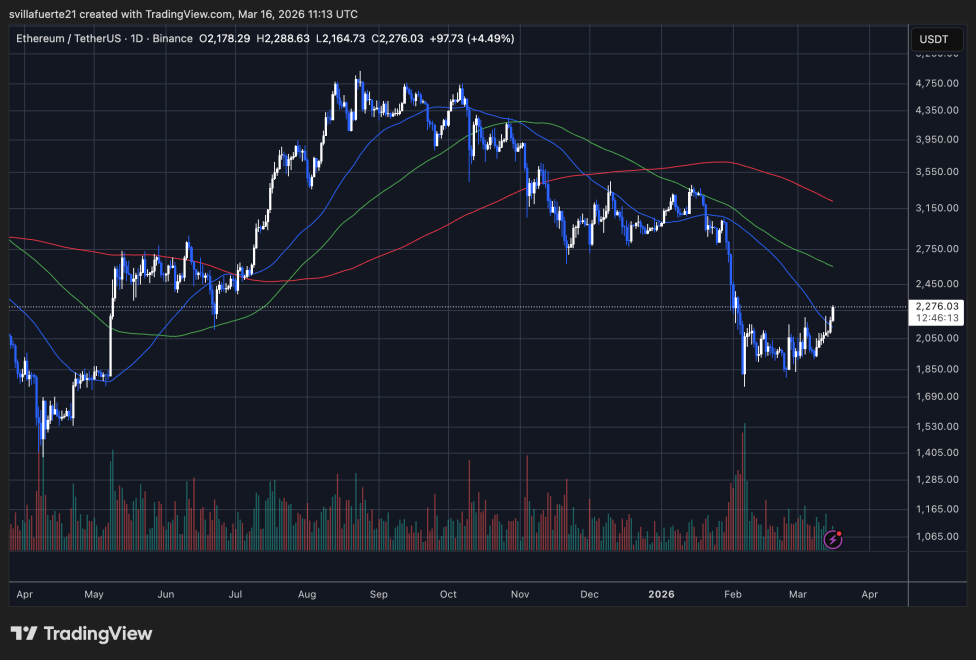
Over the past few sessions, Ethereum managed to reclaim the $2,200-$2,250 range, signaling improving short-term momentum. The latest break above local resistance suggests buyers are gradually regaining control after weeks of consolidation.
However, the broader technical structure still presents significant challenges. ETH remains below the 200-day moving average, which continues to decline and is a major dynamic resistance level around the $2,800 region. The 100-day moving average also sits above the current price, reinforcing the presence of an air supply.
From a technical perspective, the $2,300 to $2,400 area now represents the next key resistance zone. A sustained breakout above this region could open the door for a broader recovery towards the $2,600-$2,800 range, where stronger resistance had previously formed.
On the other hand, the $2,050-$2,100 area is now an important support zone. Sustaining above this level would help maintain the current recovery structure as the market attempts to rebuild bullish momentum.
Featured image from ChatGPT, chart from TradingView.com
Editorial process as Bitcoinist focuses on providing thoroughly researched, accurate and unbiased content. We follow strict sourcing standards and every page undergoes careful review by our team of top technology experts and seasoned editors. This process ensures the integrity, relevance and value of our content to our readers.


