




Ethereum (ETH) price is trading precariously at $2,060, stuck between a growing technical correction and a striking divergence in fundamental data. As the asset has recovered from the recent $1,900 low, traders face a binary risk environment: is the current consolidation a calm accumulation phase before a breakout, or a setup for a devastating breakdown?
The plan remains the same for $ETH people.
The market structure is still bearish at this stage. pic.twitter.com/Ri3RPNgEly
– Hardy (@Degen_Hardy) March 6, 2026
On-chain metrics paint a conflicting picture, with foreign exchange reserves hitting multi-year lows even as price action struggles to recover key moving averages. This disconnect suggests that while smart money may position itself for the long term, the immediate structure of the market remains fragile.
EXPLORE: Ethereum Whale unloads $543M worth of ETH, sparking concerns over risk
Ethereum Price Technical Analysis: Critical Resistance at $2,150
Ethereum is in a danger zone where the chart looks tempting to value investors, but the risks of a continuation trend are significant. The asset is currently compressing below the $2,150 resistance level, a ceiling that limited bullish momentum in early March. A rejection here would not simply signal a pause but could validate a bearish macro structure.
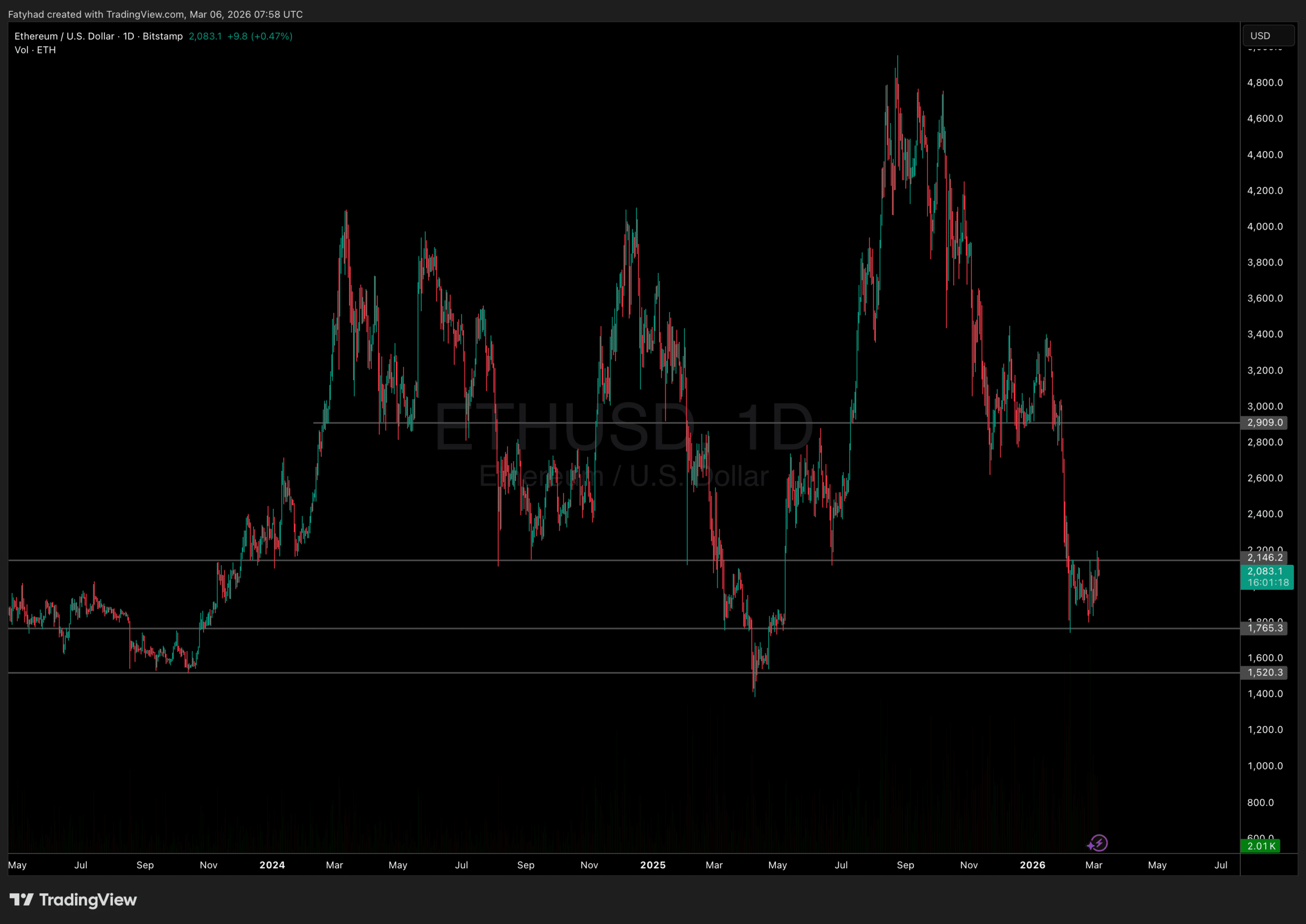
Ethereum Price Analysis Source: TradingView
Technical indicators show that Ethereum is hovering in no man’s land. The Relative Strength Index (RSI) is neutral, offering no clear directional bias, while volume has declined: a classic sign of indecision. For the bullish thesis to gain traction, ETH must close decisively above $2,150. Failing that, the price is vulnerable to a retest of the $1,984 support floor. Below that we would see $1,750.
Conversely, chart patterns suggest a potential rally to $2,500 if the bulls manage to reclaim the narrative and break through the immediate supply wall.
DISCOVER: What is the next crypto to explode in 2026?
On-chain data: supply shock and institutional exits
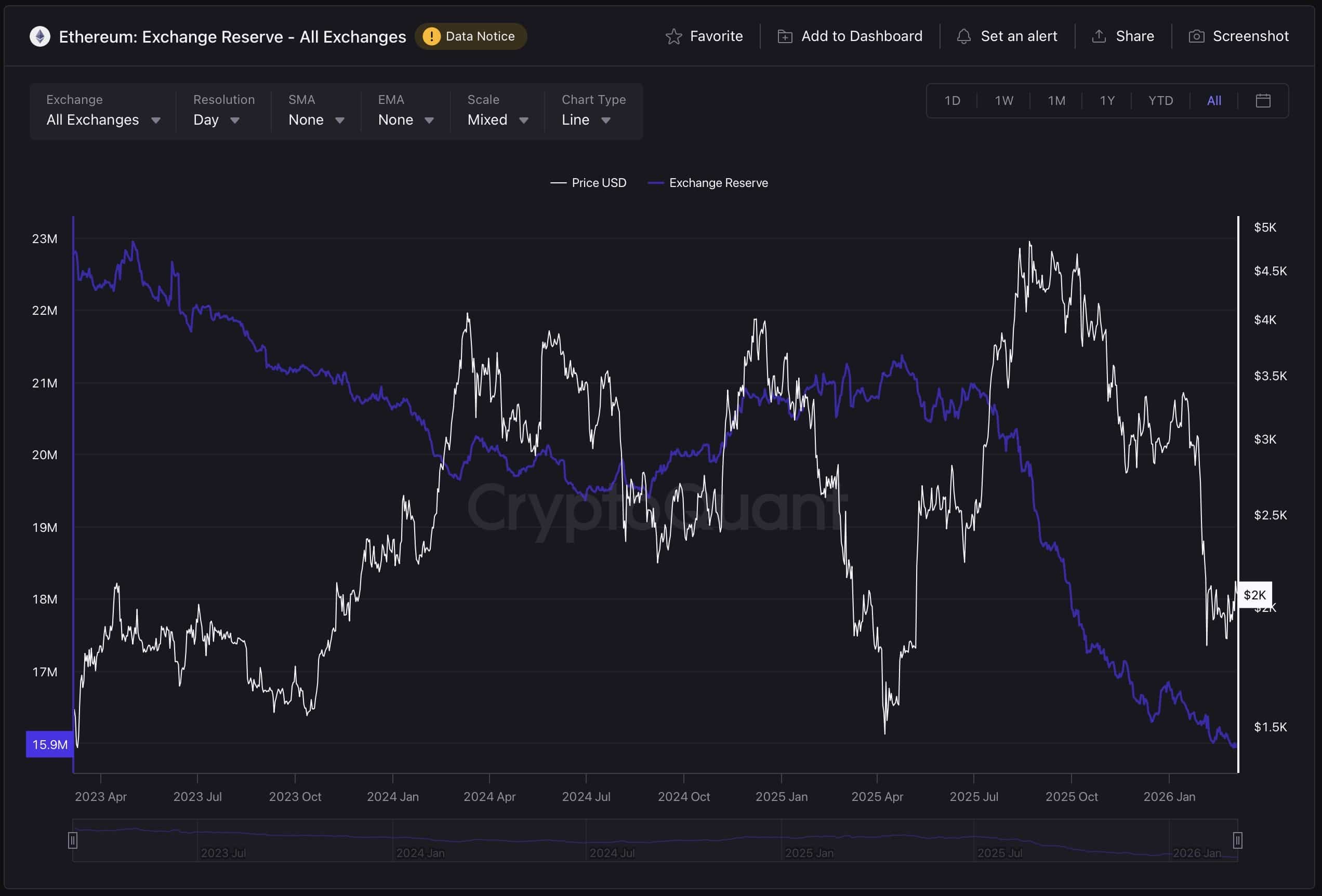
Ethereum balance on exchanges Source: CryptoQuant
Beneath the surface, on-chain data reveals a market undergoing discrete structural change. The total number of Ethereum held on exchanges has reached an all-time high, historically a bullish signal indicating a lack of immediate selling pressure from retail holders. This suggests that despite headline-grabbing fears, long-term holders are moving their assets into cold storage rather than preparing to sell them.
However, this accumulation narrative is complicated by visible institutional distribution. Recent reports highlight significant transfers from known whale wallets, including losses made by early ICO participants. This creates a divergence: retail supply is shrinking, but wealthy entities appear to be reducing their risks.
A sleeper #Ethereum The ICO wallet woke up after 10.6 years and moved 100.27 $ETH ($212,000) to a new portfolio.
Participant only invested $125 to purchase 401.1 $ETHwhich is now worth $834,000, an estimated return of 6,687x. pic.twitter.com/4eb4B37spx
– Onchain Lens (@OnchainLens) March 6, 2026
Until net inflows to derivatives exchanges calm down, the risk of volatility remains elevated.
EXPLORE: Best New Cryptocurrencies in 2026 – Watchlist of Recently Launched Coins and Investments
The bearish case: is it a “bull trap”?
The main risk facing Ethereum bulls is that the current rally is just a bull trap: a setup designed to lure retail traders ahead of a sharp decline. Analysts warn that the bounce from $1,900 lacks the impulsive volume typically seen in true trend reversals. Instead, price action has been characterized by “counterfeits” and long upper wicks, signaling that aggressive sellers are still active at higher levels.
If Ethereum price cannot reach the $2,160 level, the technical damage would be severe. Bearish projections indicate that a break below the psychological $2,000 line could open the door to lower targets near $1,750.
The lack of distinct dynamics suggests that the market is currently driven by a combination of narrative fatigue and macroeconomic constraints on liquidity rather than organic demand.
following
Disclaimer: Coinspeaker is committed to providing unbiased and transparent reporting. This article is intended to provide accurate and current information, but should not be considered financial or investment advice. Because market conditions can change quickly, we encourage you to verify the information for yourself and consult a professional before making any decisions based on this content.

Daniel Frances is a technical writer and Web3 educator specializing in macroeconomics and DeFi mechanics. Hailing from crypto since 2017, Daniel leverages his experience in on-chain analytics to write evidence-based reports and in-depth guides. He holds certifications from the Blockchain Council and is dedicated to providing “insight gain” that overcomes market hype to find real utility for blockchain.


