




Ethereum (ETH) price recently fell below $1,800 before moving aggressively towards the $2,000 level. But behind this price rise lies a worrying statistic that worries many traders: wallets holding between 100,000 and 1 million ETH have drastically reduced their reserves over the last 90 days.
Is the ETH whale signaling an immediate sell-off or is this a classic bear trap designed to rattle retail investors ahead of a major rally? Even though the charts look shaky, history suggests that struggling February often precedes a profitable March. Let’s examine the on-chain data to uncover the true underlying situation.
$ETH just closed its 6th consecutive month in the red
12 of the last 15 months ended negative
It’s persistent pressure, not noise
Either this is a deep buildup or a larger structural change. pic.twitter.com/s6jc8kTVS6
– Carl Hawley (@CarlHaawle) March 2, 2026

DISCOVER: The Best Crypto Presales to Watch Now
The signal from the whales: exodus or strategic reshuffle?
Crypto analyst Wedson notes that this cohort (large ETH holders) has significantly reduced non-exchange wallet holdings, generally indicating a lack of confidence in immediate price action.
However, on-chain analysis is rarely black and white. As private whales reduce their positions, market dynamics suggest that a complex battle between bears and bulls is unfolding. Interestingly, recent market behavior reflects past accumulation phases, in which whales trigger a short squeeze by casually shaking off weak hands before buying them back at lower prices. This “surge” of leveraged positions often sets the stage for a healthier, more sustainable rally.
Understanding these movements requires looking beyond just the gross balance of a portfolio. As we explained in our whale accumulation analysis guide, a decline in specific portfolio reserves does not always mean a stock market crash; this often signals a rotation to other assets or decentralized finance (DeFi) protocols to seek higher returns in stagnant market conditions.
DISCOVER: 14 best cryptos to buy now
Historical Cycles: Why Ethereum Price in March Might Surprise You
If you nervously watch your wallet turn red and feel a knot in your stomach, you’re definitely not alone. But it’s useful to zoom out and look at the monthly crypto cycle. Historically, February has often been a month of “devastation” for the crypto market, serving to eliminate excess leverage (borrowed money used for trading) before a quarterly reset. This creates a trend in which prices fall at the end of the first quarter, only to find a solid bottom in March.
This is where Ethereum market prediction models become optimistic. Despite the whales’ disappearance, institutional interest remains surprisingly persistent. We have seen resilience in ETH ETF inflows, with over $157 million entering the ecosystem recently. This suggests that even as private holders reduce their risks, institutional giants are happy to absorb supply near these lows. This stands in stark contrast to the volatility seen elsewhere, such as the recent Bitcoin ETF release, which signaled a temporary pause in institutional demand for the market leader.
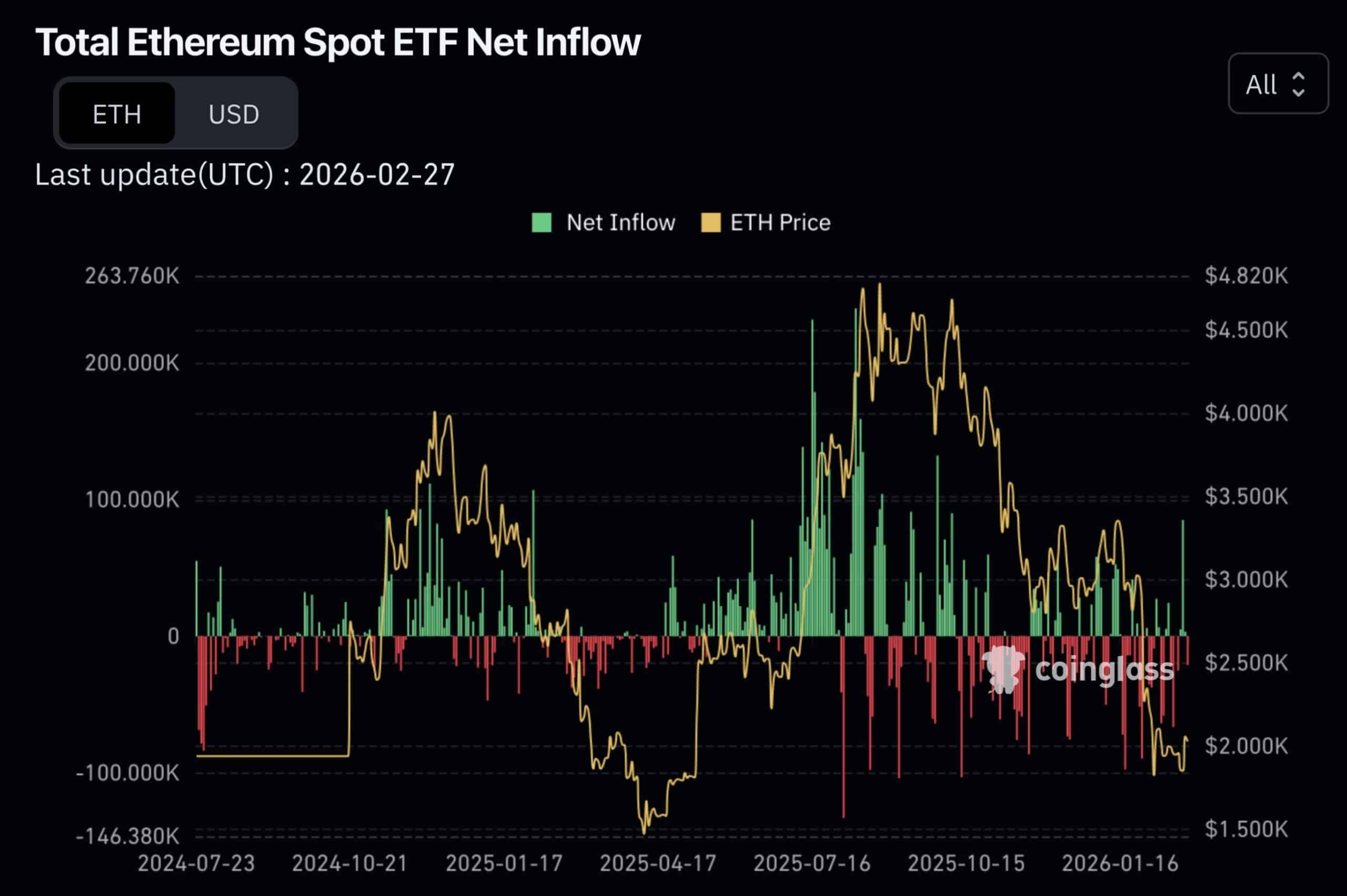
Data from recent market reports supports this view, showing that although the size of whale orders is decreasing, the volume of smaller, regular purchases is increasing. This transfer of ETH from eager whales to long-term institutional holders is the mark of a market bottom.
Ethereum Price Analysis: The $1,800 Line in the Sand
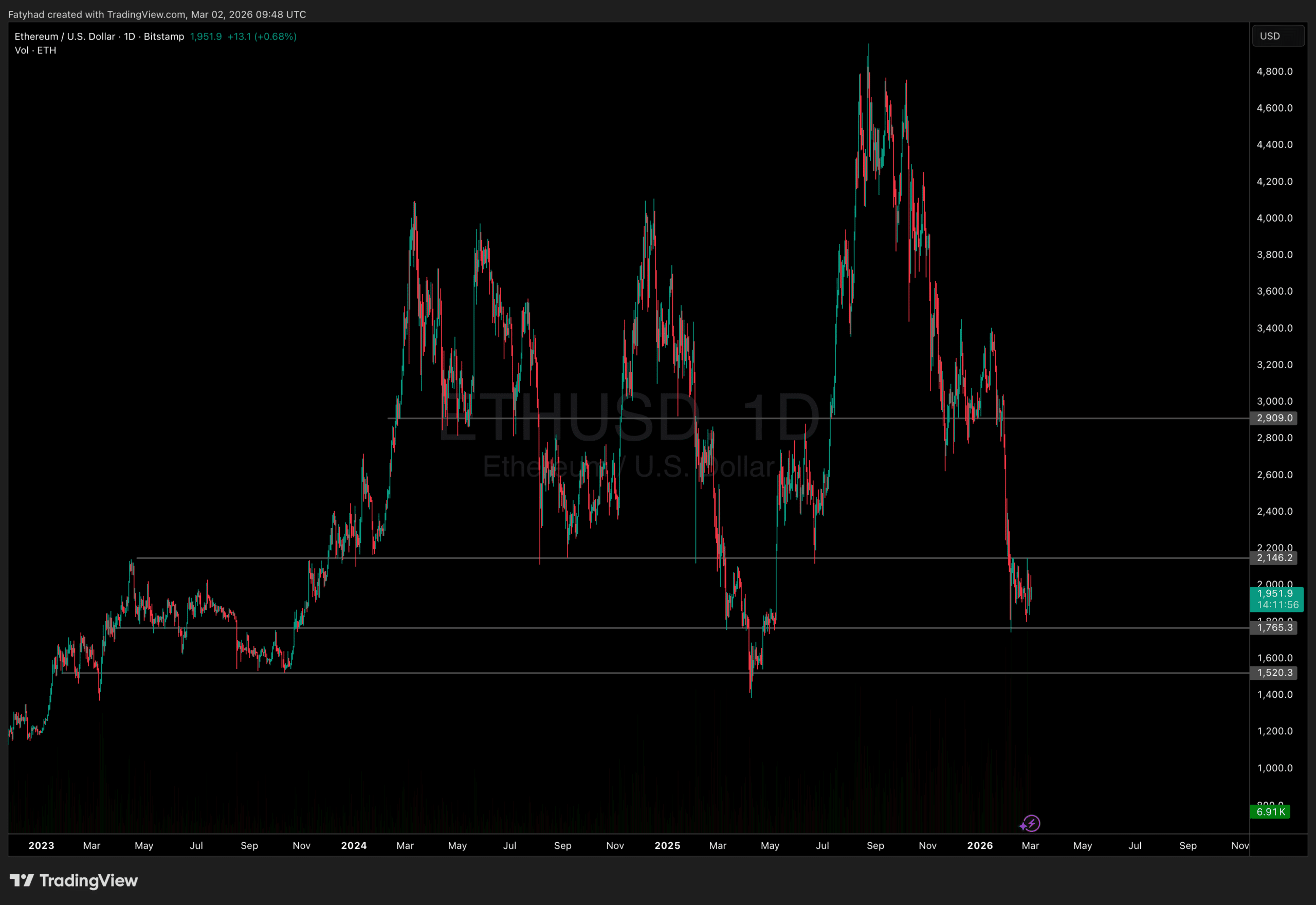
However, we cannot ignore the risks. If Ethereum fails to reestablish the $2,000 level, the next major support (a price level where buying is strong enough to stop the decline) lies at $1,800. A break below this line could trigger a cascade of automated sell orders, potentially pushing ETH towards $1,500-1,600.
DISCOVER: 5 High-Risk, High-Reward Cryptos
Key takeaways
- Divergence of whales: Large wallets (100,000 to 1 million ETH) are selling off, but $157 million in ETF inflows suggests institutions are absorbing the supply.
- Crucial support: Keep a close eye on the $1,800 level; a break below this line in the sand invalidates March’s bullish thesis.
- Seasonal model: Historical data shows that “bad Februarys” effectively eliminate leverage, often creating a highly likely recovery trend in March.
Follow 99Bitcoins on X For the latest market updates and subscribe on YouTube for daily market analysis from experts.
Afterwards Ethereum price: possible recovery in March? appeared first on 99Bitcoins.


