



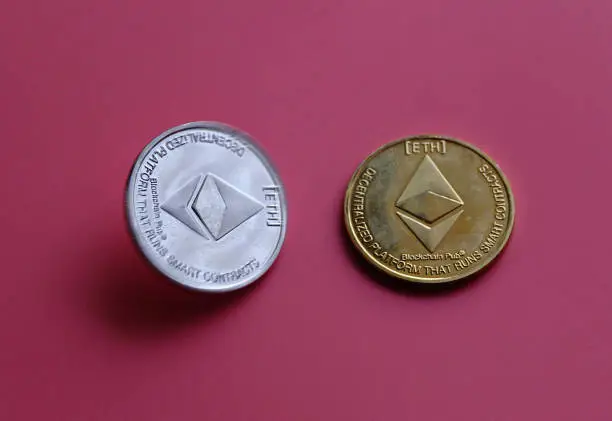
Ethereum continues to trade in a prolonged accumulation phase, signaling that the market may be approaching a crucial transition. As ETH/BTC firmly defends long-term cycle support, the structure indicates a quiet building of strength beneath the surface, often a precursor to a pivot and next decisive move.
Ethereum Inverted Monthly Chart Signals Late Accumulation
EGRAG CRYPTO has published an article showing that Ethereum’s monthly inverse chart continues to reflect a familiar cyclical pattern, albeit with a notable shift. Each market cycle follows a similar rhythm, but as the asset matures, volatility reduces and price behavior becomes more controlled.
During the first cycle, Ethereum experienced a brief accumulation phase followed by a sharp and violent fall. The second cycle extended the accumulation period, leading to a more gradual decline. Meanwhile, in the third and current cycle, the buildup lasted much longer, suggesting that any corrective phase should be relatively superficial.
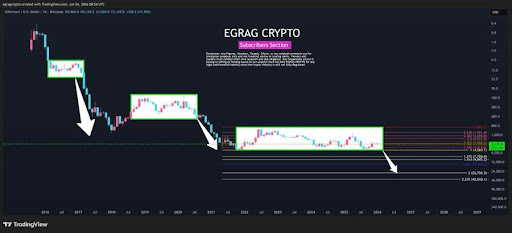
It is important to note that the chart is inverted, meaning that what appears as a decline on this view actually represents a breakout on the standard price chart. In this context, the current structure suggests that the accumulation is nearing completion and that the market could be approaching its next decisive move. This configuration suggests a less explosive movement compared to previous cycles, but more controlled.
From a price roadmap perspective, initial resistance is expected between $3,800 and $4,500. A successful swing from this zone to support could open the door to the $6,000-$7,500 region. The main risk scenario remains a deeper retest towards the $1,800-$2,200 range before a broader bullish continuation.
Why ETH/BTC is currently a key market barometer
In a recent article on ETH/BTC, CyrilXBT highlighted that this remains one of the most important charts to watch. Ethereum continues to defend 2018 cycle support, consistently posting higher lows as price action tightens just below key resistance levels. This type of squeeze often indicates that the market is preparing for a larger move rather than crashing.
Importantly, there are no signs of panic or structural damage. Sellers failed to cause a decisive breakout, while buyers continue to intervene at higher levels, reinforcing the strength of the underlying support. The longer this base holds, the more significant any breakage or rotation becomes.
At this point in the cycle, Ethereum does not need to outperform aggressively. Simply maintaining its relative value is usually enough to signal the early stages of capital turnover. Historically, lasting stability on the ETH/BTC pair tends to precede periods where Ethereum begins to take the lead once momentum fully returns.


