



Blockchain analytics firm Glassnode warned on Monday that XRP’s on-chain market structure reflects the exact cost base configuration seen ahead of a 60% price collapse in 2022.
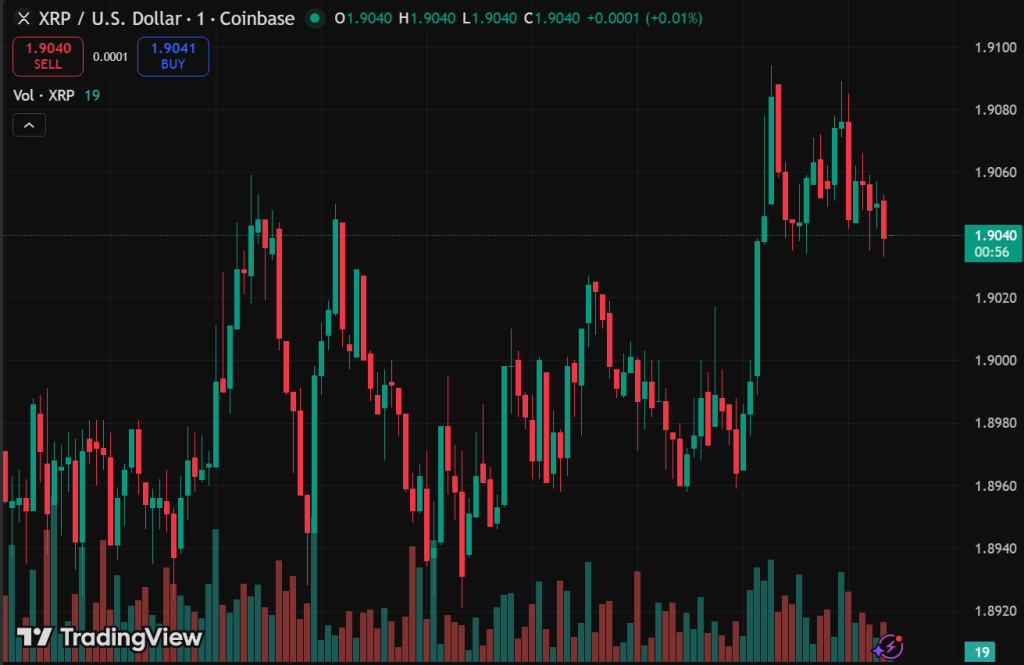
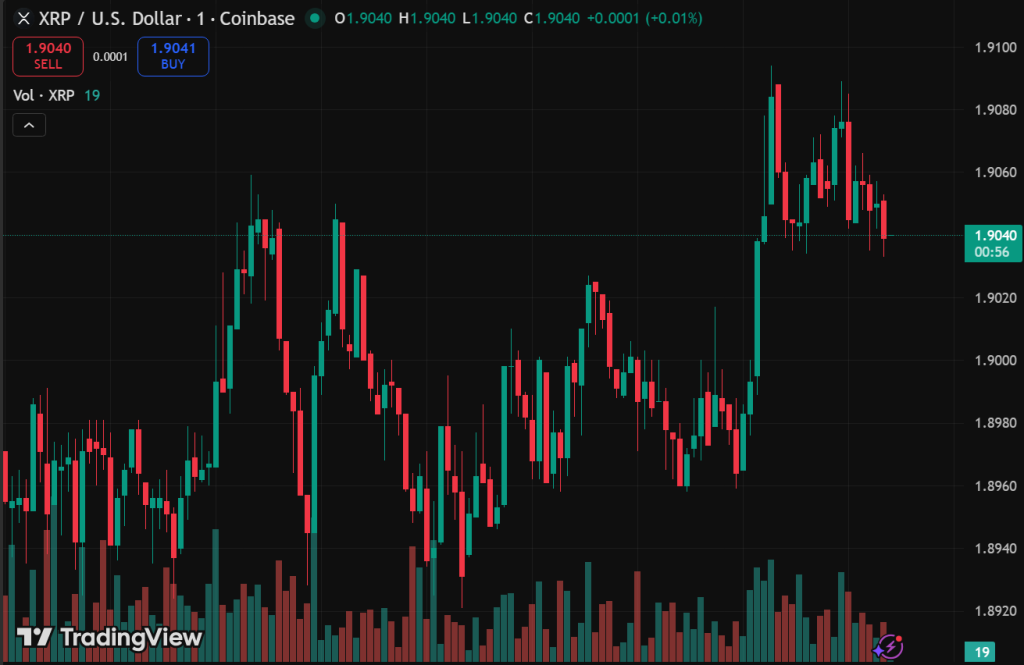
XRP is trading at $1.91, down 4.74% in the last 24 hours.
The signal is centered on the incumbent’s cost base. Active portfolios in the 1 week to 1 month window are now accumulating below the realized price of the 6 month to 12 month cohort. New buyers hold their securities at cheaper entry points, while medium-term holders remain underwater or near break-even.
This relationship creates a supply of overhead. As the spot approaches the mid-term cohort cost base, this group becomes eager to de-risk any rally. February 2022 showed the result: XRP rose from $0.60 to $0.88 in the first week, then crashed 60% to $0.30 mid-year following the Terra implosion and broader macroeconomic deterioration.
The $2 behavioral threshold
Glassnode has identified $2.00 as a level above the technical level. According to the firm’s November 2025 analysis, each retest of $2 since the start of 2025 has triggered between $500 million and $1.2 billion in weekly realized losses. The holders systematically capitulated in force in this area.
XRP surpassed $2.40 in early January, up 25% in a week. It has since fallen back below $2.00. The pattern is familiar. The token is now trading below its 20, 50, 100, and 200 day moving averages.
The counter data
Positive signs exist. The Total assets under management stand at nearly $2 billion with over 788 million XRP locked.
Exchange reserves fell from 3.76 billion XRP at the start of October 2025 to around 1.6 billion at the end of December, the lowest since 2018. ETF creations require spot purchases, which remove tokens from the available float.
However, inflows did not prevent withdrawals. XRP fell 15% in December despite record institutional buying. Trade balance data shows that 206 million XRP (around $430 million) has been transferred across platforms since the start of January, indicating their distribution.
Which offices are watching
The February 2022 analog raises a specific question: can ETF supply absorption offset the capitulation mechanisms described by Glassnode? At the time, no spot ETF products existed. Retailers have folded under macroeconomic pressure, without any institutional attempt to absorb the supply.
This cycle is structurally different. Five major issuers (Canary Capital, Bitwise, Franklin Templeton, Grayscale, 21Shares) serve pension funds and endowments. Their constant accumulation has tightened the float in circulation, and every billion dollars of inflows locks up around 500 million XRP. But the gap between medium- and short-term cost bases remains.
If $2.00 does not hold, the 6-12 month cohort enters a deeper loss zone. The $1.80 support level becomes the next support line. Failure opens the way for a decline towards $1.25, the deepest support zone identified by analysts. An extended break above $2.40 would invalidate the bearish setup and shift the focus towards the $3.00 resistance.
The article Glassnode Flags XRP Structure Matching Feb 2022 Pre-Crash Configuration appeared first on Cryptonews.


