





Bitcoin has reacted as expected the conflict between the United States and Iran, continuing a pattern that has always manifested itself in previous geopolitical escalations. Cryptocurrency prices are digesting the latest developments and analysts are comparing the current price structure to similar times in 2022 and 2023, when Bitcoin initially sold off before staging strong rallies.
War Headlines and the 20-40% Rally Model
Recent geopolitical tensions are arriving at an already fragile period for the crypto market. Bitcoin is already down 48% from its all-time high and is on track to close its fifth consecutive red monthly candle. The leading cryptocurrency also posted its worst start for the first two months of the year, down 24% since January. February closed 14.8% below its open, making it the third worst February in Bitcoin history. The only weaker Februarys were in 2025, when Bitcoin closed 17.5% below its open and in 2014, when the monthly close was 33% below its open.
Crypto analyst Ted Pillows shared a weekly chart illustrating Bitcoin’s behavior during previous diplomatic escalations. In February 2022, when Russia attacked Ukraine, Bitcoin fell before rebounding by around 40% in the months that followed. In June 2025, after Israel attacked Iran, Bitcoin was first resold, but then recovered about 25%.
Today, following the US strikes against Iran on Saturday, Bitcoin has once again reacted lower. The question raised by Pillows is whether the same pattern of post-shock recovery will occur again.
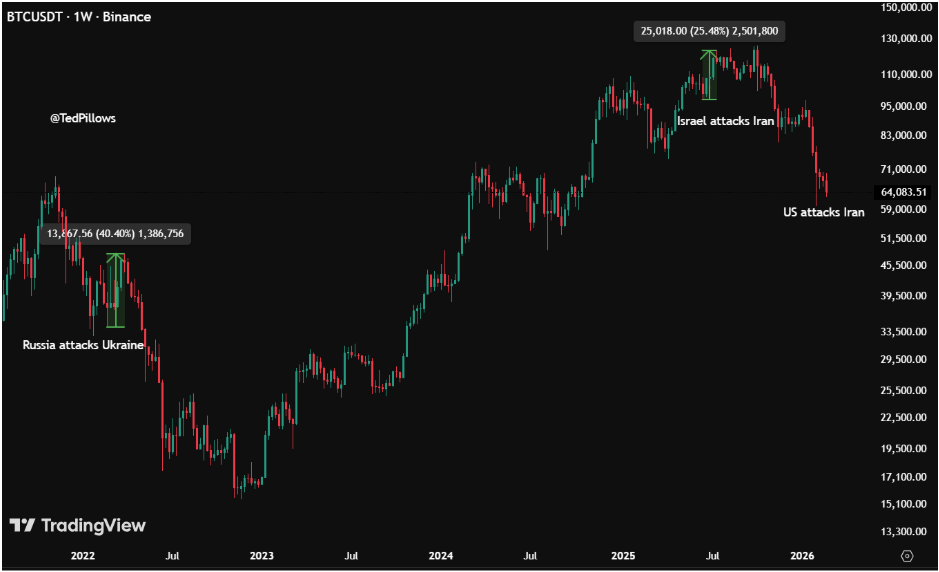
Bitcoin Price Chart. Source: @TedPillows on X
Another analyst, Sherlock, focused on short-term reactions. He noted that during previous US or Israeli strikes against Iran, Bitcoin typically fell sharply over the weekend and recovered within 24-48 hours.
In April 2024, after Iran struck Israel, Bitcoin fell 8% overnight and recovered within two days. In October 2024, a 3% drop was erased in 24 hours.
In June 2025, strikes in the United States led to a 6% decline that was recovered on Sunday, followed by a 62% rise over the next two months to reach new all-time highs in October. Interestingly, the initial decline in each case occurred before traditional financial markets reopened.
The market already profoundly corrected
It is important to note that the current setup is different from previous episodes because Bitcoin was already in a strong uptrend during the geopolitical shock of 2025. Today’s market structure is very different, because Bitcoin is in a prolonged period of decline for five months.
Bitcoin’s weekly RSI is currently at the lowest level in its history. The Fear & Greed Index has also been released extreme fear for 22 consecutive days. Furthermore, leveraged positions have been significantly reduced, with open interest in weak readings.
In previous cases, panic selling followed the geopolitical event itself. This time, however, much of the forced selling and deleveraging appears to have taken place before the strike. Based on this caveat, the weaker hands have largely disappeared and excessive debt has already been eliminated. Therefore, Bitcoin may not suffer a prolonged decline due to tensions and may stabilize sooner than in previous episodes.
Featured image from Unsplash, chart from TradingView
Editorial process as Bitcoinist focuses on providing thoroughly researched, accurate and unbiased content. We follow strict sourcing standards and every page undergoes careful review by our team of top technology experts and seasoned editors. This process ensures the integrity, relevance and value of our content to our readers.


