





As stablecoins continue to gain momentum globally, the International Monetary Fund (IMF) has called for global cooperation to avoid potential macro-financial stability risks associated with this rapidly growing sector and to transform the industry “into a force for good.”
Stable coins to drive innovation and financial inclusion
On Thursday, the IMF released a 56-page report discussing the growing influence of stablecoins, their potential use cases in traditional financial markets, and the risks associated with variable oversight of the sector.
Amid the rapid growth of the sector, the organization highlighted that the two largest stablecoins, USDT and USDC, have tripled their market capitalization since 2023, reaching a total of $260 billion. At the same time, their trading volume has increased by around 90% to reach $23 trillion in 2024, with Asia overtaking North America in terms of stable business volume.
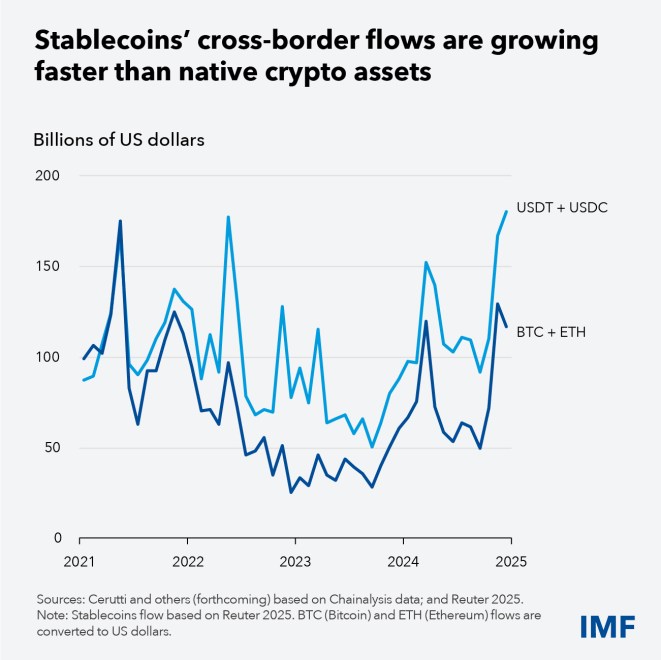
USDT and USDT cross-border flows over the years. Source: IMF
The IMF highlighted two major potential benefits of stablecoins. First, they could enable faster and cheaper cross-border payments, particularly for remittances, which can cost 20% of the amount sent and cause some delays.
However, “as a single source of information, blockchains can greatly simplify processes related to cross-border payments and reduce costs,” explain the Fund’s economists in a blog post.
Second, stablecoins could expand financial access, driving innovation by increasing competition with established payment service providers, thereby making retail digital payments more accessible to underserved customers.
They could facilitate digital payments in areas where it is costly or unprofitable for banks to serve their customers. Many developing countries are already overtaking traditional banking services with the development of mobile phones and different forms of digital and token money.
Notably, competition with already established providers could reduce costs and lead to greater product diversity, “taking advantage of synergies between digital payments and other digital services.”
IMF warns of fragmented surveillance
Despite their potential benefits, stablecoins also carry significant risks, the IMF explained, including unpegging and collapse if the underlying assets lose value or if users lose confidence in the ability to cash out. According to the report, it could also trigger forced sales of reserve assets and disrupt financial markets.
Stablecoins could also accelerate a dynamic of “currency substitution,” in which individuals and businesses abandon their domestic currency in favor of a foreign currency, such as the U.S. dollar or euro, due to instability or high inflation.
The organization noted that this dynamic diminishes the ability of a country’s central bank to control its monetary policy and serve as lender of last resort, thereby undermining the financial sovereignty of the countries involved.
Additionally, the ability to reduce cross-border friction and conduct faster, cheaper transactions could be compromised by a lack of interoperability if different networks fail to connect or are limited by different regulations and other obstacles.
“Regulation of stablecoins is in its infancy, so the ability to mitigate these risks remains uneven across countries,” the organization asserted, noting that “the IMF and Financial Stability Board have issued recommendations to guard against currency substitution, maintain controls on capital flows, address fiscal risks, ensure clear legal treatment and robust regulation, implement financial integrity standards, and strengthen global cooperation.”
As Bitcoinist reported, the FSB pledged in October to address growing threats from private financing and the growing use of stablecoins, promising to increase the global watchdog’s policy response and overhaul its surveillance system to make it more flexible and faster.
Nonetheless, major jurisdictions have taken different positions in key areas, as the IMF explained, which could lead to the exploitation of gaps between jurisdictions and issuers to locate areas where oversight is weakest.
All this highlights the need for strong international cooperation to mitigate macrofinancial risks and spillovers (…). Tokenization and stablecoins are here to stay. But their future adoption and the prospects of this technology are still largely unknown.
The organization concluded that “improving the existing global financial infrastructure may be easier than replacing it. Achieving the best possible balance will require close cooperation between policymakers, regulators and the private sector.”
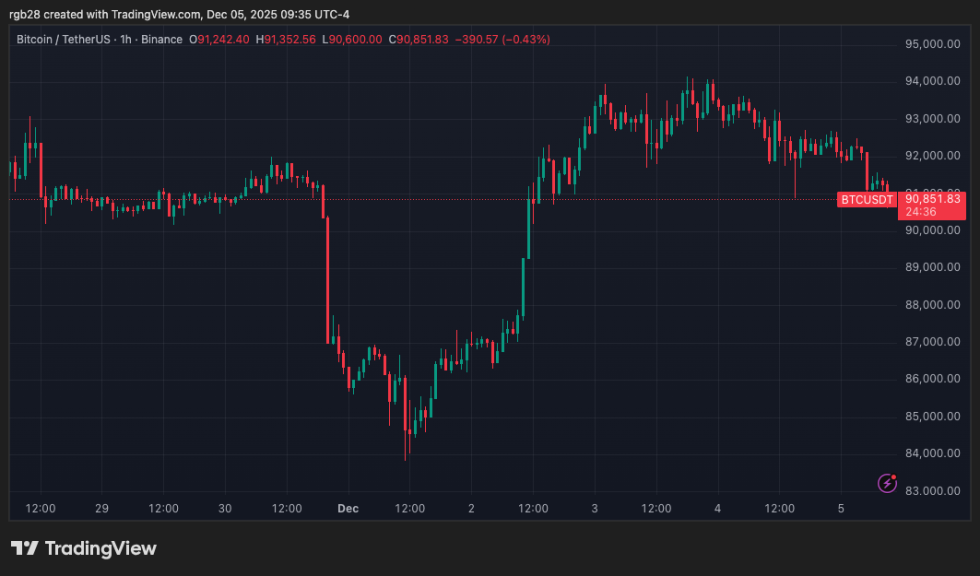
Bitcoin (BTC) trades at $90,851 in the one-week chart. Source: BTCUSDT on TradingView
Featured image from Unsplash.com, chart from TradingView.com
Editorial process as Bitcoinist focuses on providing thoroughly researched, accurate and unbiased content. We follow strict sourcing standards and every page undergoes careful review by our team of top technology experts and seasoned editors. This process ensures the integrity, relevance and value of our content to our readers.


