




Altcoin season is still not here, but traders are already watching the first signals. One sector specific to DeFi stands out more than others: decentralized exchanges. Whales bought DEX tokens during a weak market, and their price behavior shows that they can move on their own when Bitcoin slows down.
If the next altcoin season arrives, it will be one of the few groups already showing early leadership traits. Let’s understand why!
Reason 1: DEX Trading Share Continues to Increase Compared to CEX Spot and Perps
The DEX market has been gaining ground all year.
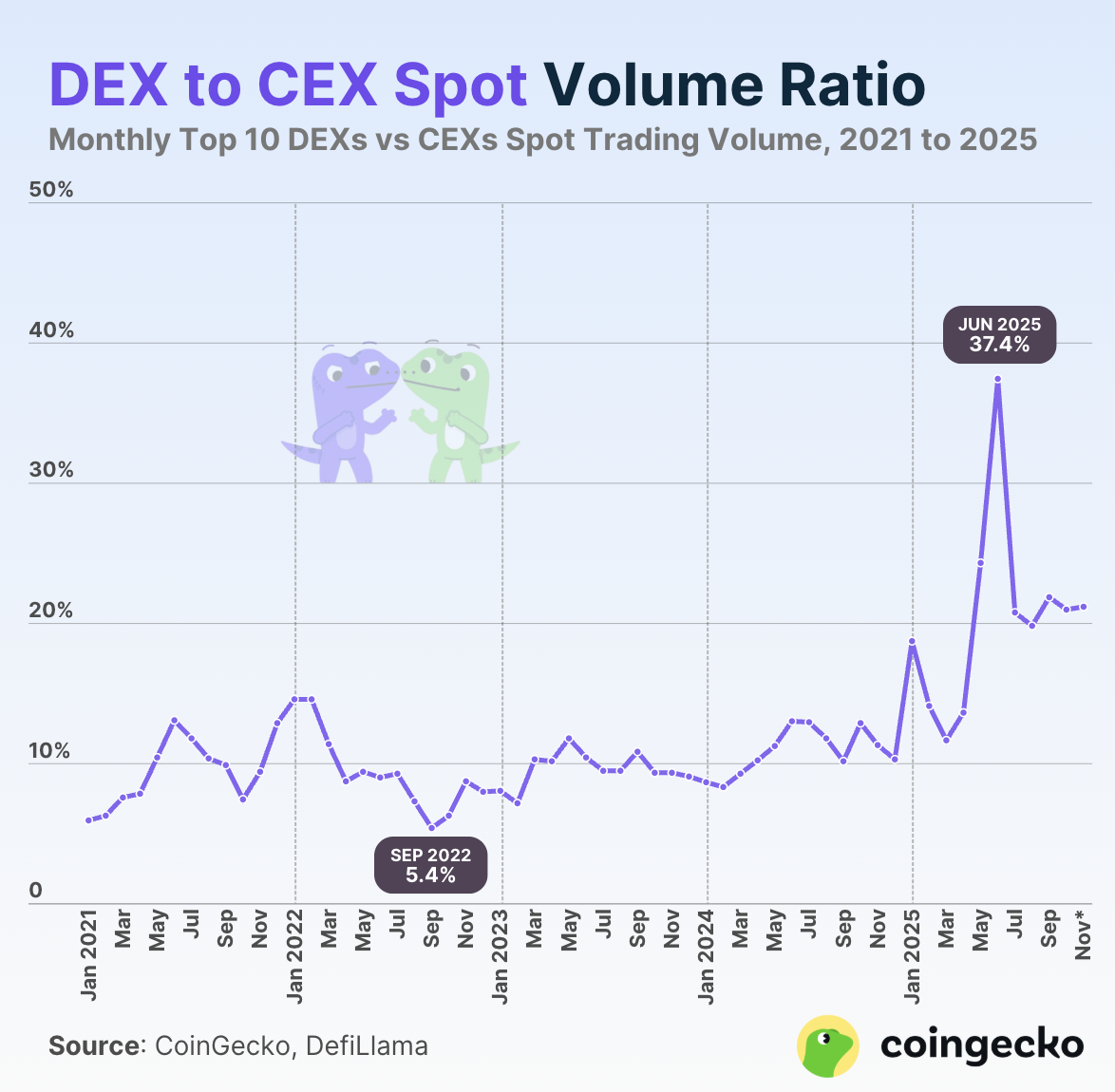
DEX spot trading volume, measured as a share of global spot volume, increased from 5.4% in September 2022 to 21.19% in November 2025. In June 2025, it peaked at 37.4%, the highest level on record. This shows that users are moving more one-off activities onto the chain, even when the overall market is weak.
Sponsored
Sponsored
Want more token information like this? Sign up for publisher Harsh Notariya’s daily crypto newsletter here.
Derivatives activity tells the same story.
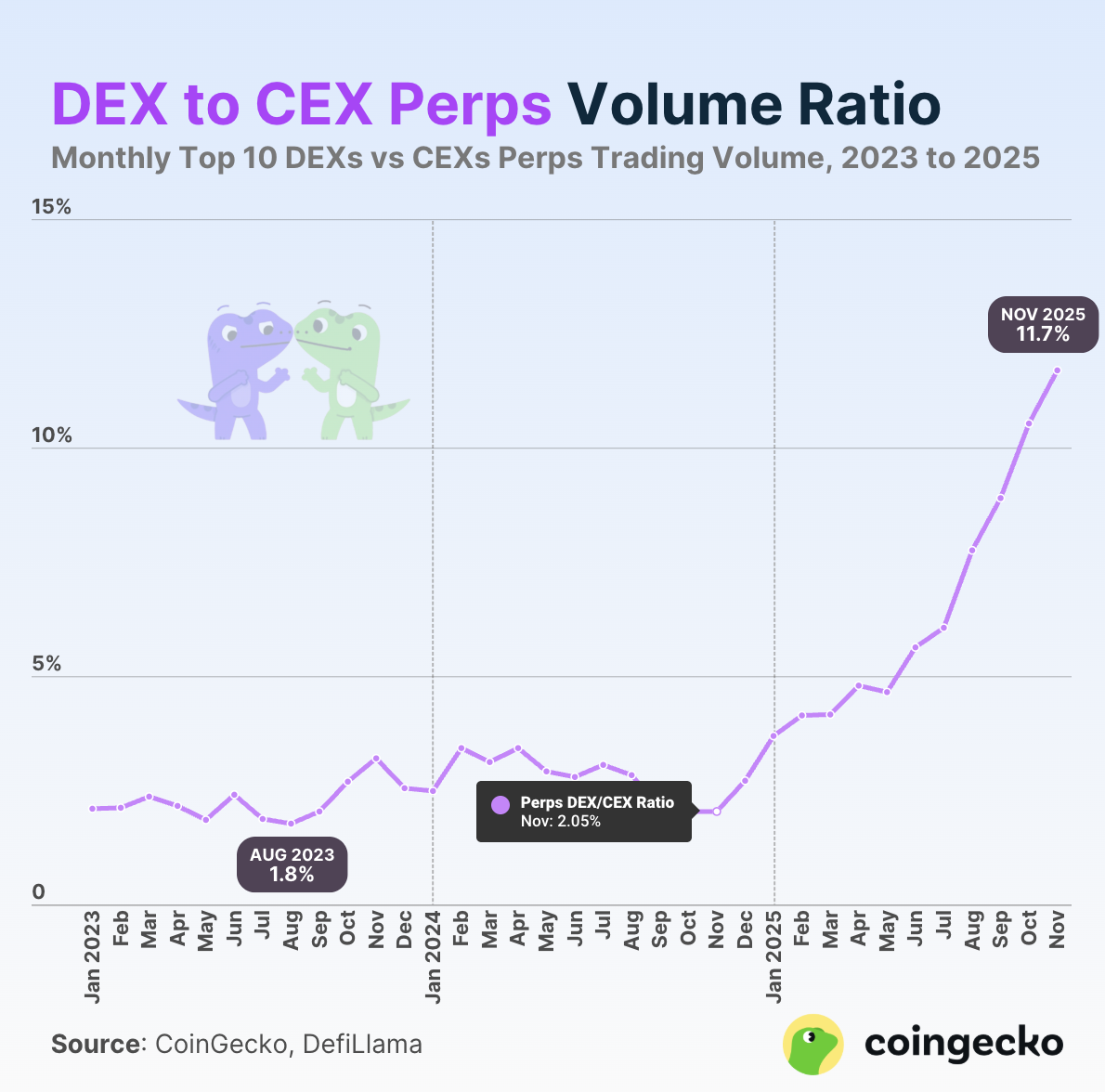
The DEX/CEX perpetual ratio increased from 2.05% in November 2024 to 11.7% this month, its highest value to date. When more traders choose on-chain perpetuals over exchange-based ones, it suggests that trust in DEX systems is increasing.
Despite this strength, the DEX token category is still down 3.9% over the past week, while CEX tokens are up by the same amount. This gap indicates undervaluation and leaves room for DEX tokens to catch up if sentiment improves.
This is why this subcategory is becoming one of the first places traders check when moving away from the majors.
Reason 2: Whales are quietly accumulating key DEX tokens
DEX-specific price action appears weak on the surface, but large wallets are buying steadily. Whales and mega-whales have been adding to major DEX names even as prices have drifted sideways to decline over the past 30 days.
Uniswap (UNI) is down 3.4% in 30 days, but mega-whales increased their holdings by 11.66%. The top 100 addresses now hold 8.98 million UNI, showing strong accumulation as exchanges continue to lose supply.
Sponsored
Sponsored

Aster (ASTER) is almost stable in 30 days, up 0.9%, but the whale signal is even stronger. Whale holdings jumped 133% and top addresses added 2.87% more supply. Retail portfolios continue to sell off (green net trade flows), but early whale positioning is usually the first sign of a sector reversal before prices follow.

PancakeSwap (CAKE) is down 5.4% in 30 days, yet the top 100 addresses (mega whales) increased their balances by 40.51%.
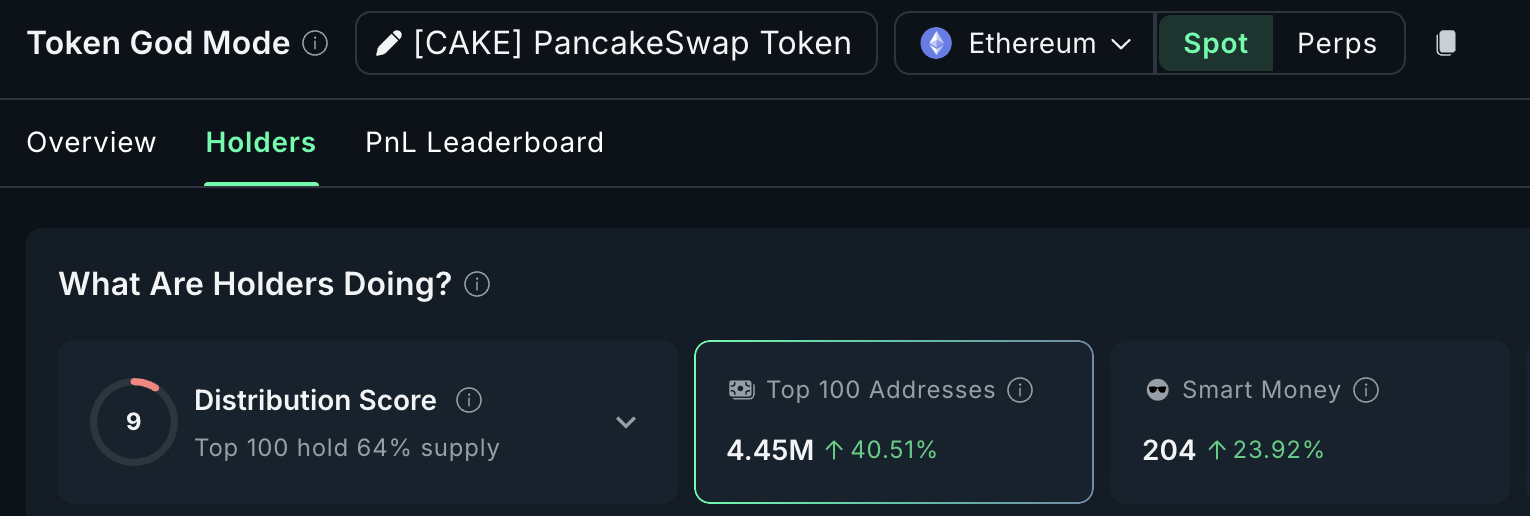
This trend in three unrelated DEX ecosystems shows a common message: large holders build exposure in times of weakness, without exiting.
When an industry shows growing on-chain adoption and growing demand for whales at the same time, it often becomes one of the first beneficiaries when risk appetite returns.
Reason 3: DEX Tokens Move Differently When Bitcoin Stalls
Monthly correlation trends show that major DEX tokens are no longer moving at the same rate as Bitcoin. Correlation here refers to the Pearson correlation coefficient, which measures how two prices move together. A negative value means they are moving in opposite directions.
Sponsored
Sponsored
UNI shows a slight negative correlation with Bitcoin at –0.13. ASTER shows a much stronger negative reading at –0.57, which is rare in a Bitcoin-led market.
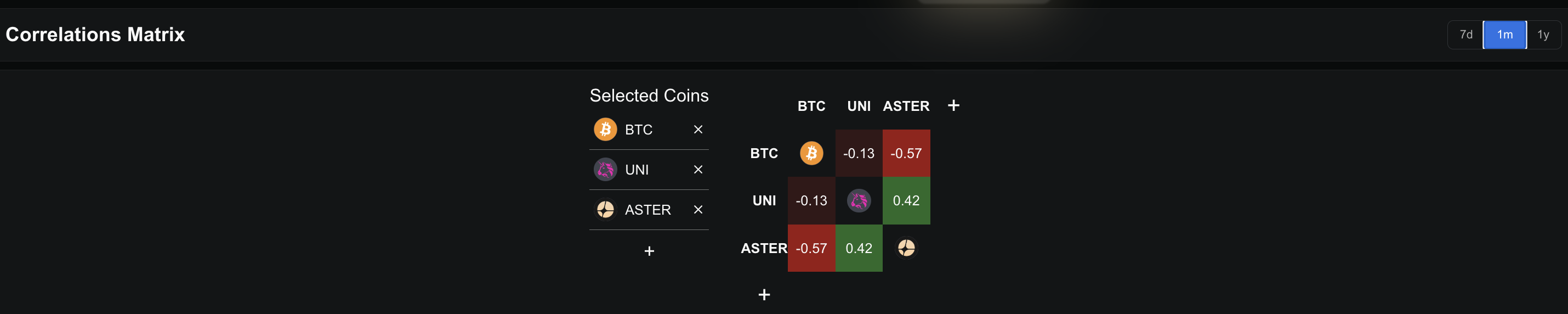
This means that when Bitcoin pulls back, these tokens often do not immediately follow. In some cases, they attract early speculative flows because they move independently. This independence is one of the first signs of altcoin rotation.
Charts support the same view.
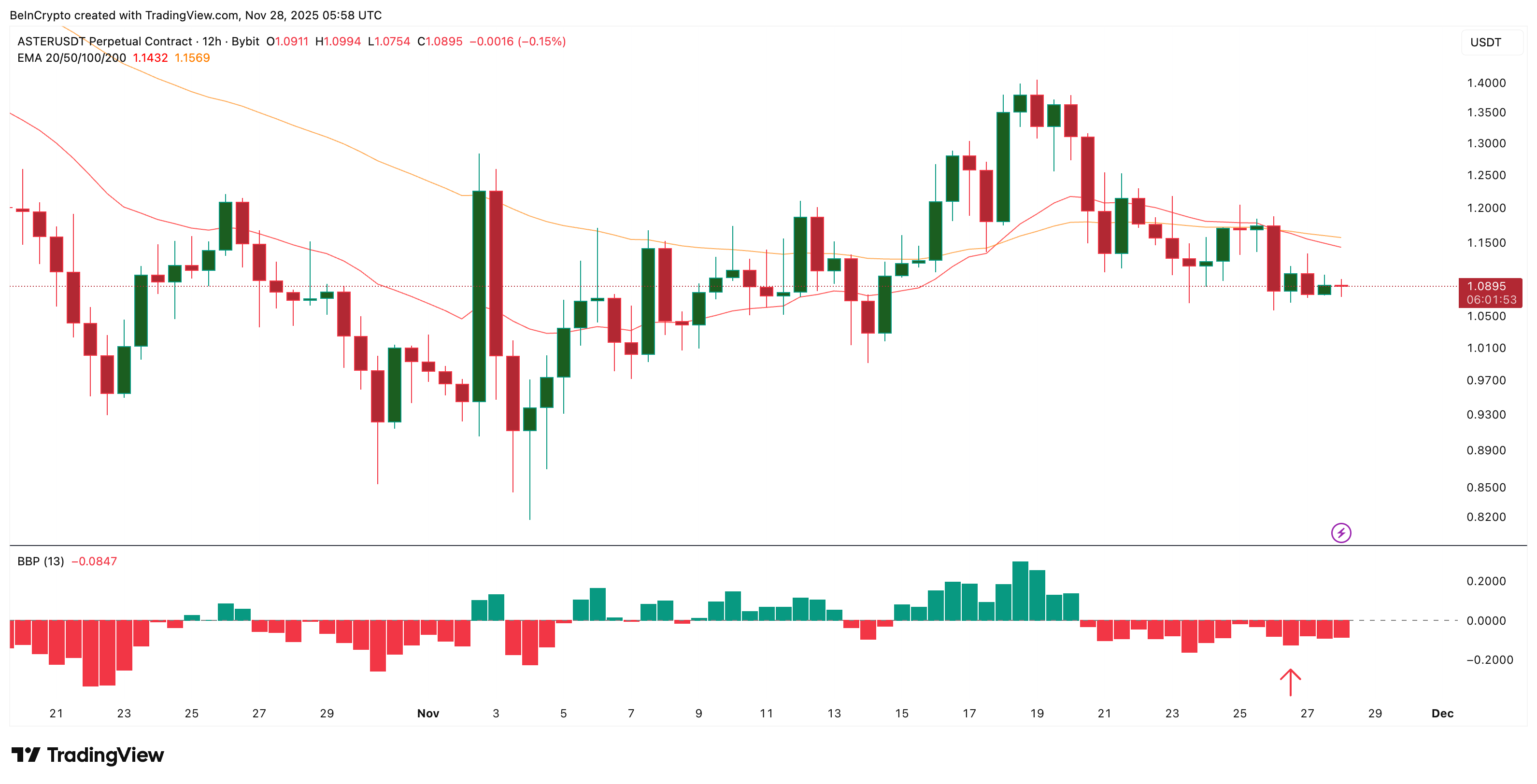
The ASTER 12-hour chart shows a completed bearish crossover between the 20- and 50-period EMA (exponential moving average), and bearish strength has diminished since. When a token with a negative BTC correlation shows weakening bearish pressure after a bearish crossover, it becomes one of the first candidates to rebound if market conditions reverse.
An EMA is a moving average that gives more weight to recent price candles.
UNI is trading inside a tight pennant with a weak upper trendline, with only two points of contact. A break above $6.91 opens $8.06 then $10.26, but it will need confirmation of its on-balance volume (OBV). The OBV measures volume flow, and without an upward change, breaks often fail. Nonetheless, the technical structure aligns with the whale accumulation and negative correlation backdrop.
Sponsored
Sponsored
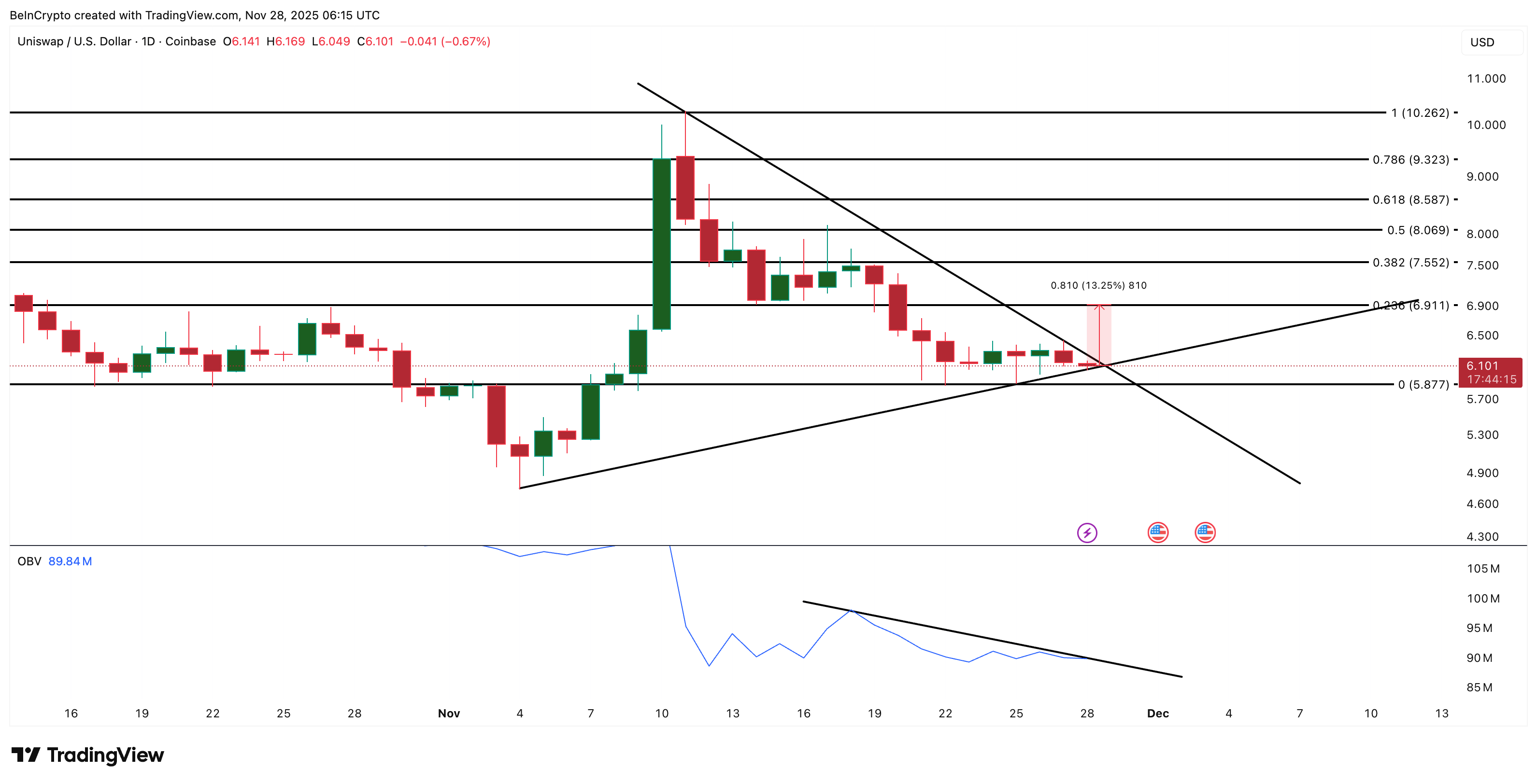
This combination – whale buying, diminishing bearish power, and price decoupling – is exactly how early altcoin leaders behave before the start of a broader cycle.
But the Altcoin season hasn’t started yet
According to BlockchainCenter’s Altcoin Season Index, the current score is 33, well below the threshold of 75 that signals a true altcoin season.
The index also shows that we are 63 days since the last altcoin season broke out and the average gap between seasons is 67 days. This places the market near the window where rotations usually begin, but not yet.
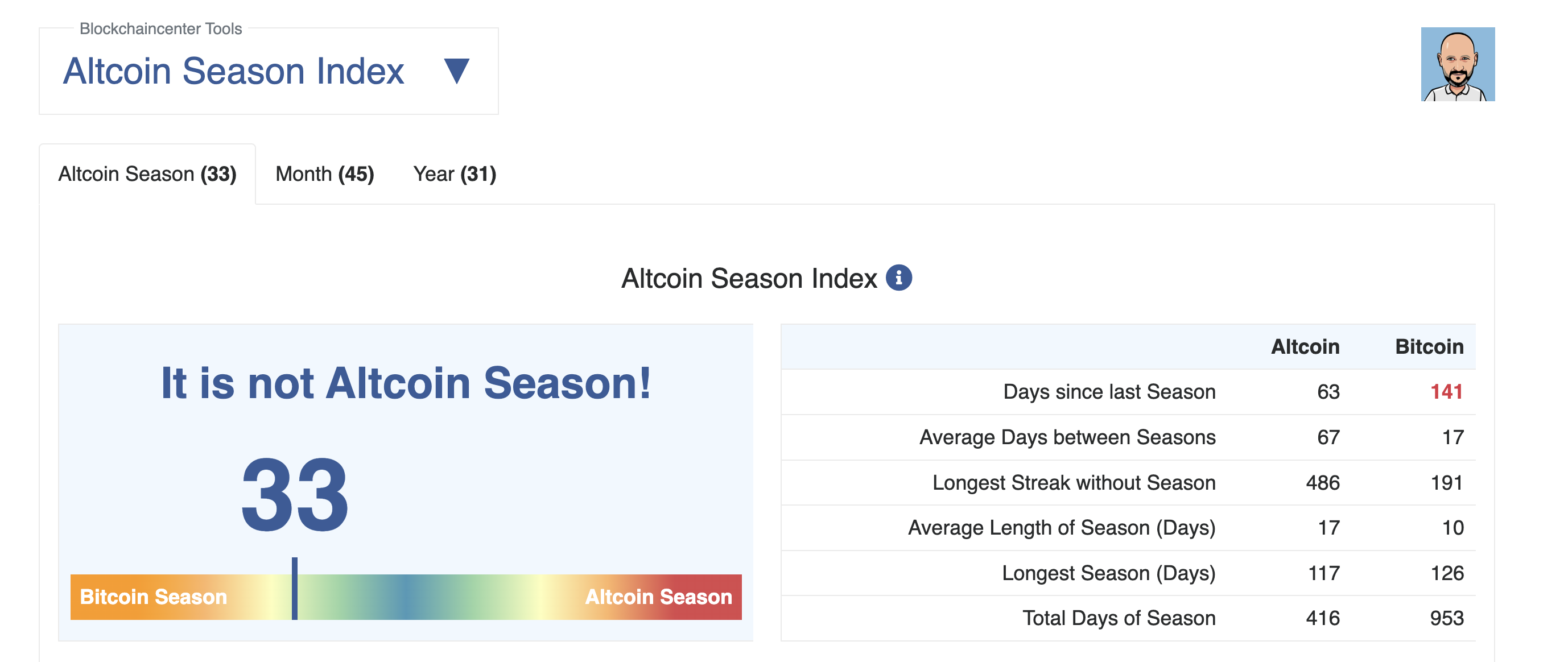
Bitcoin dominance is still high, meaning Bitcoin still controls most of the money flowing in and out of crypto. For an altcoin season to form, two things must happen together:
- The total crypto market capitalization must increase.
- Bitcoin dominance must fall at the same time.
This combination would show that traders are moving money from Bitcoin to altcoins. Only then can a sector develop sustainably.
If this shift occurs during this cycle, DEX tokens present one of the strongest arguments for leading the first wave. They are already showing increasing volume share, consistent whale demand, and negative correlation with Bitcoin – characteristics that often appear in sectors that swing first.


