



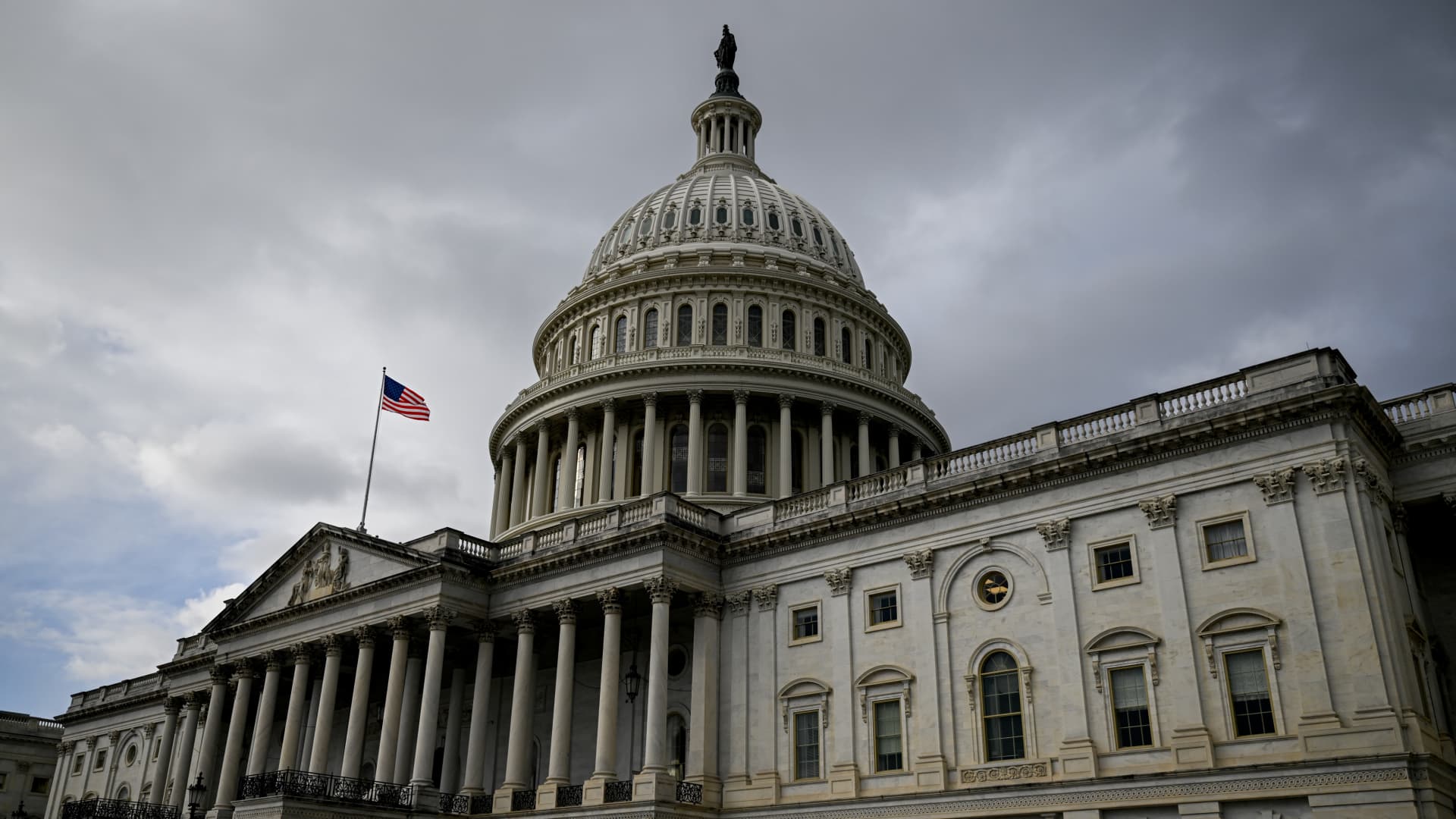
The United States Capitol in Washington, DC, United States, on Thursday, December 11, 2025.
Daniel Heuer | Bloomberg | Getty Images
Lawmakers this week plan to revisit efforts to pass a market structure bill that will determine the future of the crypto industry in the United States, restarting legislative efforts that stalled last year.
On Thursday, the Senate Agriculture and Banking committees are expected to hold hearings on their respective parts of the crypto bill, during which they could revise the text. This will lay the groundwork for establishing legislative guardrails for digital assets in the United States – a potential turning point for the crypto industry.
This is what you need to know about the Market Structure Bill and the efforts to get it passed.
The objective of the bill
The so-called Clarity Act aims to provide legislative guardrails for the multi-billion dollar crypto market and large digital asset companies – which could accelerate the adoption of blockchain technology and crypto in the United States.
It aims to clarify the roles of the Securities and Exchange Commission and the Commodities Futures Trading Commission in regulating cryptocurrencies, in addition to creating more well-defined token classifications. It also aims to set registration and compliance standards for a wide range of brokerage firms, exchanges and other crypto entities, allowing them to operate more easily in the United States.
According to Summer Mersinger, CEO of crypto trade group Blockchain Association, these safeguards could help the United States allow more digital asset companies to set up operations in the United States, boosting the crypto economy and market.
“We have seen this massive movement of businesses and activities into the country because there is a crypto-friendly administration,” Mersinger said. But without a law on market structure, “all this could disappear, especially in the event of a hostile change of administration.”
That said, the bill’s implications for digital asset companies, cryptocurrency holders, and other investors will not be 100% clear until the text of the bill is finalized.
What’s happening this week
Lawmakers will attempt to resolve three key issues this week: stablecoin rewards; the treatment of decentralized financial platforms and their developers; and the issue of preventing elected officials such as President Donald Trump from profiting from crypto projects. Trump-affiliated entities have launched both a memecoin and a non-fungible token in the past.
The stablecoin issue is “the biggest outstanding issue” for negotiations on the Hill, said Cody Carbone, CEO of crypto trade association Digital Chamber.
“Stablecoin rewards, interest, returns, whatever you want to call it, will be addressed in the bill,” Carbone said. “Both Republicans and Democrats have reached this conclusion.”
In early January, the American Bankers Association’s Community Bankers Council wrote to members of the Senate asking them to prevent companies affiliated with stablecoin issuers from offering customer rewards. The stablecoin products, they said, exploit a loophole in the stablecoin-centric Genius Act passed last year that bans dollar-pegged tokens that offer returns to holders — making for an attractive alternative to high-yield savings accounts and other traditional products.
On the DeFi front, crypto advocates are fighting to ensure that developers are not prosecuted when their technology is used for illicit activities like money laundering.
“We are very aware of how illicit financing is addressed in the bill… but we need to make sure that there are not obligations imposed on codes rather than people, or make sure that there is not an unintended way that technology is burdened in a way that it cannot comply,” Amanda Tuminelli, legal director of the DeFi Education Fund, told CNBC.
DeFi supporters also want to ensure that the Market Structure Bill contains provisions allowing individuals to keep their crypto on their own. Additionally, they want provisions of the Blockchain Regulatory Certainty Act to provide that software developers and blockchain service providers that do not control or maintain customer funds be exempt from registration as money transfer businesses.
Finally, some lawmakers like Senator Elizabeth Warren (D-Mass.) want to prevent public officials from profiting from digital asset projects while in office.
“That’s a really tough question,” Mersinger said. “They ended up bringing it up in the House because it was really difficult to put it on the bill. A lot of Democratic senators said, ‘We’re not going to get into this.'”
“Key window”
The Senate Agriculture and Banking committees are expected to release new bills on market structure, with the goal of discussing and revising the details of the bill Thursday during markup, according to Mersinger.
Later, they will join the two documents to create one big crypto invoice. This bill will go to the Senate, where discussions could take several weeks, before potentially going through the rest of the legislative process to become law.
Crypto advocates want the bill to pass before the 2026 midterm elections in case some industry allies are ousted in November and to avoid losing momentum on the Hill, Mersinger told CNBC.
“There are a lot of other priorities that Congress has on the books for this year, and so this is kind of the key window that they see to get something out of committee and have the time necessary to get it done,” Mersinger said.


