



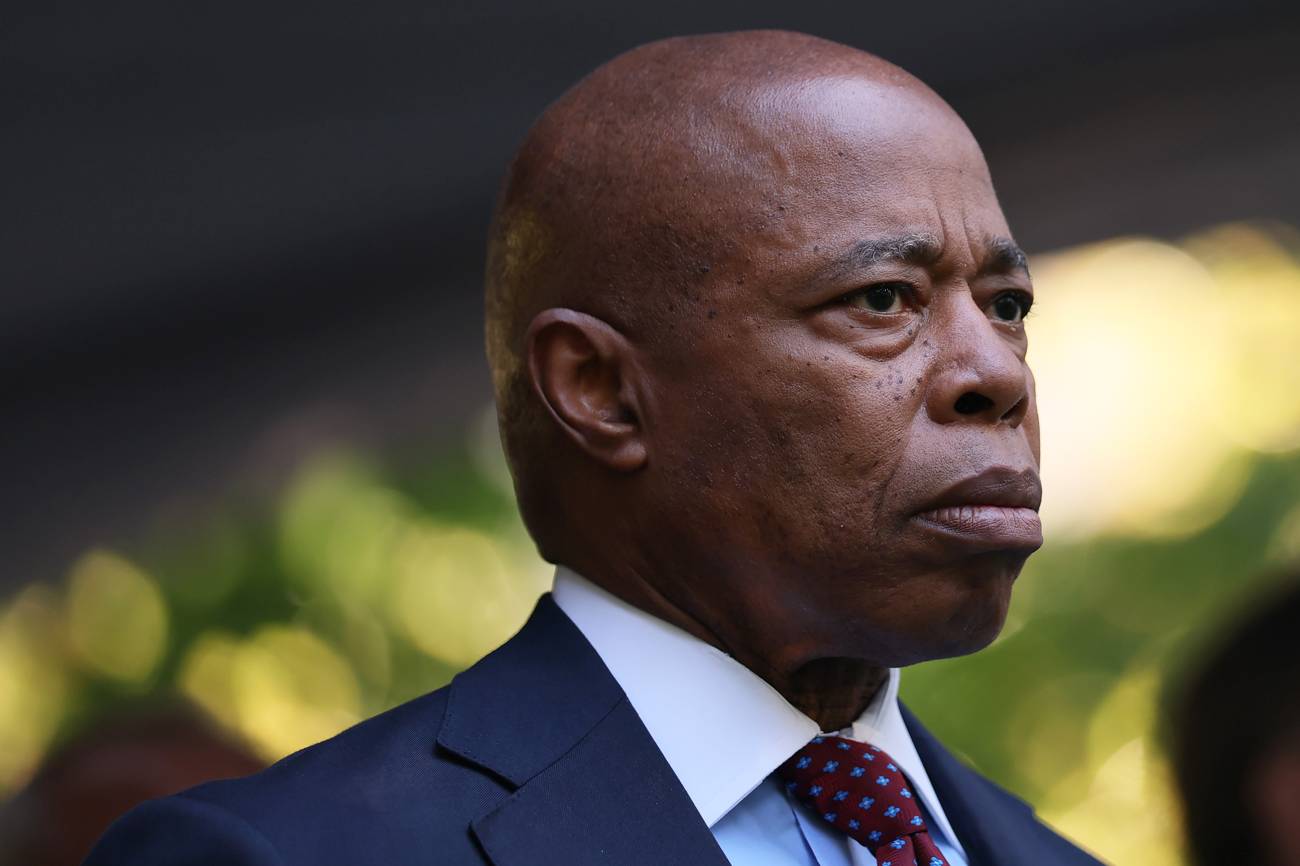
New York Mayor Eric Adams signed an executive order Tuesday creating a new Office of Digital Assets and Blockchain Technology, the latest attempt by a state or local government to capitalize on a trend accelerated by support from Washington.
The order notes that digital assets and blockchain technology, the distributed ledgers that underpin cryptocurrencies like bitcoin, have “accelerated rapidly over the past decade, driven by increased institutional adoption, regulatory evolution, and innovations in decentralized finance and tokenization.” Perhaps most notably, the passage of the GENIUS Act last July established a reliable framework for payment stablecoins, encouraging Wyoming and North Dakota to develop their own digital tokens.
To lead the new office, Adams said he would appoint Moises Rendon, who has served for more than a year and a half as a digital asset and blockchain policy advisor to the city’s Office of Technology and Innovation. In his new role, Rendon continues to report to the city’s chief technology officer, Matthew Fraser.
The new office’s primary responsibility, according to the order, is to support the growth of the cryptocurrency and blockchain industry, thereby making New York a “hub” for these technologies. The office is also responsible for educating the public and encouraging responsible use of digital assets.
The order’s emphasis on economic development aligns with the analyzes of several cryptocurrency experts interviewed by this publication. Bill Maurer, a cultural anthropologist at the University of California, Irvine who studies the technologies behind financial exchange, said many digital currencies, like the one Wyoming launched in August, are not useful and only serve to signal to private industry that regulations will be friendly to them.
Adams’ interest in cryptocurrency technologies is not new. In 2022, he repeatedly boasted to the press that he would receive his first paychecks in Bitcoin, only to run into legal issues that forced him to accept a portion of his $258,750 annual salary in U.S. dollars and then convert it to Bitcoin immediately afterward.
This year, Texas created not a digital assets office but a statewide cryptocurrency reserve, a $10 million investment that the state legally cannot cash out, seen largely as a marketing push hoped to attract the attention of the fintech industry.
Several cities have tinkered with accepting cryptocurrency payments for various taxes and fees, including Detroit, which had planned to begin accepting such payments this summer. As in New York, publicity for the program focused largely on economic development. Detroit Mayor Mike Duggan said last November, when announcing the program, that “Detroit is building a technology-friendly environment that empowers residents and entrepreneurs.”
The Colorado Department of Revenue has allowed residents to pay their taxes using cryptocurrency since September 2022, but has only received a few dozen such payments, totaling less than $50,000, Colorado Newsline reported last April.


