



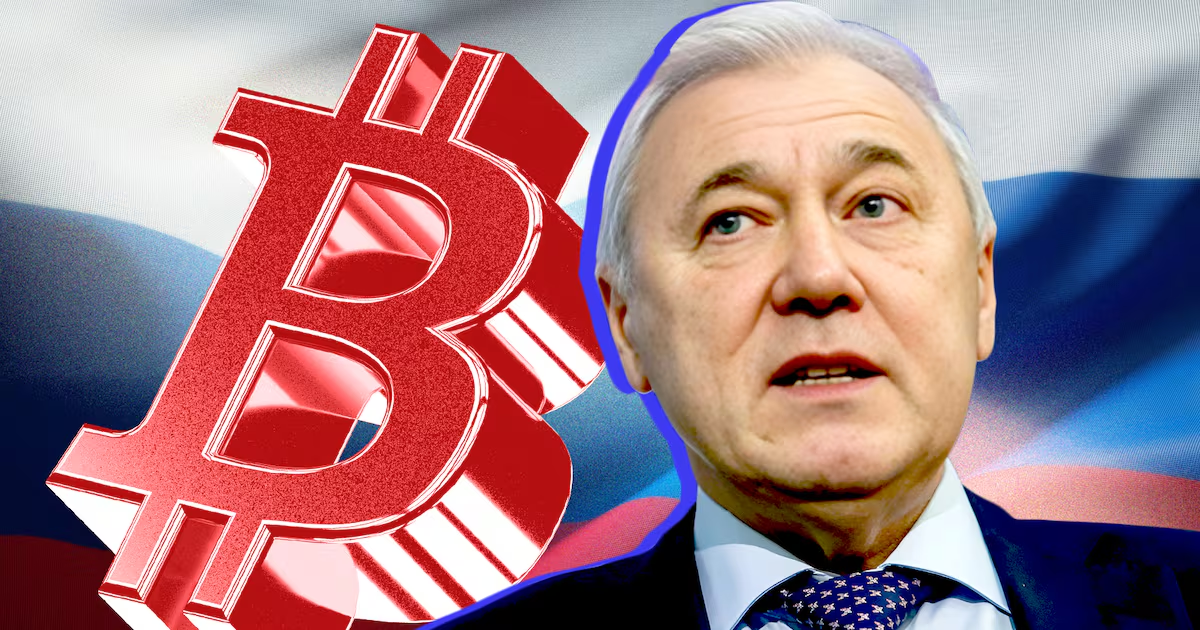
- Cryptocurrency purchases by retail investors will be capped at $4,000 per year.
- New rules will come into force in 2027, the top lawmaker said.
- The central bank will decide which coins investors can buy, the expert explains.
Moscow will roll out much-anticipated Russian crypto regulations in July, allowing retail and institutional investors to buy Bitcoin by mid-2027, according to the chief architect of a new financial law.
A comprehensive legislative framework will be ready for a vote by Duma deputies at the end of June, Anatoly Aksakov, head of the State Duma’s financial markets committee, said at the Russian press conference. Parliamentary Gazette.
The law will include regulations for crypto exchanges, which currently operate in a quasi-legal gray zone, Aksakov said. Under the law, unregistered cryptocurrency exchange operators could face fines or jail time, similar to Russia’s laws on illegal banking activities.
Assuming lawmakers approve the bill, it will take effect on July 1, 2027, Aksakov said.
Cryptocurrency is playing an increasingly important role in Russia, which has forced the crypto-skeptical central bank to make an about-face.
Major banks envision a future in which crypto gives citizens more investment options, while Russian traders want to use crypto to conduct cross-border transactions without dollars.
Deployment of regulations
Russian crypto regulation has been stuck for years, lagging behind much of the rest of the world due to a long-running impasse between the central bank and the finance ministry.
The ministry has advocated regulating and taxing cryptocurrency trading, while the bank has called for a China-style ban. The bank plans to unveil the digital ruble, its central bank digital currency, nationwide in September this year.
But the evolution of digital finance and the realities of sanctions regimes led by the United States, European Union and United Kingdom have left Russia excluded from dollar-denominated trade. Crypto has allowed businesses to circumvent these sanctions, leading the central bank to abandon its anti-crypto stance.
Commercial banks also say their customers want access to “real cryptocurrencies” rather than the derivatives products they currently offer.
Aksakov said retail investors will have to pass an eligibility test before they can trade cryptocurrencies. Lawmakers also discussed imposing a $4,000 annual cap on retail investors’ cryptocurrency purchases.
Experts say the new law will limit the types of cryptocurrencies that retail investors can purchase.
“The central bank will most likely compile a list of the five or ten most capitalized cryptocurrencies on major crypto exchanges,” said Alexandra Fedotova, lawyer at law firm White Stone Consulting. Parliamentary Gazette.
“This list will definitely include Bitcoin and Ethereum. Given their popularity in Russia, it could also include Solana and Toncoin.”
Only “qualified investors” will be able to buy or sell coins that are not on the central bank’s list, Fedotova said.
The lawyer also said she expected policymakers to “select stablecoins as a tool for foreign economic activity.”
She said the Tether-issued USDT coin, which is pegged 1:1 to the US dollar, “will become a digital dollar for businesses, with purchases permitted only through licensed brokerages.”
Tim Alper is a news correspondent at DL News. Do you have any advice? Email to tdalper@dlnews.com.


