



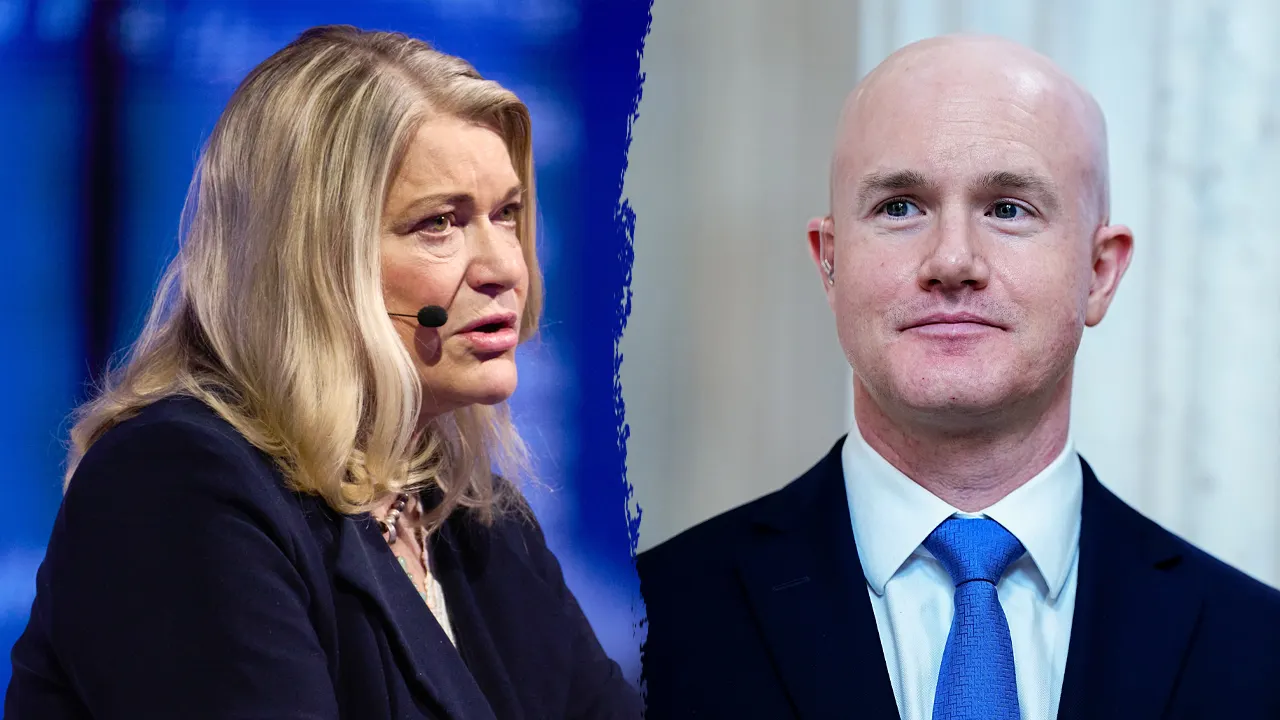
Fox News Chief Congressional Correspondent Chad Pergram has the latest on delays to a crypto bill on Capitol Hill in “Special Report.”
It was a mega-bill.
About megabytes.
And megadollars.
But hacked – lack of consensus.
The Senate Banking Committee canceled a meeting scheduled for last Thursday to draft a bill establishing market rules for cryptocurrencies and other digital assets. It was a highly anticipated session for a bill that lawmakers, their aides and lobbyists have worked for — and against — for years.
US FACES GREAT POWER CRISIS DRIVE BY EXPLOSIVE GROWTH OF AI, CEO WARNS
But the glitch in the Congressional matrix has blocked the legislation.
This was the legislative version of Control+F7.
“It was a big blow,” lamented Sen. Cynthia Lummis, R-Wyo., one of the staunchest cryptocurrency advocates in Congress. “I feel a little like Flat Stanley after he got run over by the Mack Truck.”
The Senate tried to sneak into crypto.
But everything went wrong.
A key industry player has slammed the legislation.

The crypto market collapsed in October as billions were wiped out in massive liquidations of leveraged trades. (Silas Stein/alliance photo via Getty Images / Getty Images)
“We would rather have no bill than a bad bill,” Coinbase CEO Brian Armstrong wrote on social media.
Armstrong later appeared on Capitol Hill after the Banking Committee interrupted the hearing to expand on his statement.
“I felt a responsibility to speak on behalf of our customers and the 52 million Americans who use crypto and say that the current draft would be much worse for them. I felt obligated to stand up for the customers. But I defer to the Senate, procedurally, on what happens next and in what order,” Armstrong said.
There is a conflict between supporters of cryptocurrencies and some players in the banking sector. Banks fear digital assets known as stablecoins could steal their business. The value of stablecoins is linked to other fixed assets, such as gold, the dollar or the euro. Congress approved and President Trump signed the GENIUS Act last year. This measure established regulations for stablecoins. However, a provision in the legislation allows certain stablecoin holders to earn “rewards” based on the asset’s performance.
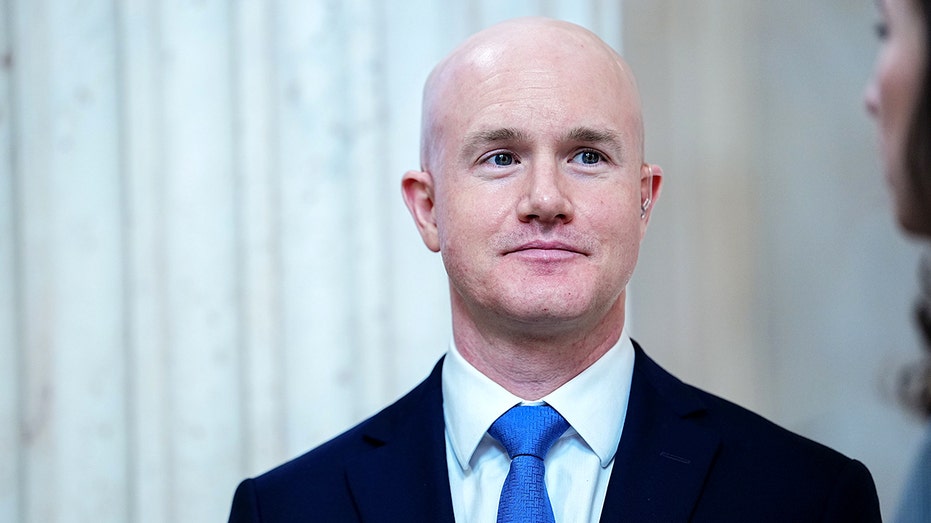
Brian Armstrong, CEO of Coinbase Global Inc., during a television interview on Capitol Hill in Washington, DC, U.S., Thursday, January 15, 2026. The Senate Banking Committee delayed its discussion of a digital assets bill amid debate. (Aaron Schwartz/Bloomberg via Getty Images)
These rewards are essentially “interest”. And the returns could be higher than what an investor could earn on an interest-bearing checking or savings account at a conventional bank. Some in the banking industry have been pushing lawmakers to remove this provision from the law – even though the president just signed it.
TRUMP SAYS HE WILL CONTINUE LAWSUIT OF JPMORGAN FOR “INCORRECT” DEBANCING AFTER JANUARY 6
These demands upset some members of the Banking Committee. Senator Bernie Moreno, Republican of Ohio, suggested that old-fashioned banking rules were lagging behind the digital age.
“They need to reach consensus with the innovation community. If they can’t, then they will have to live with the status quo,” Moreno said.
It is worth noting that cryptocurrency played a role in Moreno’s election in 2024. Moreno defeated former Sen. Sherrod Brown, D-Ohio. Brown chaired the banking committee. Crypto-backed superPACs have invested $40 million in the Moreno/Brown race in hopes of defeating the banking committee chairman. Brown harbored reservations about crypto and opposed legislation pushed by the industry. Moreno’s victory is perhaps the crypto lobby’s most successful foray into electoral politics.
Either way, crypto legislation is on hold. A source close to the process called it “complicated.” Sen. Thom Tillis, R-N.C., who is retiring, predicted the panel would hold a successful review of crypto legislation “in the first quarter of this year.” Lummis is also retiring early next year. And if nothing happens soon, it’s possible that the Wyoming Republican will leave the Senate without action on her signature issue.
“What this does is reset the clock a little bit for me,” Lummis said of canceling the committee. “I still have 11 months to work on this and make it and improve it.”
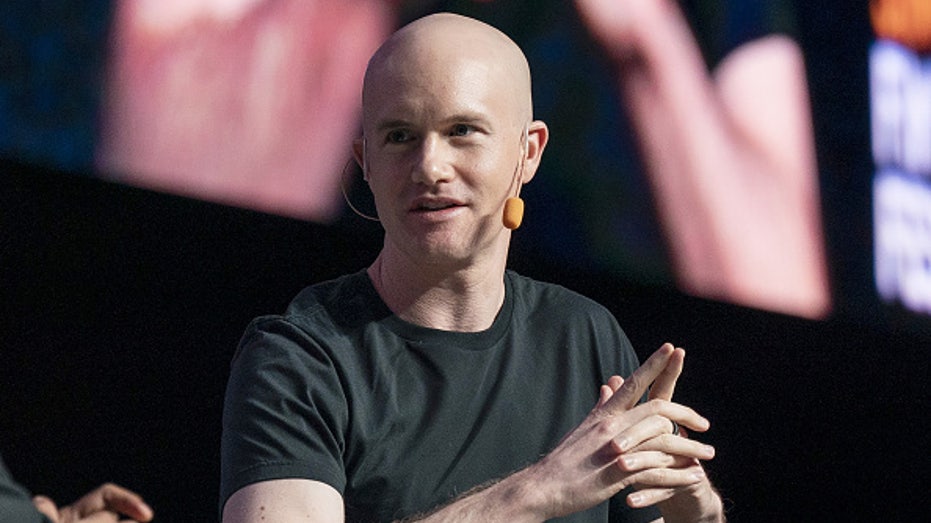
Brian Armstrong, co-founder and CEO of Coinbase Inc., speaks at the Singapore Fintech Festival, in Singapore, Friday, November 4, 2022. (Bryan van der Beek/Bloomberg via Getty Images)
It’s only January. But the timing of the midterm elections already poses a threat, as interested parties have worked for years on this bill – only to end up with a postponed session to craft the bill.
“What does that matter? It’s still two years of the United States leading the way in terms of the crypto market globally. And it’s really important for American consumers, the American economy, our national security, that the United States is the dominant crypto market,” Peter Smith, CEO of the Blockchain Association, said on FOX Business. “If this doesn’t pass now – and we’ve been working on this for about a year and a half now – it will cause a significant delay after the midterm elections. That means, in effect, two more years of delay.”
Lawmakers tracking crypto regulation fear the U.S. is falling behind.
“We want to be the center of the global economy for the next generation. We won’t achieve that if we don’t get it right,” said Rep. William Timmons, R-S.C.
Timmons suggested that cryptocurrency would be a “very disruptive technology” that would “change everything about our financial system.” Timmons says “tens of billions of dollars will come back to the United States” if Congress establishes the right framework. Otherwise, everything crypto related could be sent overseas. This threatens the American economy and the American banking system.
WARREN LAUNCHES INVESTIGATION OF BIG BANKS INTO TRUMP’S OIL SALES TO VENEZUELA
“People should care about this, because if we don’t do this right, it could destabilize their traditional community banking system,” Tillis said, adding that the United States is “the gold standard” in global banking.
“If we want to continue to do this, then we also need to get crypto right because it is undoubtedly part of the future of leading banking systems,” Tillis said.
But some want to phase out cryptocurrencies altogether.
“The great thing about crypto — and they made it clear in the name — is that it’s literally dark money,” said Rep. Brad Sherman, Democrat of California.
He argues that crypto is a haven for crime and tax evasion.
An American flag flies in front of the dome of the U.S. Capitol on December 16, 2019 in Washington, DC. (Photo by Samuel Corum/Getty Images)
“Obviously we’d be better off without it. Not all inventions are actually useful,” Sherman said.
But House Financial Services Committee Chairman French Hill, R-Ark., says the technology behind cryptocurrencies makes them easier to track. This makes it more difficult to use it for criminal purposes.
“The preferred method of transaction for criminals is actually cash,” Hill said. “Drug trafficking and smuggling is still frequently done in cash. The same goes for trade-based money laundering. Or even stacks of gift cards purchased at retail stores.”
CLICK HERE TO DOWNLOAD THE FOX NEWS APP
The New York Stock Exchange has just announced the launch of a platform allowing the trading of “tokenized” securities, such as cryptocurrencies. The market would operate on blockchain technology, the backbone of cryptocurrencies. Exchanges would be instantaneous. Today, many trades on Wall Street are not completed until the next business day. In addition, this service would be open 24/7. Not just during a regular weekday trading session.
The fact is that the free market is way ahead of Congress. Capitol Hill is an analog place. Not digital. And the United States could fall further behind if lawmakers continue to tiptoe around crypto.


