



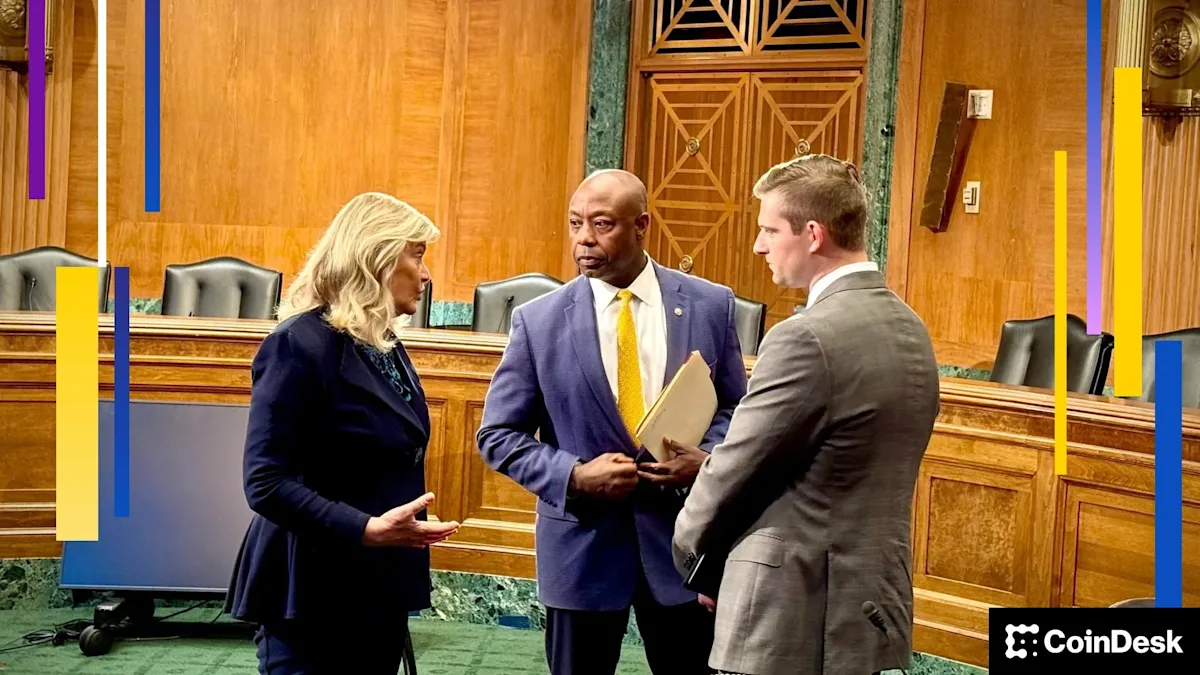
An updated US Senate bill to regulate crypto reveals some important conclusions drawn about decentralized finance (DeFi) and stablecoin performance, but the circulating document remains silent on other key points, including whether public officials can profit from crypto activities while in government.
The document, released minutes after midnight by Senate Banking Committee Chairman Tim Scott and sending teary-eyed lobbyists into a new round of review, is 278 pages long and addresses many of the outstanding issues that lawmakers were negotiating as part of the crypto market structure bill. The bill aims to define how federal agencies such as the U.S. Securities and Exchange Commission and the Commodity Futures Trading Commission, among others, can oversee crypto markets.
The latest version overlaps and expands on a document obtained by CoinDesk that circulated among industry stakeholders earlier Monday evening and contained part of this legislation scheduled for a hearing by the Senate Banking Committee later this week.
The committee plans to consider the bill on Thursday, when lawmakers will debate the bill’s provisions and propose amendments. Senators have until Tuesday evening to table any amendments they wish to propose. A similar hearing on markup in the Senate Agriculture Committee will take place later this month, after its chairman, Sen. John Boozman, postponed it. Both committees will need to advance their respective bills before the full Senate can take a look.
One of the central points of the ongoing negotiations – the issue of stablecoin rewards and yield – has finally been addressed after weeks of back-and-forth between the crypto industry and the banking lobby.
“In general, a digital asset service provider may not pay any form of interest or yield (whether in cash, tokens, or any other consideration) solely in connection with holding a payment stablecoin,” the bill states. This provision does not apply to “activity-based rewards or incentives,” including transactions. It resembles a compromise proposed last week by Democratic Sen. Angela Alsobrooks, one of the legislation’s negotiators, who sought to protect the deposit-taking business model of community banks.
A person familiar with the negotiations said representatives of one of the industry’s leading voices on the issue, Coinbase, viewed Alsobrooks’ compromise as an attempt to find a constructive path forward on an issue that had stalled negotiations.
The bill used the GENIUS Act definition of “digital asset service provider,” which includes exchanges, custodians, and issuers.


