



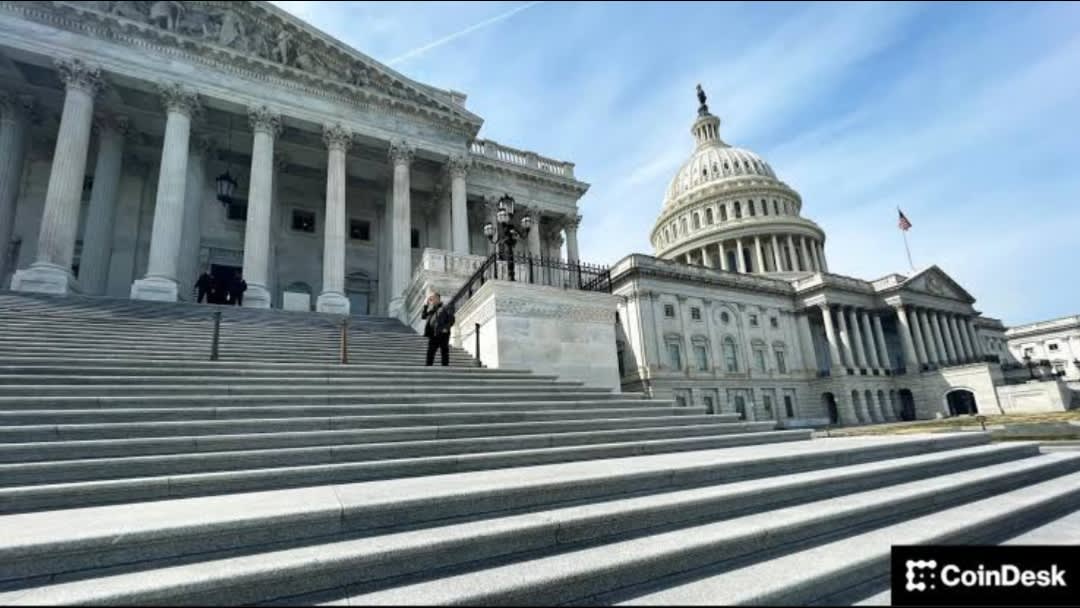
In early 2026, the US Congress is proposing one of the most significant cryptocurrency laws in years. Under the watchful eye of markets and users, a major crypto market structure bill – often called the Digital Asset Market Clarity Act, coupled with stablecoin and digital asset frameworks – is moving through the Senate and could have far-reaching effects on how everyday people interact with digital assets like Bitcoin, Ethereum, stablecoins, and more.
For many casual holders, traders, and newcomers to the crypto world, this legislation represents more than just political maneuvering: it could reshape how crypto works on a daily basis.
—
Why this bill matters now
After years of regulatory uncertainty in the United States, lawmakers have agreed that a clearer legal framework for digital assets has become a priority. A major bill defining how cryptocurrencies should be regulated has been introduced to the Senate Banking Committee, separating responsibilities among key financial regulators and proposing consumer protections that have been largely absent until now.
A complementary effort, known as the GENIUS Act, focuses on stablecoins – cryptocurrencies designed to maintain stable value – and has already taken previous legislative steps, establishing federal standards for how these assets must operate and be supported.
—
1. Clarity on what crypto is and who regulates it
One of the clearest goals of the new legislation is to end the long-standing debate over how digital assets are classified. In the current U.S. regulatory environment, it can be ambiguous whether a token is a security (regulated by the Securities and Exchange Commission, or SEC) or a commodity (regulated by the Commodity Futures Trading Commission, or CFTC).
The bill aims to:
Clearly define which regulator oversees which type of asset: for example, Bitcoin and Ethereum may be regulated more like commodities, while tokens with investment contract characteristics could fall under securities law.
Provide legal certainty for exchanges, developers and users, reducing the risk of enforcement actions or lawsuits that have slowed innovation.
For everyday users, this could mean fewer surprises – such as unexpected exchange restrictions or closures – and a clearer legal basis for trading, holding and using digital assets.
—
2. Stablecoins obtain a legal basis
Stablecoins – digital tokens often pegged to the US dollar – are widely used for daily transactions, transfers and DeFi (decentralized finance) activities. But until recently, there was no explicit federal legal framework governing how these securities should be issued or guaranteed.
The GENIUS law, which is part of a broader policy, requires:
Full Reserve Guarantee: Each stablecoin must be backed by equivalent US dollars or highly liquid assets.
Regular audits and transparency so users and regulators can be sure that stablecoins are truly maintaining their peg.
Federal and state oversight, meaning state and local regulators can play a role in enforcement.
This framework aims to protect users from sudden depegging events and provide a stable basis for payments and savings using stablecoins.
—
3. Consumer protection and safety requirements
A major criticism of crypto in recent years has been the lack of consumer protections, particularly when platforms crash or are hacked and users lose funds. The new legislative effort aims to address this problem by:
Require platforms to adopt anti-money laundering (AML) and know-your-customer (KYC) standards similar to those of traditional financial institutions.
Require prompt redemption rights and stricter oversight to prevent fraud and protect users.
Give regulators the power to suspend or penalize non-compliant issuers.
For everyday users, this could mean stronger safeguards on the platforms where they buy or store cryptocurrencies – although some critics worry that compliance constraints could increase costs or reduce innovation.
—
4. Industrial divisions and opposition
Despite the potential benefits, not everyone supports the legislation in its current form. Major crypto companies, including industry giants, have expressed concerns that certain provisions could limit innovation, restrict decentralized financial activities, or favor incumbent financial institutions over new technology companies.
This opposition highlights a broader debate: should crypto be integrated into the traditional financial system with similar rules, or should it remain a freer and decentralized ecosystem? The result – and its impact on users – will shape the industry for years to come.
—
5. What this means for you – Takeaways
If the bill becomes law, everyday crypto users could experience:
✔ More regulatory certainty
Knowing how assets are treated legally could reduce surprise enforcement actions and improve exchange rate stability.
✔ Improved stablecoin reliability
With reserve and transparency requirements, stablecoins may seem safer for payments and transfers.
✔ Strengthened consumer protections
AML/KYC and monitoring rules could protect against fraud, although they may require more verification of personal data.
✔ Potential changes in DeFi and rewards
Rules that restrict certain decentralized finance features or stable yield programs may change how users earn yield or access financial services.
—
Conclusion – A turning point for crypto in the United States
The major US crypto bill, currently before Congress, represents a watershed moment for digital assets, bridging the gap between innovation and regulation. For everyday users, it offers the promise of clarity, security and wider adoption, but not without tradeoffs, including increased monitoring and compliance.
As the legislative process continues, it will be essential to stay informed – and understand how these changes affect your personal crypto journey. We are witnessing the evolution of cryptocurrency from niche digital experiences to mainstream financial instruments backed by safeguards and legal protections.
Stay tuned: The story of cryptocurrency regulation in the United States is far from over, and its final form will determine how millions of people engage with digital finance in the years to come.


