



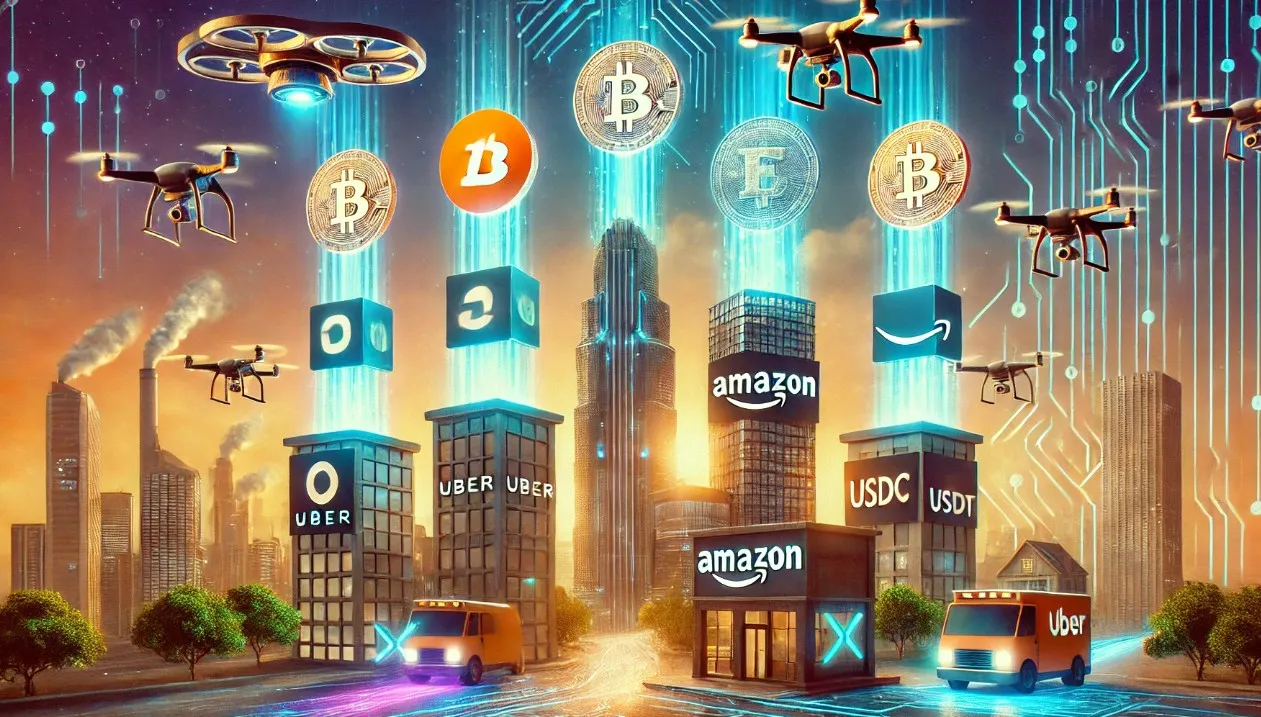

In a recent article written for Entrepreneur, Sandeep Nailwal, co-founder and CEO of layer 2 (L2) blockchain Polygon (POL), made a bold prediction for the 2026 technology landscape.
Nailwal envisions a major convergence of blockchain, artificial intelligence (AI) and payment technologies that could potentially “completely reshape the Internet.”
The Blockchain Transparency Solution
At Nailwal visionAI would assume the role of decision maker within this cohesive structure. Blockchains would then verify these decisions, ensuring their authenticity, while payment infrastructure would facilitate the seamless transfer of value to enforce these decisions instantly.
The merger of these technologies is poised to have far-reaching implications. Nailwal highlights the role of AI in shaping various aspects of daily life and business operations, from content curation to supply chain logistics and financial decision making.
However, the opacity surrounding artificial intelligence systems poses a challenge, with limited transparency in decision-making and data integrity.
Blockchains are emerging as a solution to this transparency problem, providing a public ledger with visibility into transactions, patterns and decisions. The security protocols inherent in blockchain technology not only protect digital signatures, but also verify algorithmic results, thereby establishing trust in the decision-making process.
Nailwal emphasizes the importance of proofs of zero knowledge (ZKP) to ensure transparency without compromising data privacy, enabling verification of rules and decisions without revealing sensitive underlying information.
The future of digital wallets
According to Nailwal’s thesis, the transition from trust-based to evidence-based systems has already begun, with governments using blockchain platforms to anchor public records and maintain transparency and accountability.
Additionally, blockchain payment systems are being tested by cities around the world for various applications, from tax collection to cross-border transferspaving the way for a new era of efficiency and security in financial transactions.
The evolution of payment systems is another area of interest, with digital currencies poised to streamline cross-border transactions by eliminating middlemen.
Nailwal highlighted platforms like Polygon, which currently facilitate stablecoin payments seamlessly, offering fast and cost-effective transfers to individuals and businesses around the world.
Additionally, Nailwal anticipates a future where digital wallets consolidate identity, data and financial assets, simplifying everyday tasks such as payments and document signing.
The convergence of AI, blockchain and payment technologies is expected to redefine user experience, seamlessly integrating trust mechanisms into everyday interactions. Nailwal concluded:
The biggest technological change of 2026 will not be a new channel or a new model but the unceremonious formation of a converged Internet, an infrastructure capable of thinking, verifying and paying for itself. Most people won’t notice the change. They will simply discover that the digital world suddenly works the way it should: seamlessly.
At the time of writing, Polygon’s native token POL was trading at $0.1025. That represents year-to-date losses of nearly 80% and 92% from the all-time high of $1.29.
Featured image of DALL-E, chart by TradingView.com
Editorial process as Bitcoinist focuses on providing thoroughly researched, accurate and unbiased content. We follow strict sourcing standards and every page undergoes careful review by our team of top technology experts and seasoned editors. This process ensures the integrity, relevance and value of our content to our readers.


