




Key points to remember:
- Senate Banking Committee Chairman Tim Scott is proposing a comprehensive U.S. crypto market structure bill for markup in January 2026.
- The proposal aims to establish clear regulatory boundaries, protect retail investors, and maintain blockchain innovation in the United States.
- Lawmakers are negotiating high-impact issues including DeFi oversight, stable rules, and the distribution of regulatory powers.
Chairman Tim Scott has officially moved U.S. digital asset regulation into its most decisive phase yet. With committee markup planned, Congress is now testing whether America can lock down clear crypto rules or risk losing the industry to foreign markets.
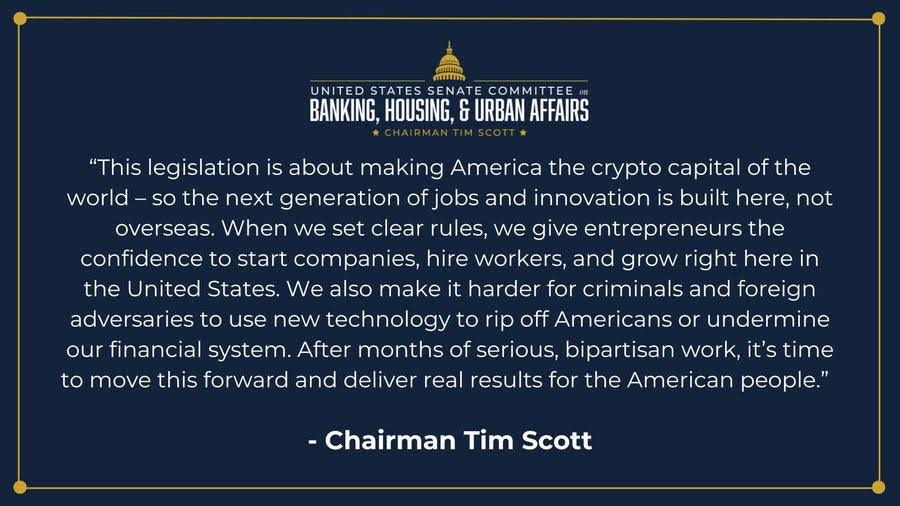
Senate Banking Committee Moves Crypto Regulation Towards Determining Vote
The US Senate Banking Committee is preparing to craft sweeping legislation on the structure of the digital asset market, signaling a turning point in Washington’s approach to crypto oversight.
President Tim Scott confirmed that the bill is designed to establish firm regulatory limits while balancing innovation, investor protection and national security. According to the committee, the legislation focuses on protecting “main street,” preventing illicit activity, and ensuring that crypto development remains anchored in the United States rather than migrating to more permissive jurisdictions.
This increase follows months of hearings, stakeholder consultations and bipartisan negotiations. Senate Republicans released their first market structure principles in mid-2025, followed by two discussion drafts and a broad request for information from industry participants. The current version represents the most successful attempt yet to define how digital assets fit into U.S. financial law.
Read more: More than 110 crypto companies urge US Senate to ensure developer protections under marketplace bill
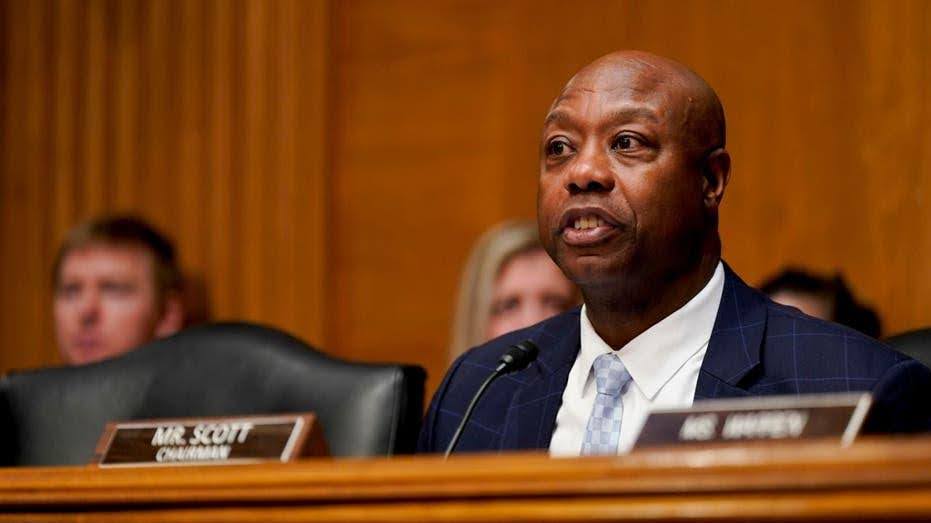

Why market structure has become crypto’s main political battle
Market structure legislation goes well beyond simple compliance. The bill, in its minimal form, attempts to answer questions that have puzzled the crypto industry over the years:
- Which digital assets are considered securities versus commodities?
- Which regulator has authority over each category?
- How can exchanges, brokers and custodians operate legally across all asset classes?
In the absence of statutory clarification, companies have had to resort to their coercive measures, piecemeal guidance and judicial decisions to interpret their obligations. As a result, President Scott says such uncertainty discourages investment and discourages innovation.
Clear rules, in turn, would unlock institutional participation, facilitate job creation, and minimize the legal risks that have halted crypto adoption in the United States.
Investor protection and national security at the heart
According to its supporters, this bill is not only pro-innovation, but it is specifically defensive. The framework focuses on the protection of retail investors, an increased level of transparency and fraud reduction mechanisms. It also aims to limit the ability of foreign enemies or criminal gangs to use decentralized systems to launder money, avoid sanctions or commit crimes using computers.
In the committee’s eyes, it is safer to regulate crypto within the U.S. financial system rather than allowing it to spiral out of control and become something that cannot be regulated. Such framing helped interest both parties in the idea, despite the ongoing dispute over the stringency of the final regulations.
Read more: Vietnam launches bold digital asset regulations with $379 million entry bar and crypto pilot
Bipartisan support will decide the bill’s fate
The upcoming markup will serve as an initial test of whether the legislation can attract true bipartisan support.
In a closely divided Senate, advancing a major bill typically requires the support of multiple Democratic senators. Previous crypto legislation has shown that bipartisan coalitions are possible, but not guaranteed.
A strong vote in committee would significantly improve the bill’s chances of reaching the Senate and ultimately becoming law. A weak or partisan result, however, could stall progress through 2026, especially as electoral pressures mount.


