



Protect our news from ads and paywalls by donating to support our work!

Notes from Poland is managed by a small editorial team and is published by an independent, non-profit foundation funded by donations from our readers. We can’t do what we do without your support.
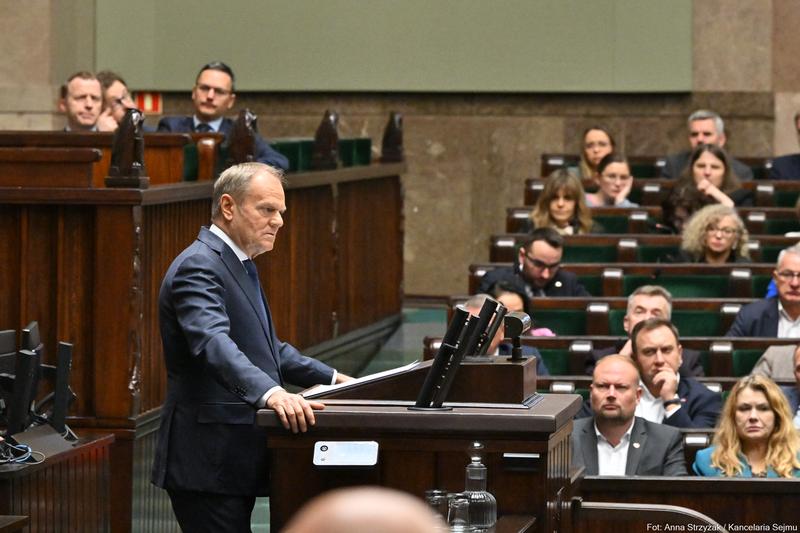
Prime Minister Donald Tusk called a classified meeting of Parliament today in a bid to persuade opposition MPs to help overturn opposition-aligned President Karol Nawrocki’s veto of a bill intended to regulate the crypto-asset market.
Tusk said the issue was a national security issue because “part of the cryptocurrency market is clearly… infiltrated and controlled by Russian and Belarusian entities.” Russia has also used cryptocurrencies to pay agents carrying out sabotage in Poland.
However, in a subsequent vote, MPs split along partisan lines, with the right-wing opposition refusing to overturn Nawrocki’s veto. This means the government failed to secure the three-fifths majority needed to oust him.
Dzisiaj w sejmie odbyło się głosowanie w sprawie odrzucenia weta prezydenta Karola Nawrockiego w sprawie Ustawy ou Rynku Kryptoaktywów.
We have NIE ZOSTAŁO przegłosowane.
Polska branża krypto odniosła dziś zwycięstwo. pic.twitter.com/OMD8LqrpJi
– Marek Stiller (@MarekStiller) December 5, 2025
On Monday, Nawrocki vetoed the government’s bill to regulate the crypto-asset market, which aimed to bring the country into compliance with EU rules. The president argued that the measures were too burdensome, lacked transparency and “constituted a real threat to the freedoms of Poles”.
Government figures, who regularly clash with Nawrocki over various issues, criticized his decision, saying it would put Polish consumers at risk of becoming victims of fraud.
Today, they also say this issue has national security implications. Speaking at a public parliamentary session, Tusk said Nawrocki’s veto had benefited an unnamed company that he described as having “criminal” funding sources, with “obvious Russian…infiltration” and influence “in the right-wing camp.”
Tusk added that “this market is very susceptible to the tools and methods of foreign intelligence services and mafias.” Addressing the opposition, he asked: “Decide who you want to protect: national security or the Russian mafia that invests in these companies?
💬First @DonaldTusk ⤵️
Kogo chcecie chronicle w Polsce? Ludzkie pieniądze, ludzkie interesy, bezpieczeństwo państwa czy ruską mafię? Kogo chcecie chronic? O tym joke to głosowanie, o niczym więcej.#SzkodliweWeto pic.twitter.com/oIeGptrfKS
– Kancelaria Premiera (@PremierRP) December 5, 2025
The prime minister did not reveal further details about the company in question or its alleged links to Russia. However, he clarified that the information had been provided to deputies during a closed session held Friday morning at his request.
The law prohibits MPs from revealing what was said in that session, but opposition politicians later told media they did not understand why the information had been classified. Law and Justice (PiS), the main opposition party, filed a motion to declassify it.
“The charade of Donald Tusk must be made public,” said PiS MP Janusz Kowalski, quoted by the Onet news site.
Nawrocki’s chief of staff, Zbigniew Bogucki, also said that the secrecy surrounding the parliamentary session was completely unnecessary and was being used to sow fear among citizens and distract from other problems facing the government.
He asked Tusk why, if there is such a threat, his government did not act sooner and only now introduce crypto regulations, while other EU member states have done so much earlier.
In recent years, Poland has faced a campaign of sabotage carried out by agents working on behalf of Russia. Very often, these are Ukrainian and Belarusian immigrants hired via Telegram messaging by Russian security services and paid in cryptocurrency.
Earlier this week, Poland indicted a Russian citizen accused of coordinating such operations. Authorities say he was recruited by Russia’s Federal Security Service (FSB) because of his expertise in cryptocurrencies.
Polish prosecutors have filed five charges against a Russian accused of running a spy and sabotage network in Poland.
He is said to have coordinated a group of at least 30 agents on behalf of the Russian Federal Security Service.
— Notes from Poland 🇵🇱 (@notesfrompoland) December 2, 2025
After the secret and public parliamentary sessions were held, the Sejm, the most powerful lower house, held a vote on whether to override Nawrocki’s veto. This would require a three-fifths majority.
However, even though a majority of 243 MPs – mostly from Tusk’s ruling coalition – voted in favour, this figure was 18 short of the required threshold, given that 192 opposition MPs opposed it.
Overriding presidential vetoes is extremely rare in Poland. The last time this happened was in 2009, under President Lech Kaczyński.
President Nawrocki vetoed a law regulating the crypto-asset market, which the government said would protect consumers and help Poland comply with EU rules.
But Nawrocki said it “represented a threat to the freedoms of Poles and the stability of the state.”
— Notes from Poland 🇵🇱 (@notesfrompoland) December 1, 2025
Notes from Poland is run by a small editorial team and published by an independent, non-profit foundation funded by donations from our readers. We can’t do what we do without your support.
Main image credit: Anna Strzyżak/Kancelaria Sejmu (under

Alicja Ptak is editor of Notes from Poland and multimedia journalist. She previously worked for Reuters.


