



Cryptocurrencies will be regulated in the same way as other financial products under legislation that comes into force in 2027.
The Treasury is developing rules that will require crypto companies to adhere to a set of standards overseen by the Financial Conduct Authority (FCA).
Ministers have sought to overhaul the crypto market, which has grown in popularity as a way to invest money and make payments.
Cryptocurrencies are not subject to the same regulation as traditional financial products such as stocks, meaning that in many cases consumers do not receive the same level of protection.
The government said the new rules would make the crypto sector more transparent, boost consumer confidence and make it easier to detect suspicious activity, impose sanctions and hold companies accountable.
Rachel Reeves, the Chancellor, said: “Bringing crypto into the regulatory scope is a crucial step in securing the UK’s position as a leading financial center for the digital age.
“By giving businesses clear rules of conduct, we are providing them with the certainty they need to invest, innovate and create high-skilled jobs here in the UK, while providing millions of people with strong consumer protection and excluding dubious players from the UK market.
Crypto companies, which can include crypto exchanges and digital wallets, must register with the FCA if they provide services that fall within the scope of the UK’s money laundering regulations.
The changes mooted by the Treasury will bring companies that provide crypto services under the jurisdiction of the FCA and mean that the services will be regulated in the same way as other financial products, including being subject to transparency standards.
Lucy Rigby, Minister for the City of London, said: “We want the UK to be at the top of the list for crypto asset companies looking to expand and these new rules will give businesses the clarity and consistency they need to plan for the long term.
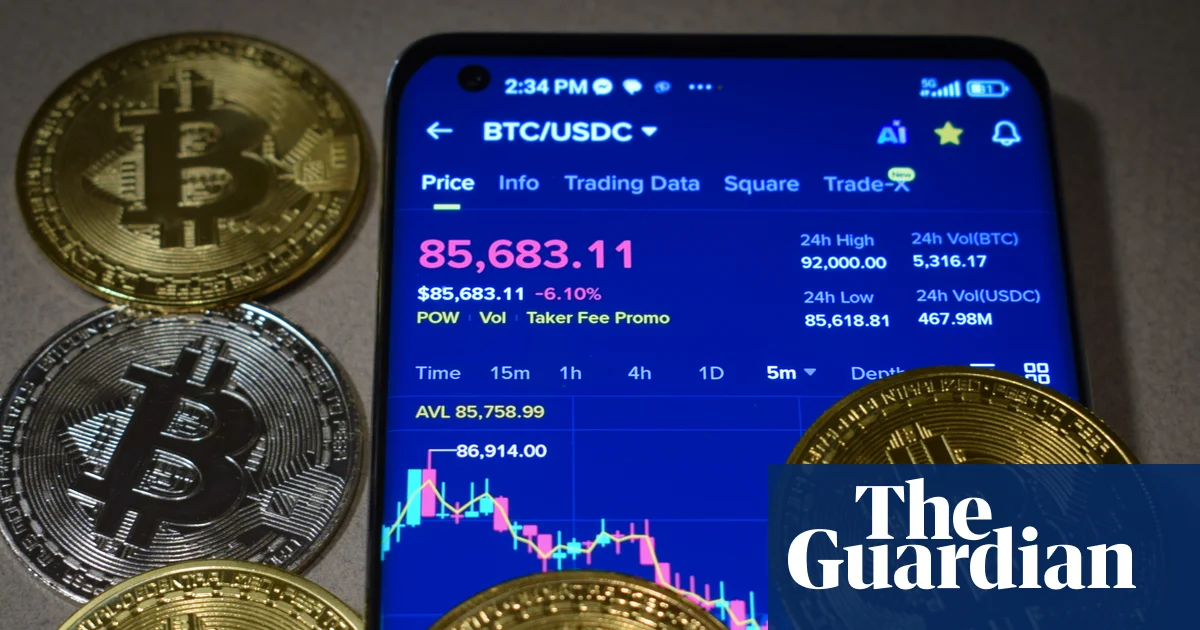
The cryptocurrency market has suffered turbulence due to growing investor fears over a potential artificial intelligence bubble.
Banking sector data for October showed the amount of money lost to investment scams by UK consumers increased by 55% year-on-year, with fake cryptocurrencies thought to top the list.
A Chinese woman living in the UK was convicted in September of a multi-billion pound bitcoin fraud.
Zhimin Qian, also known as Yadi Zhang, orchestrated a fraud in China between 2014 and 2017 that left 128,000 people out of pocket. The 45-year-old stored the profits in bitcoins, but British authorities made a breakthrough in the case when they raided a Hampstead mansion in 2018 and seized Qian’s devices holding 61,000 bitcoins, worth more than £5 billion at current prices.
The Metropolitan Police believe this is the largest cryptocurrency seizure in the world. Qian pleaded guilty at Southwark Crown Court on Monday to acquiring and possessing cryptocurrency which was criminal property.
Ministers are also drawing up plans to ban political donations made with cryptocurrencies, fearing it will be difficult to determine their origin and ownership.
Nigel Farage’s Reform UK party, which this year became the first party in the country to accept contributions in digital currency, reportedly received its first recordable cryptocurrency donations this fall. It has set up a crypto portal to receive contributions, saying it is subject to “enhanced” controls.
This month, Reform received £9 million from Christopher Harborne, a Thailand-based cryptocurrency investor and businessman – the largest donation made by a living person to a British political party.


