



Key notes
- UNification took place on December 25 with 125,342,017 UNI YES against 742 NO.
- Uniswap will burn 100 million UNI from the treasury.
- This removes about 16% of the total supply.
Uniswap governance approved the UNification overhaul on December 25, locking in a 100 million UNI cash outlay. The vote also activated protocol fees that will finance
UNITED
$5.89
24h volatility:
1.8%
Market capitalization:
$3.72 billion
Flight. 24h:
$369.22 million
destruction, according to the proposal finalized on the Uniswap forum and the Labs blog.
Uniswap voting details
The chain vote closed with 125,342,017 UNI in favor and 742 against. Uniswap founder Hayden Adams posted on X, increasing the quorum of 40 million UNI by more than 3x.
The Unification vote is over 🦄
125 342 017 YES
742 NOUnified, true to its name
After a voting delay of approximately 2 days, 100 million UNI will be burned, fee switches will be flipped, labs will turn off interface fees and focus on protocol, and more.
Merry Christmas everyone 🎄 pic.twitter.com/P0rJmLN9Cc
– Hayden Adams 🦄 (@haydenzadams) December 25, 2025
After the mandatory delay of approximately 2 days, contracts are executed and burn transactions and fee settings go live. Governance records on the Uniswap portal show a participation rate of over 20% of UNI in circulation, one of the highest participation rates in the history of the protocol, with over 99.9% of votes cast in favor of the change.
UNI was trading around $6.05, +2.3% in 24 hours as of 5:00 p.m. UTC on Dec. 26, holding on to gains from a race that began when voting opened.
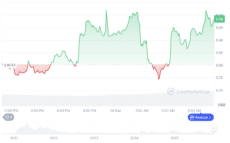
Uniswap price on December 26 | Source: CoinMarketCap
What changes after the Uniswap vote
The core specification, published as the UNIfication Proposal on the Uniswap Governance Forum and reflected in the Uniswap Labs blog, outlines eight concrete actions.
The protocol will transfer 100 million UNI from the treasury to a burned address. This will remove approximately 16% of the total supply from circulation and reverse the long-dormant fee switch on Uniswap v2 and a curated set of high-volume v3 pools on the Ethereum mainnet. For v2, LP fees increase from 0.30% to 0.25%, with 0.05% of volume now going to the protocol. For v3, the proposal sets protocol fees at 25% of LP fees on the 0.01% and 0.05% tiers and 16.7% of LP fees on the 0.30% and 1% tiers, with governance capable of adjusting on a pool-by-pool basis during follow-up votes.
All protocol fees, plus Unichain’s net sequencer revenue after L1 data costs and Optimism’s 15% share, are now routed to a programmatic burn mechanism described in the proposal and supporting documentation. The design uses two contracts, commonly referred to in community analysis as TokenJar and Firepit.
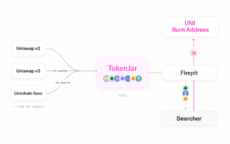
Uniswap Burn Mechanism | Source: gov.uniswap.org
Fees will accumulate there until UNI is destroyed. At this point, the contract will void the claims, thereby turning the use of the protocol directly into a reduction in supply.
Additionally, Labs has committed to the proposal to remove all interface, wallet, and API fees, thereby removing monetization from the application layer of its products. In return, governance approved a UNI cash allocation of 40 million over a two-year acquisition schedule as a recurring growth and development budget. This allocation is separate from the 100M UNI burn and will fund Labs’ protocol-focused roadmap, including Uniswap v4 hooks, protocol fee discount auctions, and aggregator functionality.
Uniswap will burn up to $700 million worth of UNI per year
The Uniswap Labs blog notes that Unichain is currently operating at around $100 billion in annualized DEX volume and around $7.5 million in annualized sequencer fees. It will now join swap fees as inputs to the burn engine.
Third-party modeling based on research by Tekedia and OKX estimates that the combined system can wipe out between $280 million and $700 million from UNI per year if 2025 fee levels persist.
following
Disclaimer: Coinspeaker is committed to providing unbiased and transparent reporting. This article is intended to provide accurate and current information, but should not be considered financial or investment advice. Because market conditions can change quickly, we encourage you to verify the information for yourself and consult a professional before making any decisions based on this content.

Yana Khlebnikova joined CoinSpeaker as an editor in January 2025, following previous stints at Techopedia, crypto.news, Cointelegraph and CoinMarketCap, where she honed her expertise in cryptocurrency journalism.
Yana Khlebnikova on LinkedIn


