



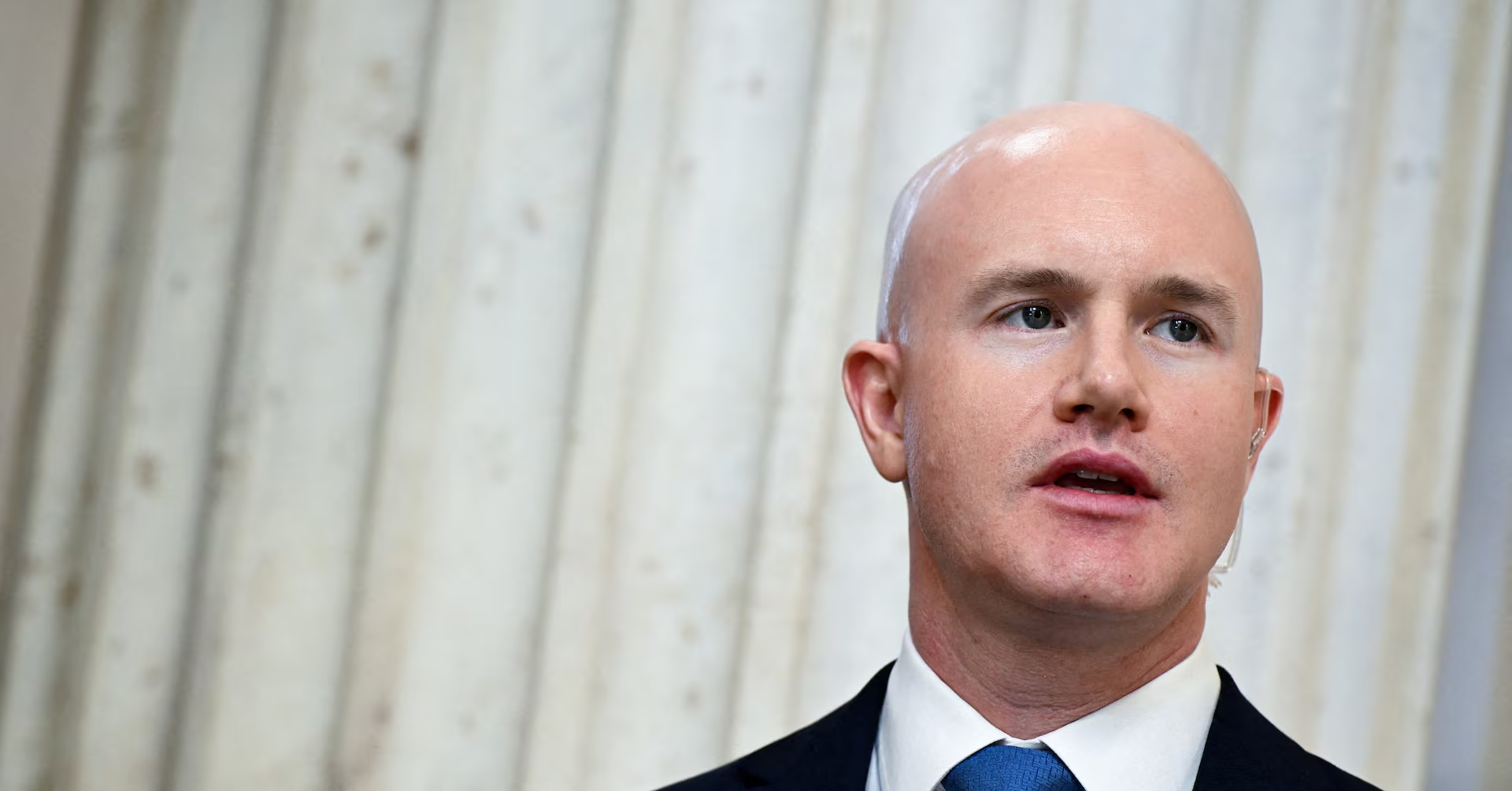
Point 1 of 2 Coinbase CEO Brian Armstrong is interviewed for CNBC in the Russell Senate Office Building on Capitol Hill in Washington, DC, U.S., January 15, 2026. REUTERS/Annabelle Gordon
Register here.
The bill is the culmination of a years-long lobbying campaign by Coinbase and other major crypto companies, which argued that the industry needed new regulation to provide legal clarity that would ultimately drive adoption of digital assets. Coinbase’s CEO, however, says he is now bothered by some aspects of the latest efforts to craft new rules.
Former President Joe Biden’s regulators have alleged that many crypto companies are flouting U.S. securities laws and other rules, but the industry says existing rules are not appropriate for digital assets.
The Senate Banking Committee was scheduled to debate amendments to the bill, called the Clarity Act, on Thursday. But he reversed that so-called markup Wednesday night, after Coinbase CEO Brian Armstrong said on
Armstrong said the bill would erode the authority of the U.S. Commodity Futures Trading Commission, the industry’s preferred regulator, and “kill” the ability of crypto companies to offer rewards on customers’ holdings of dollar-pegged tokens, known as stablecoins, among other complaints.
“We would rather have no bill than a bad bill,” he wrote, adding, however, that he was “rather optimistic that we will achieve the right result through continued efforts.”
Coinbase has donated millions of dollars to political action committees aimed at electing pro-crypto candidates in 2024 and was a key player in the negotiations.
There have been disagreements among Republicans over the bill’s stablecoin provisions, according to two people with knowledge of the discussions, with one adding that Armstrong’s objections “pushed those” concerns to the forefront. Senators involved in crafting the bill then became concerned that it would not get enough votes to move out of committee after consideration, the second source said.
To be approved, the bill would need the support of at least seven Democrats in the Senate. Some Democrats have expressed concerns that the measure does not include provisions preventing politicians from profiting from crypto projects.
“I have spoken with leaders in the crypto industry, the financial sector, and with my Democratic and Republican colleagues, and everyone remains at the table and working in good faith,” Senate Banking Committee Chairman Tim Scott, a South Carolina Republican, said in a statement.
Scott’s office did not immediately respond to a request for additional comment.
Among the Senate bill’s most controversial provisions is what banks see as a loophole created by last year’s stablecoin legislation, which allows intermediaries, such as crypto exchanges, to pay interest on customers’ stablecoin holdings.
Banks say this would cause deposits – the main source of funding for most banks – to leak out of the banking system, potentially threatening financial stability. Crypto companies have fought back, arguing that banning them from paying interest on stablecoins would be anti-competitive.
The Senate bill prohibits crypto companies from paying interest to consumers for holding a stablecoin, but allows them to pay rewards or incentives to customers for certain activities, such as sending a payment or participating in a loyalty program.
“On complex issues, like digital asset market structure, moments like this can be a healthy part of policymaking, allowing time for additional deliberations,” Summer Mersinger, CEO of the crypto industry trade group Blockchain Association, which counts Coinbase as a member, said in a statement.
Reporting by Hannah Lang in New York, Carlos Méndez in Mexico and Abu Sultan in Bangalore; Editing by Matthew Lewis and Nick Zieminski
Our Standards: The Thomson Reuters Trust Principles.


