





Michael Saylor’s reputation for buying Bitcoin near local highs is less a timing flaw and more a function of how the cash flow model works, according to Dylan LeClair, Metaplanet’s director of Bitcoin strategy. In an interview, LeClair argued that the apparent trend reflects when capital markets are most open, not a deliberate effort to chase highs.
Why Saylor continues to buy Bitcoin Top
LeClair said critics misunderstand the mechanics behind Strategy’s purchases. “The Bitcoin cash flow model is very procyclical,” he said. “So when times are good, usually in a four-year or minute-to-minute market, it’s easier to raise capital. So the capital markets are wide open when Bitcoin is strong for common stocks. But when it’s weak, they’re not.”
This dynamic, he said, helps explain why Strategy purchases often come when Bitcoin is already trading strongly. If the company’s stock performs well and its enterprise value is rich relative to its Bitcoin holdings, it becomes easier and more attractive to issue shares and convert that capital into more BTC. “When we sell stocks, we’re literally buying minute by minute,” LeClair said, referring to Saylor’s own description of the process. “So when a weekly buy is made, people say, well, the strategy bought the high range again. Well, it’s like, no, the causality is reversed.”
According to LeClair, strategy does not buy force because it wants to pay. He buys when his financing window is widest. This distinction is important, particularly for listed Bitcoin treasury companies whose ability to raise capital is closely tied to sentiment, stock multiples, and market liquidity.
He said this model is evolving. While the strategy once relied primarily on issuing common stock and, sometimes, convertible bonds, LeClair pointed to the growing importance of preferred stock offerings, particularly STRC, as a potential shift in how Bitcoin-related companies finance their purchases in different market regimes. The appeal is that preferences can allow companies to continue raising capital even when Bitcoin is weak and common stock is less attractive to issue.
“What’s really cool about STRC is that they now have a mechanism to increase their shares regardless of market conditions,” he said. “So Bitcoin can be strong, Bitcoin can be weak. If STRC is at 100, they can raise lots and lots of money.” He added that Strategy has already used this structure aggressively, saying Saylor raised $1.2 billion in one week without selling MSTR.
LeClair presented this as more than just a funding adjustment. He described it as a new bridge between BTC exposure and capital pools that cannot directly purchase spot BTC or even ETFs. “There are trillions of dollars of fixed income around the world that are looking for low volatility and high yield,” he said. “And so Saylor says, okay, well, I’ll design, I’ll design the security for you.”
This broader financial markets angle was present in much of LeClair’s interview. While asserting that Metaplanet’s fundamental BTC thesis has not changed despite the market decline, he acknowledged that execution has changed. In strong markets, treasury companies can rely on common stock fundraising. In weaker conditions, other instruments may be more important. “The way we navigate financial markets has been slightly changed,” he said.
LeClair also suggested that Strategy is becoming the marginal buyer of Bitcoin, arguing that Saylor is now buying more than the ETFs combined. At the same time, he said the company is improving its capital structure by issuing new securities while making its existing convertible debt less significant relative to the rest of the balance sheet. According to him, this combination creates an increasingly powerful acquisition engine for BTC.
At press time, BTC was trading at $67,639.
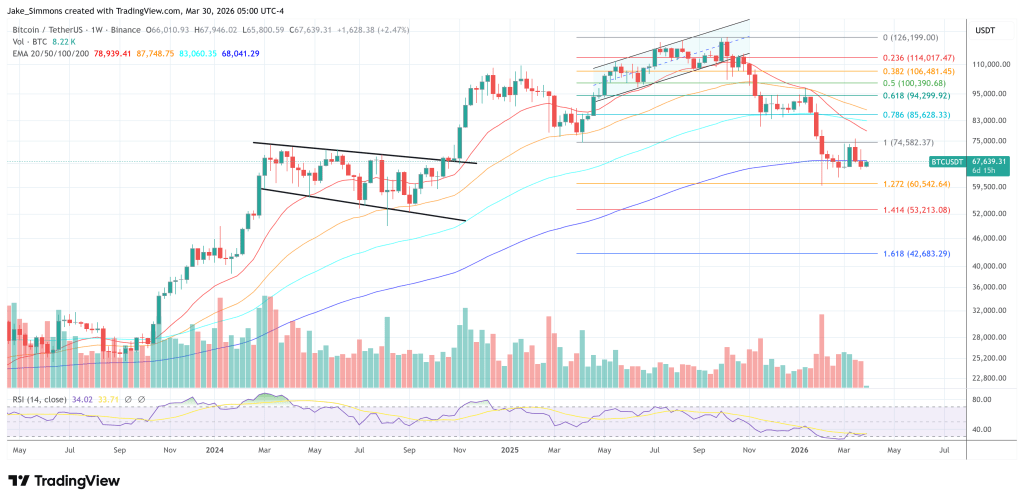
Featured image from YouTube, chart from TradingView.com
Editorial process as Bitcoinist focuses on providing thoroughly researched, accurate and unbiased content. We follow strict sourcing standards and every page undergoes careful review by our team of top technology experts and seasoned editors. This process ensures the integrity, relevance and value of our content to our readers.


