




Key points to remember:
- World Liberty Financial borrowed millions in stable coins on Dolomite using 5 billion WLFI tokens as collateral in April 2026.
- Challenge analysts warn that Dolomite’s $1 pool faces bad debt risk, with WLFI collateral exceeding 50% of the protocol’s $836 million TVL.
- WLFI plans a governance vote next week to unlock the tokens for early holders, with 80% of the presale supply still locked.
- WLFI’s criticisms have gone viral on social media. World Liberty Financial responded to the criticism in a thread on X.
WLFI governance token drops 10% as Challenge Community questions dolomite borrowing strategy
The Trump family supported Challenge The project provided approximately 5 billion WLFI governance tokens, with a face value between $440 million and $460 million, as collateral to borrow approximately $65.4 million in USD1 and $10.3 million in USDC. Onchain data shows that more than $40 million of these borrowed funds were then transferred to Coinbase Prime. Observers gave a decidedly cold reception.
WLFI launched World Liberty Markets in January 2026 as a lending and borrowing interface built directly on Dolomite. Dolomite co-founder Corey Caplan is an advisor and chief technology officer at WLFI. Arkham’s on-chain records show that WLFI’s treasury multisig routed collateral to multiple wallets, including an intermediary address and a Gnosis Safe that transferred approximately 3 billion WLFI tokens to Dolomite in early April.
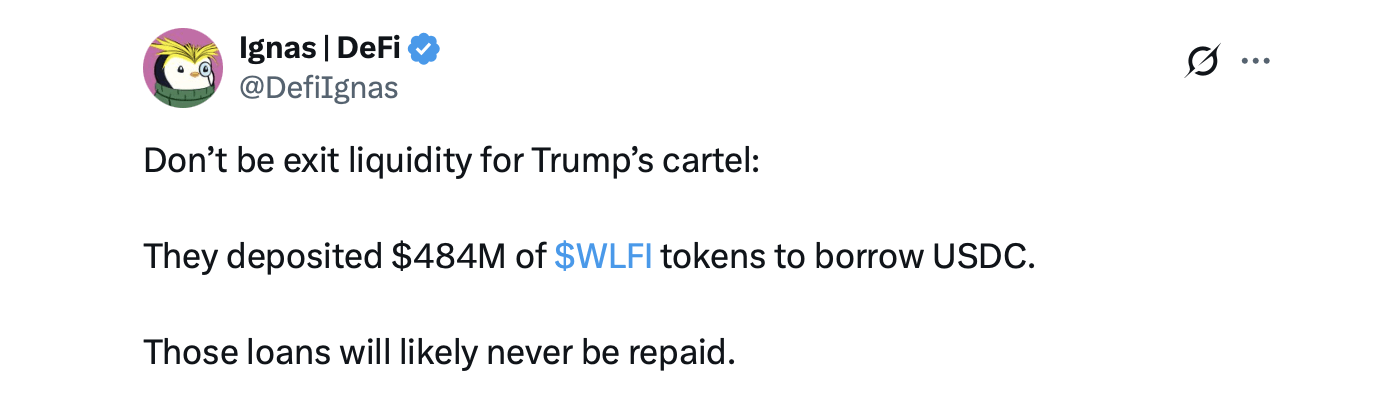
Previous deposits included approximately 1.99 billion WLFI tokens. The position now represents more than half of the total assets provided by Dolomite, whose total value locked is estimated between $825 million and $836 million. On April 9, 2026, the official WLFI account on X posted a thread addressing what it called the “FUD” community. The project indicated that it was far liquidation and argued that its role as lead borrower generated a yield that made the protocol attractive to all depositors.
“By being the lead borrower, we generate the yield that makes WLFI Markets attractive to everyone,” the statement said. The team added:
“Everyday users earn outsized revenues stable coin yields at the moment.
Challenge X analysts highlighted several structural problems. WLFI is trading with low market depth relative to position size, meaning prices are falling towards liquidation thresholds could trigger forced sales that would further depress the token and prevent a clean unwind. Critics compared the setup to the past Challenge events involving CRV and Wonderland, where illiquid collateral led to bad debts that depositors were unable to recover.
The $1 pool on Dolomite has seen utilization rates near 93%, with supply rates reaching 35% in past related activity. High utilization leaves limited liquidity for depositors who want to leave the pool before the large borrower repays.
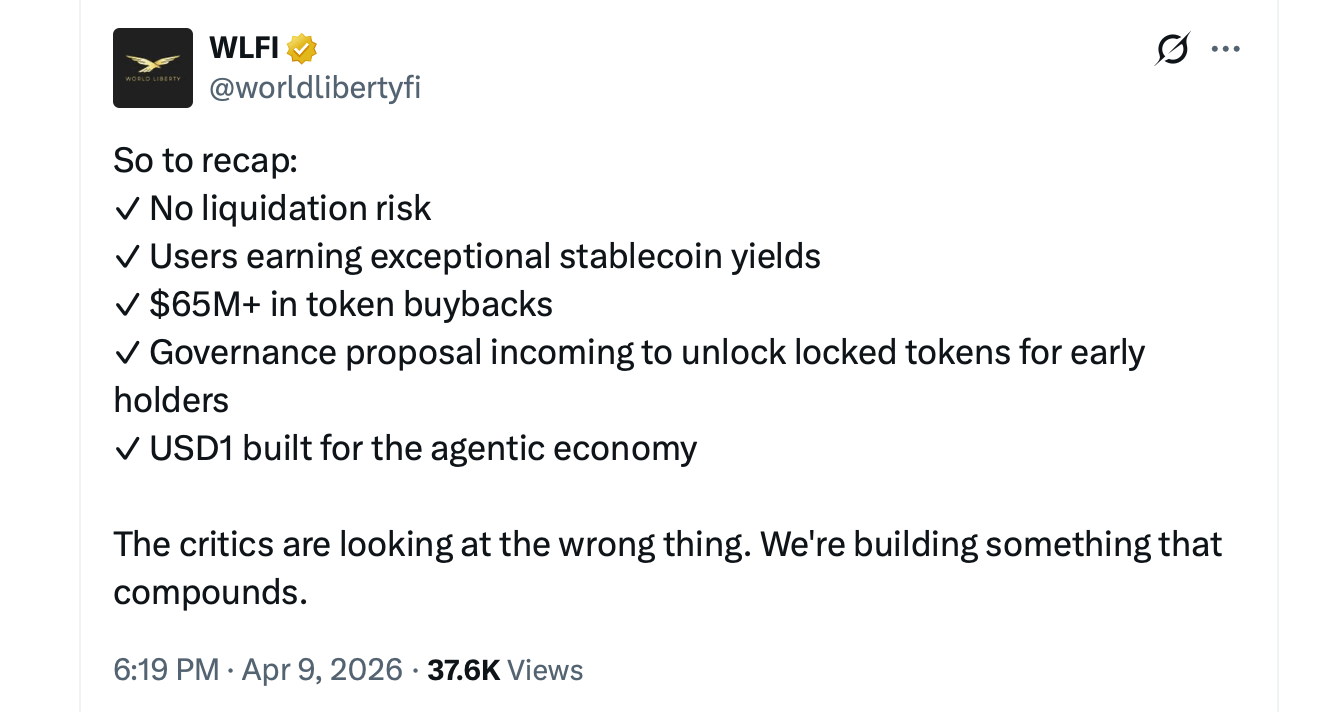
WLFI’s response called the deal strategic. The project said it has repurchased over 435 million WLFI tokens at an average price of around $0.1507, totaling around $65.6 million in open market repurchases over the past six months. Circulation of the $1 now exceeds $4 billion backed by U.S. Treasuries and cash equivalents, which WLFI cited as evidence of an annualized revenue rate of $159.5 million.
The project also indicated that a governance proposal would be posted on its forum within the week, followed by a community vote to unlock the tokens for initial holders. Approximately 80% of pre-sale WLFI tokens remain locked, a point that has garnered repeated responses from community members in the WLFI thread and other posts.
The WLFI governance token fell around 8-10% to an all-time high after the Dolomite position was covered. Over a rolling seven-day window, losses reached around 14%. No liquidation has occurred as of April 10, 2026 and the project indicates that the position remains oversized.
Separately, WLFI noted upgrades to USD1 that include gasless transfers and features designed for AI agents, signaling continued product development alongside treasury activity. The latest episode reflects a recurring tension in DeFi between governance token leverage, protocol concentration, and aligned incentives in projects where the protocol builder, token issuer, and borrower are closely linked.


