



The division within the Zcash ecosystem deepened this week as the nonprofit organization that runs the Electric Coin Company, Bootstrap, openly resolved the governance conflict that has already roiled markets and sent ZEC tumbling.
The conflict was fought across boardrooms, developer teams, and token boards, revealing long-term tensions around limitations, control, and how privacy-focused projects should be financed through crypto.
Bootstrap says nonprofit law is behind Zashi fallout
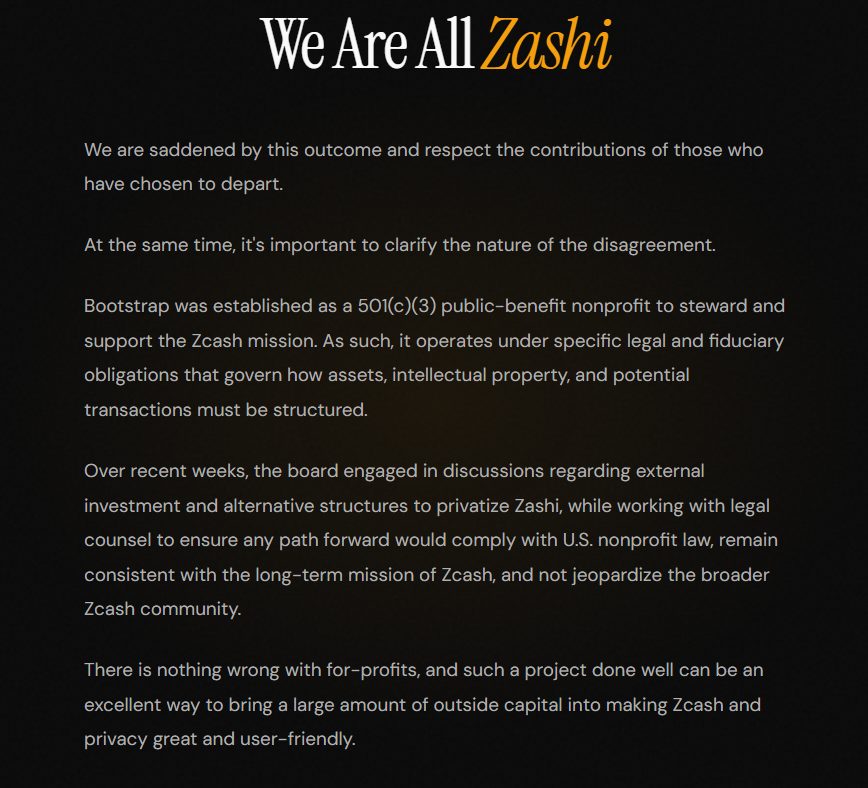
In a statement shared Thursday by Bootstrap board member Zaki Manian, the nonprofit said the fallout stemmed from its legal and fiduciary obligations as a U.S. 501(c)(3) organization, not from a disagreement over Zcash’s mission.
Bootstrap said it has been in discussions for weeks about external investments and potential restructuring related to Zashi, the mobile wallet developed by Electric Coin Company and launching in early 2024.
According to the board, those negotiations ran into strict limits imposed by nonprofit law, which governs how charitable assets, intellectual property and transactions must be managed.
Bootstrap warned that taking Zashi private could expose the organization to lawsuits or regulatory scrutiny from donors, or even force the unwinding of transactions, which could require transferring assets to ECC.
The board said these risks could extend beyond immediate parties and threaten the broader Zcash ecosystem.
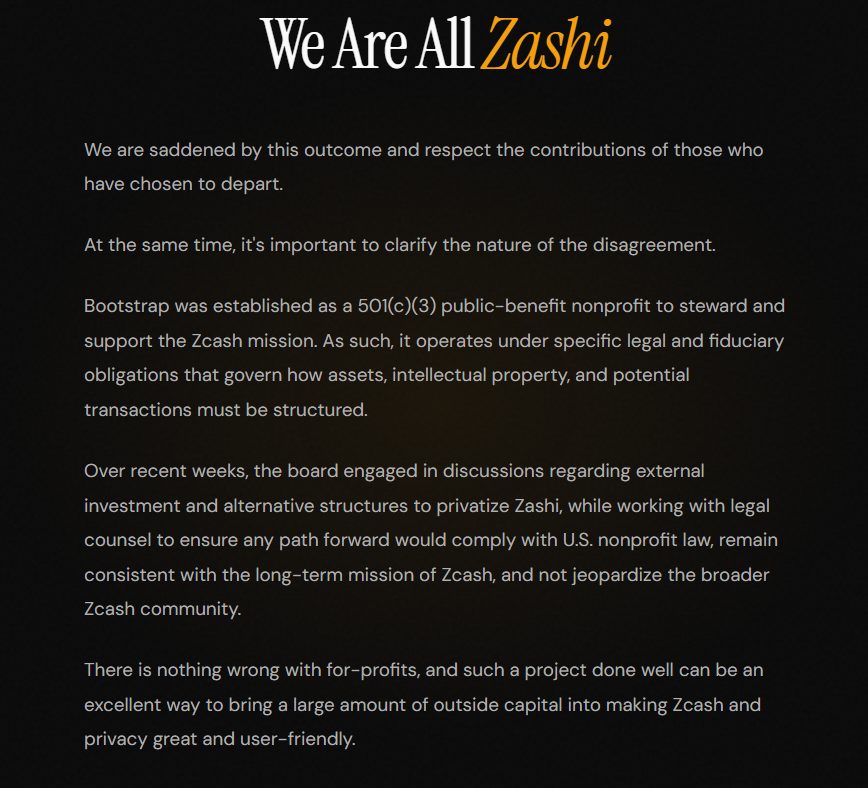
While recognizing that for-profit structures can attract capital and accelerate development, Bootstrap said urgency and good intentions are not enough to override nonprofit obligations.
This statement follows a dramatic breakup earlier today, when the core development team behind Zcash severed ties with Electric Coin Company.
@Zcash Core development team leaves Electric Coin Company due to malicious governance allegations aimed at forming new development company, sending $ZEC price down about 7%.#CryptoGovernance #Zcashhttps://t.co/ORQTzZMs0Y
– Cryptonews.com (@cryptonews) January 8, 2026

Joshua Swihart, CEO of ECC, said the move was the result of weeks of growing tensions with most of Bootstrap’s board, who he said had changed the terms of employment in such a way that it became impossible to continue their work.
Swihart called this a constructive discharge, as the rest of the ECC team had resigned on January 7 and intended to create a new independent company to continue the work of creating privacy-friendly digital currency.
Zcash dispute weighs on price, as whales buy the dip
Swihart emphasized that the split was about governance and not about abandoning Zcash. The protocol’s codebase remains open source and permissionless, meaning the network continues to operate regardless of disputes between the organizations supporting it.
Zcash founder Zooko Wilcox also sought to reassure users, saying the conflict does not affect network security or privacy guarantees, and noting that no criminal conduct has been alleged on either side.
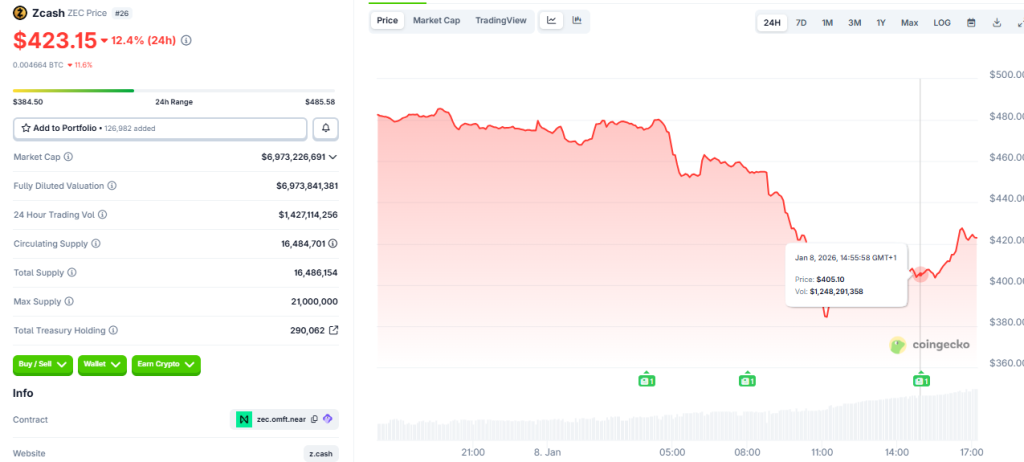
Markets reacted quickly when the governance crisis became public, with ZEC falling as much as 16% at its lowest point before regaining ground amid heavy trading.
The token is currently trading around $422, down around 12.4% over the past 24 hours, with trading volume up over 200% to around $1.43 billion.
Blockchain data shows mixed positioning during the sell-off, with Nansen data indicating increasing exposure from large holders, with whale wallets purchasing around $914,000 worth of ZEC, while newly minted wallets accumulated around $1.74 million over the same period.
The dispute has drawn attention to Zcash’s unusual governance structure, as it grew out of academic research into zero-knowledge cryptography. The project has long attempted to balance decentralization and organized development.
ECC was created in 2015 to build the protocol, the Zcash Foundation followed in 2017 and ECC then became a non-profit subsidiary under Bootstrap in 2020.
This structure was designed to distribute power, but disagreements over financing, control and strategy persist, particularly as the current development fund approaches its expiration in 2025.
The article Zcash Split Deepens: Bootstrap Blames Nonprofit Rules as ZEC Plunges 16% appeared first on Cryptonews.


