




The core development team behind Zcash severed ties with Electric Coin Company, triggering a serious governance crisis that briefly shook market confidence and sent the ZEC token sliding before volatility resumed on exchanges.
The dispute centers on allegations of “malicious governance” within Bootstrap, the non-profit entity that controls ECC, and has now resulted in the resignation of ECC’s entire staff and the move to form a new independent company.
Zcash Builders Resigned After Board Changes Employment Terms; New company to form
Josh Swihart, who took over as CEO of Electric Coin Company in late 2023, said the breakup followed weeks of escalating conflict with the majority of Bootstrap’s board.
Swihart said in her post on
Over the past few weeks, it has become clear that the majority of the board members of Bootstrap (a 501(c)(3) non-profit organization created to support Zcash by running the Electric Coin Company), particularly Zaki Manian, Christina Garman, Alan Fairless, and Michelle Lai (ZCAM), have moved…
—Josh Swihart
(@jswihart) January 7, 2026
 (@jswihart)
 He described the situation as a constructive discharge, a legal concept used when working conditions are changed so severely that employees are effectively forced to resign. On January 7, the entire ECC team went out together.
Swihart said the group will now found a new company and continue to pursue the same goal that has defined Zcash since its launch: creating privacy-preserving digital money.
He emphasized that the decision was intended to protect the team’s work from governance actions it viewed as hostile, not to abandon the protocol itself.
Zcash’s codebase is open source, permissionless, and not owned by any organization, meaning the network continues to operate regardless of internal conflicts between its supporting entities.
The market reaction was rapid as the ZEC fell by around 7% after this news, before regaining ground amid intense trading.
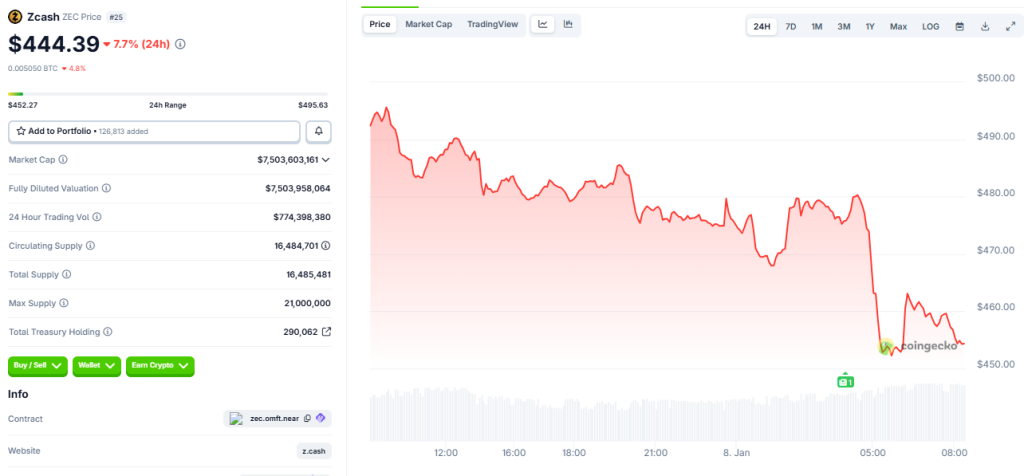
The token just recently traded around $455 after reaching a short-lived high of around $480, with 24-hour trading volume increasing by over 30% to around 800 million.
Balancing power at Zcash turns out to be more complicated than expected
Zcash’s governance structure has been unusual from the start, as the project grew out of academic research into zero-knowledge cryptography, with the ECC having formed in 2015 to create and launch the protocol in 2016.
To reduce centralization, the Zcash Foundation was established in 2017 as an independent nonprofit organization, and in 2019, ECC transferred the Zcash brand to the Foundation under a joint approval model requiring agreement from both parties.
In 2020, ECC itself became a non-profit subsidiary under Bootstrap after shareholders donated their equity.
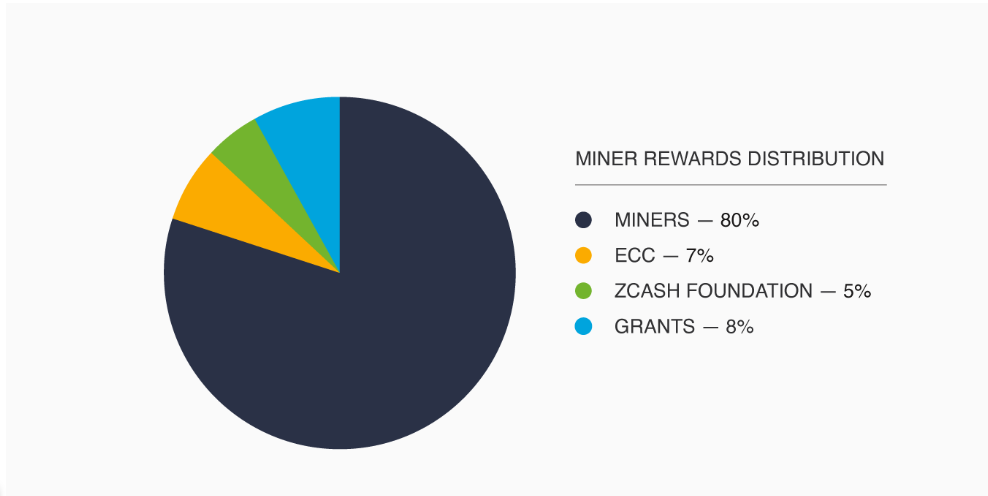
This structure, designed to balance power, has also produced friction. Disagreements have intensified over the future of the development fund, which allocates a portion of Zcash block rewards to support ongoing work and is set to expire at the end of 2025.
Swihart had publicly lobbied to end direct funding of the protocol in favor of grants and other mechanisms, arguing that this would further decentralize the ecosystem.
Former ECC CEO and Zcash founder Zooko Wilcox came to reassure users that the dispute has no impact on network security or privacy guarantees.
Big drama in one (or two now?) of the many Zcash support organizations. None of this involves me or Shielded Labs, and it’s not my place to give my opinion on this, except that I want you to tell yourself two things:
-Zooko
 https://t.co/QJmH9vhbBS
 ⓩ (@zooko)
 Although he refused to take sides, he claimed that he had worked with Bootstrap board members over the years and that they had high integrity.
No criminal conduct has been alleged on either side, and the conflict remains a corporate and governance dispute rather than a legal matter.
What happens next focuses on organizational realignment rather than coercive measures. The newly formed company plans to independently pursue privacy-focused development, while Bootstrap and the Zcash Foundation are expected to re-evaluate how the protocol’s development is funded and coordinated in the future.
The post Zcash Team Abandons Electric Coin Company Due to “Malicious Governance” – ZEC Plunges 7% appeared first on Cryptonews.


