



Zooming out, there are still no clear signs of capital turnover this cycle.
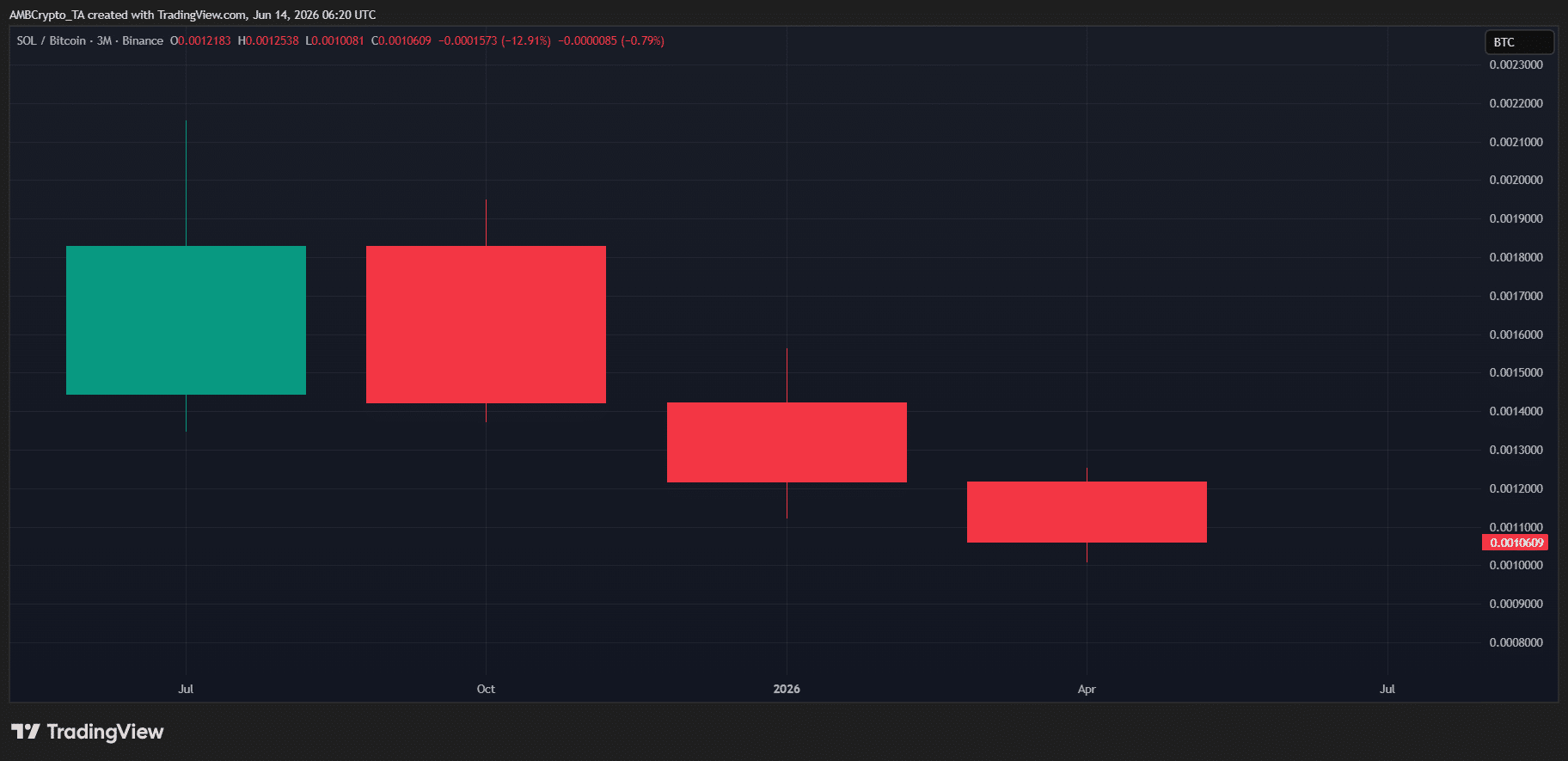
Historically, sharp declines in Bitcoin have triggered a rotation into altcoins as investors attempted to recoup BTC-denominated losses. But on a quarterly basis, this rotation still does not appear.
The XRP/BTC ratio has fallen almost 30% since the October crash last year, falling back towards Q4 2024 levels.
A similar trend is visible in SOL/BTC, which is down over 45% during the same period. This occurred alongside Bitcoin dominance approaching 60%, with no sustained supply returning to BTC.
Overall, the lack of turnover flow and BTC.D’s current consolidation suggests that a classic altcoin season structure has not truly formed this cycle.
Beyond that, there’s another key takeaway from this momentum.
The altcoin market has remained capped so far as Bitcoin (BTC) has broken key support zones, most recently losing the $60,000 level. One thing is clear from here: large caps still move largely in line with BTC flows. So unless BTC regains momentum, inflows into Ripple (XRP) or Solana (SOL) will likely remain quiet.
This divergence naturally raises a key question: what will happen once Bitcoin returns to risk? fashion?
Institutional Flows and Relative Strength of XRP and SOL
In a risk-averse environment, institutional flows often tend to guide prices rather than follow them.
Against this backdrop, the continued rotation into XRP and SOL, even amid broader market weakness, is beginning to stand out. On Solana, this is reflected in the continued expansion of the stablecoin and RWA.
Circle generated an additional 750 million USDC on the network, while Solana’s total real asset value (RWA) reached a new high above $3 billion, solidifying its position as a leading location for on-chain capital deployment.
Ripple shows a similar trend on the demand side.
XRP has now surpassed Bitcoin and Ethereum (ETH) in weekly ETF flows for five consecutive weeks, signaling continued institutional interest despite broader sentiment. As the chart below shows, XRP ETFs saw over $2 million in net inflows last week, compared to Bitcoin’s $19 million.
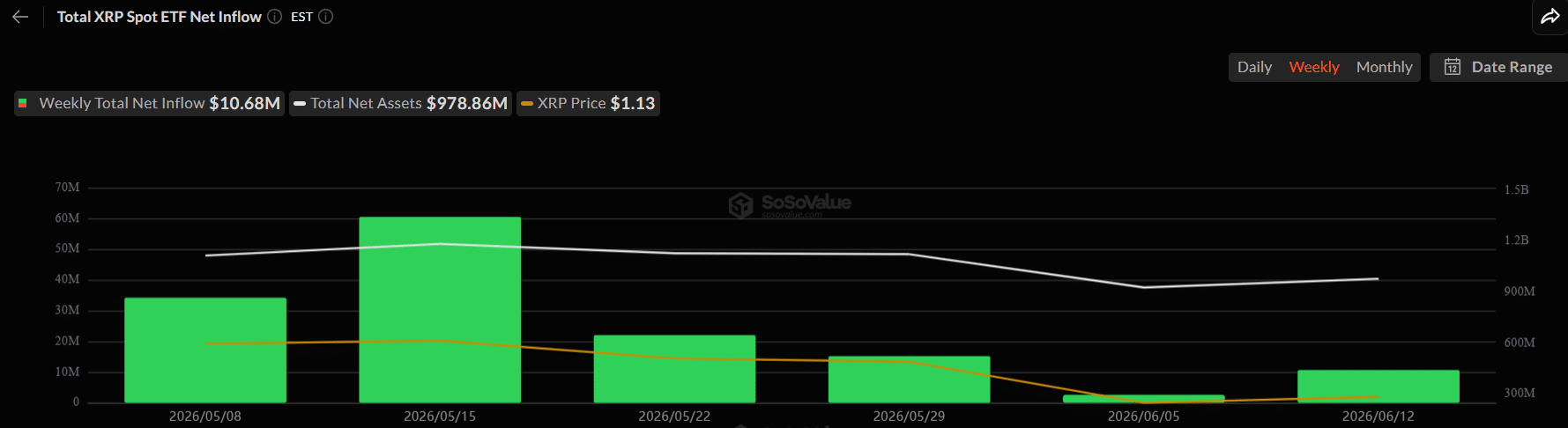
In essence, these flows in a risk aversion phase cannot be a random rotation.
Instead, as altcoins continue to follow Bitcoin’s broader direction, the ongoing consolidation around the $60,000 BTC level is clearly pushing capital toward selective high caps, with XRP and SOL seeing steady inflows, reinforcing underlying institutional demand.
This clearly shows which high caps are best positioned for potential outperformance once BTC returns to risk mode.
Final summary
- No strong altcoin rotation yet, with XRP/BTC and SOL/BTC still weak and BTC dominance close to 60%.
- XRP and SOL are still seeing consistent institutional inflows, which will make them early leaders if BTC reactivates risk.


