



In today’s Bitcoin news, Satsuma Technology raised £163.6 million in August 2025 to build a Bitcoin treasury on the London Stock Exchange, and is now expected to return between £26.8 million and £30 million to shareholders after liquidation costs. That’s around 18p per pound at the low end, and the gap between those two figures is the story.
Satsuma’s collapse isn’t just due to bad timing on a Bitcoin bet. This is what happens when a company uses fixed obligation debt to finance a volatile asset, then sees the asset fall, management leave, and creditors get priority in the exit queue.
This UK Bitcoin Treasury collapse comes as BTC USD trades at $65,800, down -0.4% in the last 24 hours after briefly recovering to $66,000. The daily trading volume is $33.4 billion.
The Daily Supertrend $BTC has gone green.
The last one increased Bitcoin by almost 15% in 4 weeks.
A similar pump means BTC will reach $76,000 by August. pic.twitter.com/4eVmGYLxbv
— Ted (@TedPillows) July 22, 2026
Bitcoin News: What Satsuma Was and How It Got Here
Satsuma Technology, formerly known as TAO Alpha, is a UK-listed AI company that has renamed and hired Mark Moss, a prominent Bitcoin commentator, as its Chief Bitcoin Strategist.
In August 2025, it raised £163.6 million ($218 million) via convertible notes, with ParaFi Capital leading the round. Investors contributed 1,097 BTC, making Satsuma a digital asset treasury company focused on Bitcoin rather than traditional revenue.
The DAT model has gained traction among small-cap companies in 2025, following strategies popularized by Michael Saylor. Satsuma’s stock peaked at almost £14 per share in June 2025.
However, it declined after Bitcoin’s all-time high of $126,000 in October, leading to a prolonged downturn in the crypto stock market.
JUST IN: Shareholders of Mark Moss-backed UK #Bitcoin treasury company Satsuma Technology ($SATS) have voted to sell all of its remaining 668 BTC, return capital to shareholders and shut down the company. pic.twitter.com/1kdDkazYMc
– BitcoinTreasuries.NET (@BTCtreasuries) July 21, 2026
The fire sale, the departures and the militant surge
By December 2025, Satsuma was selling assets to remain solvent. It offloaded 579 BTC for £40 million to cover cash flow obligations to note holders who chose not to convert their debt into equity before the year-end deadline.
This fire sale, a Bitcoin liquidation driven by creditor pressure rather than a strategic choice, left the company holding 668 BTC and significantly reduced its firepower.
The CFO left in February 2026. The CEO followed in March. By April, shares had lost more than 99% of their June 2025 peak value, trading at fractions of a cent.
It was at this point that Pantera Capital, which owned approximately 6.7% of Satsuma’s issued shares, began publicly calling for a complete liquidation.
The logic was simple: Satsuma’s total market capitalization, the combined monetary value of all its shares, had fallen well below the market value of Bitcoin on its balance sheet.
Owning stocks had become a far worse way to gain exposure to Bitcoin than simply buying the coin. A group of shareholders representing more than 20% of the issued capital have officially filed a resolution to liquidate the company.
The board was sharply divided – four of the six directors opposed the liquidation, arguing that Satsuma remained a viable publicly traded Bitcoin vehicle. Double faced by shareholders. Shareholders largely overruled the board’s majority: more than 90% of votes cast supported two resolutions to sell the remaining 668 BTC, worth around $43.5 million at the time, and to reverse the delisting from the LSE.
EXPLORE: Best Crypto Presales with Asymmetric Upside Potential in Today’s Market
Bitcoin Treasury News: Who gets paid and how little
Furthermore, the liquidation is carried out via a B share system, a British legal mechanism allowing cash to be redistributed to shareholders without triggering certain tax complications. Estimated termination costs are £2.7 million, covering legal fees, severance, delisting fees and liquidation insurance, according to the filing.
After these costs, Satsuma hopes to return between £26.8 million and £30 million. Combined with the £40 million raised in the December BTC sale, the total capital recovered is between £66 million and £70 million, compared to the initial £163.6 million raised, less than half the initial increase.
And because convertible note holders rank above common equity in any payout cascade, common shareholders could receive considerably less than these numbers suggest. Creditors are paid first; fairness gets what’s left.
This is the same structural risk that has plagued other corporate Bitcoin cash vehicles that have used debt to finance BTC accumulation; when assets decline and debt repayment deadlines arrive, the company is forced to sell at the worst possible time.
Trade BTC on ByBit and Join 99Bitcoin’s $1,000 USDT Airdrop
What’s Next for UK Bitcoin Treasuries

(SOURCE: CoinGecko)
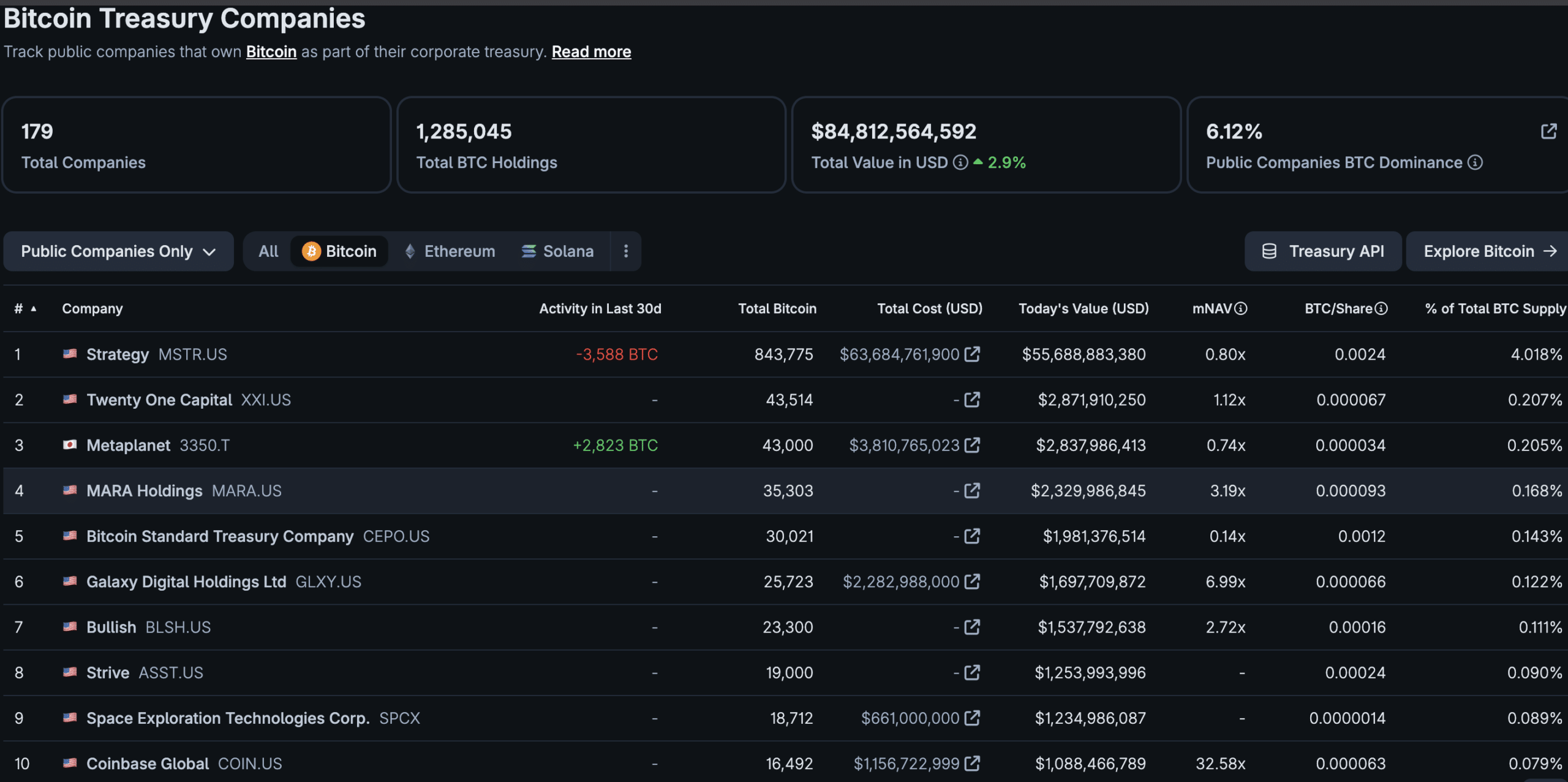
Satsuma is the second largest UK-listed Bitcoin cash company, holding significantly less than The Smarter Web Company, which owns 2,878 BTC and plans to continue trading.
UK High Court hearings into Satsuma’s capital repayment are scheduled for August and September 2026, with delisting from the LSE scheduled for mid-September and payments to shareholders expected by the end of September.
The situation has attracted the attention of other digital asset trusts (DATs), as Satsuma’s problems stem from the inability to manage convertible debt against volatile BTC collateral, resulting in a loss of more than 57% of capital in one year.
Institutional interest in Bitcoin has rebounded since 2025, but Satsuma shareholders face the prospect of minimal returns in September.
DISCOVER: The Next 1000x Crypto Gem Ahead of Its Listing on Binance
Follow 99Bitcoins on X For latest market updates and subscribe on YouTube For daily market analysis from experts.
The post Satsuma Bitcoin Treasury Collapses, Leaving Shareholders 18p on the Pound appeared first on 99Bitcoins.


