



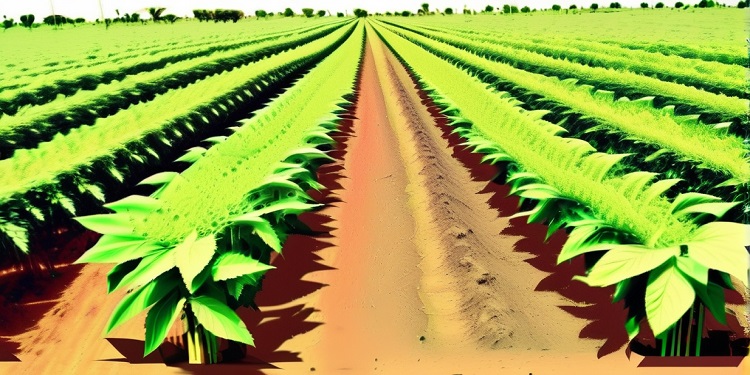
The Blockchain Technology Association of Nigeria (SiBAN) has highlighted that the adoption of blockchain technology could be the key to revolutionizing the country’s agricultural sector. As a self-regulatory body, SiBAN highlighted the critical role of agriculture and natural resources in the Nigerian economy but noted that fragmented and inefficient supply chains have long hampered progress. SiBAN President Obinna Iwuno stressed the need for innovative solutions to address these challenges and transform the agricultural landscape.
Nigeria, a country heavily dependent on agriculture, faces significant challenges that threaten its food security. In a projection in July, the United Nations warned that about 82 million Nigerians, or about 64 percent of the population, could go hungry by 2030. The UN has called on the Nigerian government to address a range of threats to agricultural productivity, including climate change and pest infestations, which have exacerbated the country’s food crisis.
Meanwhile, the National Bureau of Statistics reported that the food price inflation rate in July 2024 stood at 39.53 percent on an annual basis, a sharp increase from 26.98 percent recorded in July 2023. This alarming rise in food prices has further highlighted the urgent need to find effective solutions to stabilize the agricultural sector and ensure the nation’s food security.
The Potential of Blockchain to Streamline Agricultural Supply Chains
In response to these challenges, SiBAN has advocated for the implementation of blockchain technology to create transparent and immutable supply chain networks. According to the association, such networks would enable stakeholders to track the journey of agricultural products from the farm to the consumer’s table. By recording every transaction and movement on the blockchain, stakeholders would be able to verify the authenticity and quality of agricultural products, thereby reducing the risk of fraud and improving food safety.
The SiBAN Chairman highlighted that blockchain technology could solve one of the most pressing problems in the Nigerian agricultural sector: inefficient supply chains. With the ability to create a transparent and traceable record of every step in the supply chain, blockchain could ensure that agricultural products maintain their quality and integrity throughout the process. This would not only boost consumer confidence but also open up new markets for Nigerian agricultural products, both domestically and internationally.
Empowering farmers with access to blockchain-based financial services
Beyond supply chain management, blockchain technology has the potential to revolutionize access to financial services for farmers, especially those in rural areas. SiBAN highlighted that blockchain-based smart contracts could enable farmers to access credit, insurance, and other financial services without having to rely on traditional banks. This is particularly important in Nigeria, where many farmers face significant barriers to accessing formal financial services, limiting their ability to invest in their farms and improve productivity.
Smart contracts, which are self-executing contracts whose terms are written directly into code, could provide farmers with a safe and efficient way to access financial products. For example, a smart contract could automatically release funds to a farmer once certain conditions are met, such as the successful delivery of crops to a buyer. This would not only simplify the process of accessing financial services, but also reduce the risk of default and improve trust between farmers and financial institutions.
Improving data management and decision making in agriculture
Another key area where blockchain could have a significant impact is data management and analytics. SiBAN highlighted blockchain’s potential to enable secure and decentralized storage of agricultural data, providing real-time insights that could inform decision-making and boost productivity. By leveraging blockchain’s distributed ledger technology, data on everything from weather conditions to crop yields could be securely stored and accessed by stakeholders across the agricultural value chain.
This improved data management capability could enable farmers and other stakeholders to make more informed decisions, which would ultimately result in improved efficiency and productivity in the agricultural sector. For example, real-time weather data could help farmers optimize planting and harvesting schedules, while market price data could enable them to negotiate better prices for their produce.
A Vision for the Future of Nigerian Agriculture
SiBAN’s advocacy for blockchain adoption in agriculture reflects a broader vision for the future of Nigerian agriculture, in which technology plays a pivotal role in overcoming the challenges that have long plagued the sector. By embracing blockchain, Nigeria could create a more efficient, transparent and resilient agricultural system that is better equipped to meet the needs of its growing population.
In conclusion, the Blockchain Technology Association of Nigeria has made a compelling case for adopting blockchain technology as a transformative solution for the country’s agricultural sector. From streamlining supply chains to ensuring food security, empowering farmers with access to financial services and improving data management, blockchain offers a range of tools that could help Nigeria address its agricultural challenges and achieve greater food security. As the country continues to grapple with rising food prices and the threat of widespread famine, adopting innovative technologies like blockchain could be crucial to ensuring a more prosperous future for Nigerian agriculture.


