



Fri October 31, 2025 ▪
4
min read ▪ by
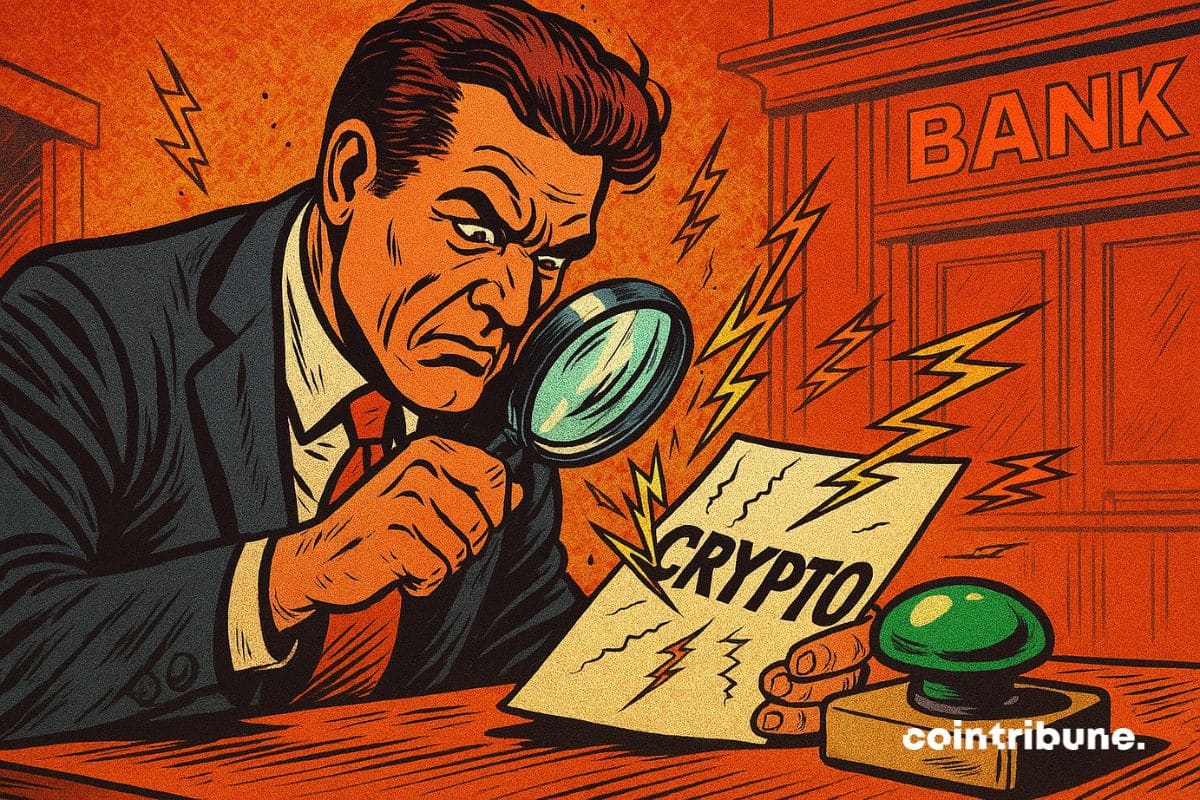
The Basel Committee on Banking Supervision (BCBS) could soon relax its strict rules on cryptos! An expected decision, after the explosion of stablecoins. This revision marks a turning point for the integration of digital assets into traditional finance, between innovation and regulatory prudence.

Brief
- The Basel Committee is considering relaxing its strict rules on cryptos, driven by the rise of stablecoins and pressure from banks.
- Stablecoins, now regulated, could benefit from prudential treatment distinct from that of bitcoin, thus accelerating their adoption by banks.
- 2026 could mark a turning point: integration of cryptos into traditional financial services or fragmentation of the market.
Global Banks Towards Accelerated Crypto Adoption: Basel Committee Under Pressure
The Basel Committee’s current rules, established in 2022, impose such high capital requirements on banks that they discourage significant exposure to cryptos. However, the growth of stablecoins, now regulated in the United States by the GENIUS Act, has revealed the limits of this framework. These assets, backed by liquid reserves, are considered less risky than Bitcoin or Ethereum. But they remain subject to the same constraints.
A review of crypto guidelines by the Basel Committee is underway, pushed by banks and regulators. Indeed, the latter wish to avoid a competitive disadvantage compared to fintechs and crypto platforms. If the rules ease, financial institutions could finally integrate crypto-assets into their services. This, subject to strict guarantees.
This development reflects a paradigm shift. Indeed, cryptos are no longer perceived as a threat, but as an opportunity for regulation.
Stablecoins: the trigger for more nuanced regulation
Stablecoins have transformed the financial landscape by offering fast, inexpensive and stable transactions, unlike BTC. Their massive adoption, particularly for cross-border payments, has forced cryptocurrency regulators to reconsider their approach. In the United States, the GENIUS Act has already regulated their use, while the European Union and the United Kingdom are studying similar solutions.
The Basel Committee must now decide: should it maintain uniform regulations for all cryptos? Or distinguish stablecoins, which are less risky, from speculative assets like BTC. Banks are arguing in favor of a differentiated approach, arguing that stablecoins, backed by dollar or euro reserves, deserve lighter prudential treatment.
This distinction could accelerate their adoption by financial institutions, while limiting the systemic risks associated with more volatile cryptos.
2026, decisive year: what impacts for crypto investors?
If the Basel Committee relaxed its rules, banks could offer products combining stablecoins and cryptos like bitcoin. The first would be used for payments and liquidity. While the latter would be integrated as reserve or investment assets, via ETFs or dedicated funds. Such a development would democratize access to cryptocurrencies for institutional and individual clients.
Conversely, maintaining strict rules could marginalize traditional banks, to the benefit of specialized players. Crypto investors could then turn to more welcoming jurisdictions, such as Singapore or Dubai, thereby increasing market fragmentation.
The Basel Committee’s revision of the rules could mark a turning point in the adoption of banking cryptocurrencies. Between opportunities for innovation and regulatory challenges that weaken the MiCA rules, one question remains: will this development be sufficient to meet market expectations, or will it only delay the real challenges of the crypto revolution?
Maximize your Cointribune experience with our “Read to Earn” program! For every article you read, earn points and access exclusive rewards. Sign up now and start enjoying benefits.

The world is evolving and adaptation is the best weapon to survive in this undulating universe. Originally a crypto community manager, I am interested in everything directly or indirectly linked to blockchain and its derivatives. To share my experience and promote a field that fascinates me, nothing better than writing informative and relaxed articles.
DISCLAIMER
The views, thoughts and opinions expressed in this article belong solely to the author and should not be considered investment advice. Do your own research before making any investment decisions.


