



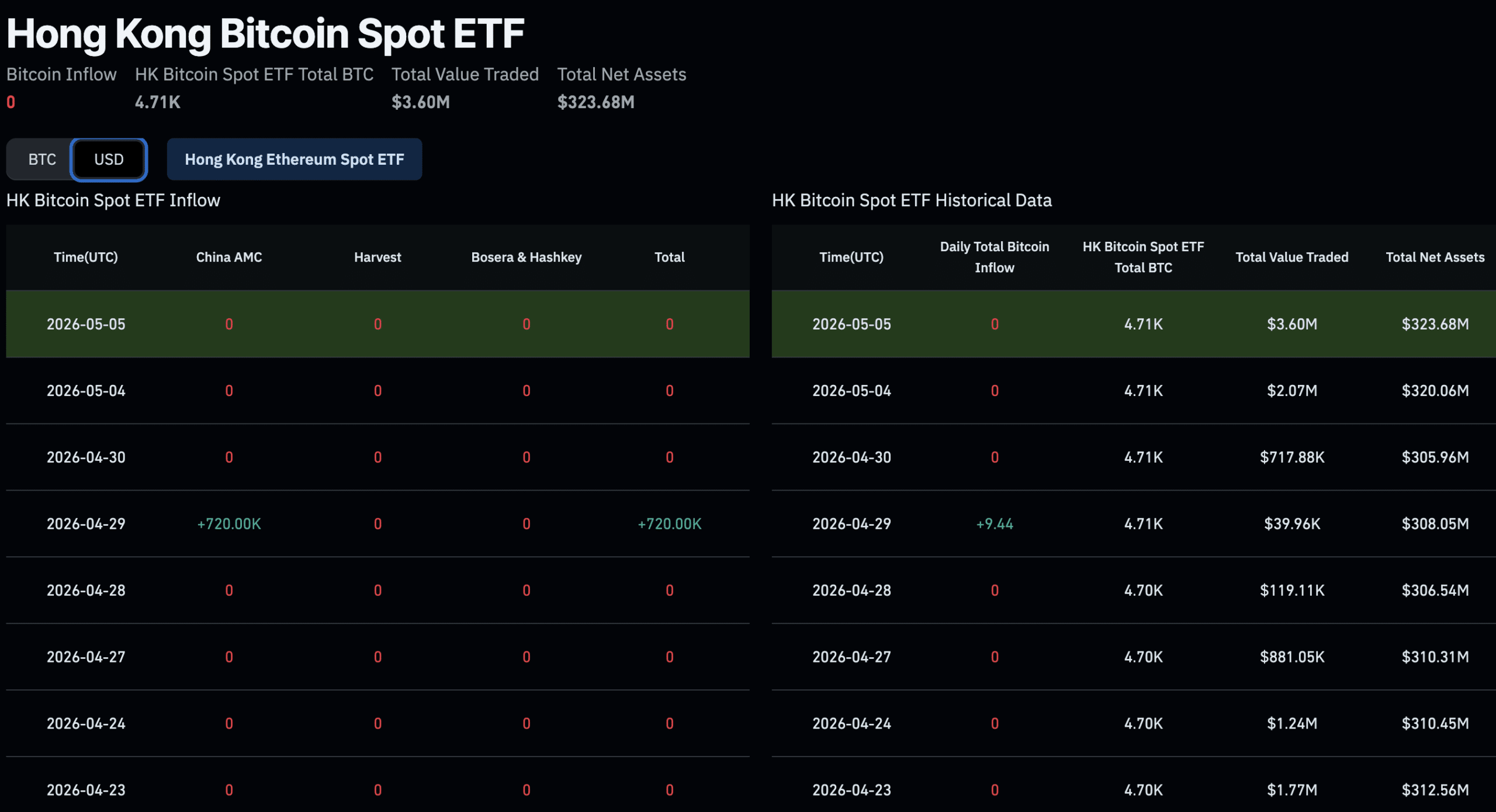
In today’s Bitcoin ETF news, Hong Kong spot BTC ETFs are measurably shrinking Bitcoin’s notorious “weekend gap,” with Asian session trading now capturing around 20% of global BTC volume during hours when US institutional offices are dark.
Since their launch on the Hong Kong Stock Exchange on April 30, 2024, products from providers such as China Asset Management and Bosera/HashKey have accumulated steady inflows, with the total spot virtual asset ETFs on HKEX expanding to nine listings by August 2025.
(SOURCE: CoinGlass)
The central question this raises is structural, not speculative: Is Bitcoin quietly transitioning from a retail weekend casino to a true 24/7 institutional asset?
Bitcoin ETF News: The Weekend Gap Explained and Why Bitcoin Was Falling Off a Cliff on Friday
The “weekend gap” refers to the price discontinuity that occurs between Bitcoin’s Friday close during U.S. trading hours and its reopening on Sunday or Monday – a window where institutional liquidity drains and thin order books amplify every trade.
Think of it like a busy highway during rush hour rather than 3 a.m.: the road is the same, but a single erratic driver causes a ten-car pileup at 3 a.m. that would barely register during the day.
Bitcoin’s price action has historically reflected exactly this dynamic, with weekend swings of 2-3% common on low volumes, driven not by new information but by the absence of stabilizing institutional participation.
The structural cause was simple. US spot ETF feeds and institutional market makers operate on business day schedules. When these participants walked away each Friday afternoon, the Bitcoin spot market continued to operate 24/7.
However, without the counterbalancing force of large buyers and sellers anchoring prices. The result was crypto volatility that penalized retail traders, triggering liquidations on moves that evaporated by Monday’s open.
CME Bitcoin is available 24/7!
THE "Weekend gap" is officially dying.
Starting May 29, 2026, CME Bitcoin futures will move to a 24/7 schedule.
The Taurus affair:
• No more gaps: real-time price discovery throughout the weekend.
• Institutional power: Wall Street can finally trade BTC in…
– Phil Sirois (@NASNMEDIA) May 3, 2026

DISCOVER: 99Bitcoin Readers – Earn $10 USDC when you sign up for Binance
How Hong Kong’s Bitcoin ETF Market Is Filling the Liquidity Gap
Here’s the mechanics: Trading hours on the Hong Kong Stock Exchange are from 9:30 a.m. to 4:00 p.m. HKT, which corresponds to approximately 9:30 p.m. to 4:00 a.m. Eastern Time. This window falls directly into the US overnight session, the exact times US institutional offices are closed and when Bitcoin’s weekend gap forms historically.
Just as BlackRock’s IBIT reshaped intraday price discovery in the United States, Hong Kong’s spot ETFs are now doing the same thing for the Asian session, inserting professional market makers and institutional-quality order flow into what was previously a free retail game.
Hong Kong’s unique in-kind product creation and redemption mechanism further enhances this effect. Unlike U.S. spot ETFs, which are limited to cash transactions, Hong Kong Bitcoin ETFs allow institutions to subscribe directly with actual Bitcoin.
China Asset Management attracted HK$1 billion in pre-launch subscriptions through this feature alone, signaling the scale of the institutional appetite engaged by the structure. According to data cited by Chainalysis, bid-ask spreads on Hong Kong spot ETFs averaged 0.5% in 2025, significantly tighter than pre-launch conditions, and weekend volatility declined by around 15% during the U.S. holiday as Asian liquidity absorbed price pressure.
CoinShares’ James Butterfill summed up the effect directly: “HKEX spot products fill the US gap overnight, reducing weekend spreads from 2-3% to less than 1%.” » This compression is not accidental. This reflects institutional adoption reaching a new geographic node, one that keeps the price discovery engine running for hours that were previously structurally unmonitored.
The numbers behind this change: what the data really shows
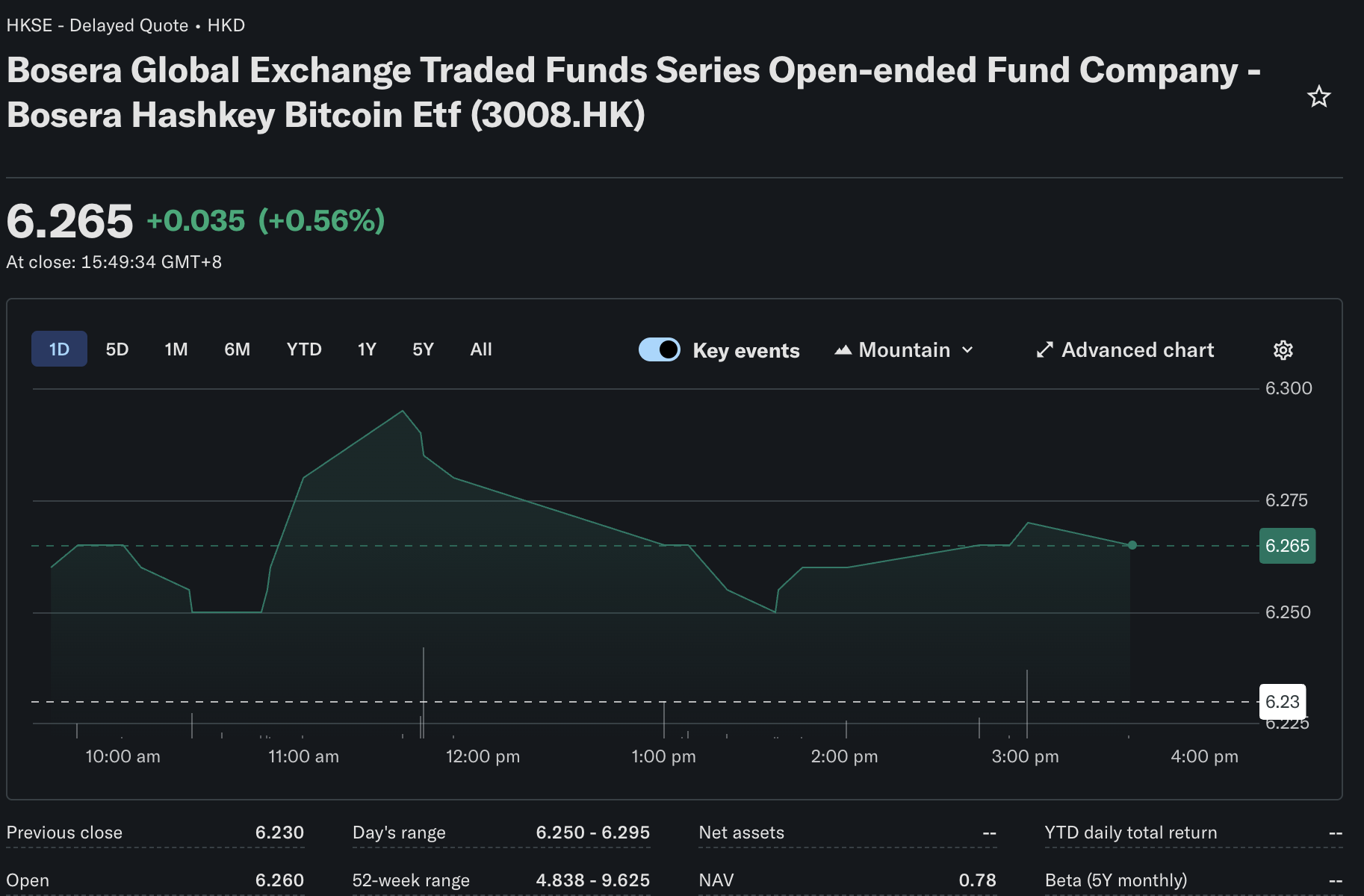
(SOURCE: Yahoo Finance)
In other Bitcoin ETF news, on launch day alone, Hong Kong’s top six spot Bitcoin and Ether ETFs recorded HK$134 million ($17.1 million) in combined turnover, with the Bosera/HashKey Bitcoin ETF leading at HK$44 million, according to Interactive Brokers data. In May 2024, net product inflows reached HK$100 million, and the ChinaAMC Bitcoin ETF (3042.HK) averaged 10,000 units per day in volume in June 2024.
By August 2025, HKEX had expanded its spot crypto ETF lineup to nine products, including multi-currency counters denominated in HKD, USD and RMB, a structure designed explicitly to attract capital from the Chinese mainland alongside global institutional flows.
Market analysis from early May 2026 indicates that Hong Kong ETF price action now frequently sets the benchmark price that the New York opening session inherits, meaning that the $80,000 support level in Bitcoin is being defended across all time zones, not just by US-based buyers. This global defense of key price levels represents a significant shift in how Bitcoin’s structure behaves around round numbers.
It should be noted that volumes remain modest compared to their US counterparts. The end of 2025 saw periods of dormant flows amid BTC trades near $80,000. The gap is narrowing, but not disappearing.
EXPLORE: Best Crypto Presales with Staking Rewards
Follow 99Bitcoins on XYouTube and Telegram for more crypto news and analysis.
The article Bitcoin ETF News: Hong Kong Spot ETFs Shifting “Weekend Gap” appeared first on 99Bitcoins.


