



Key takeaways
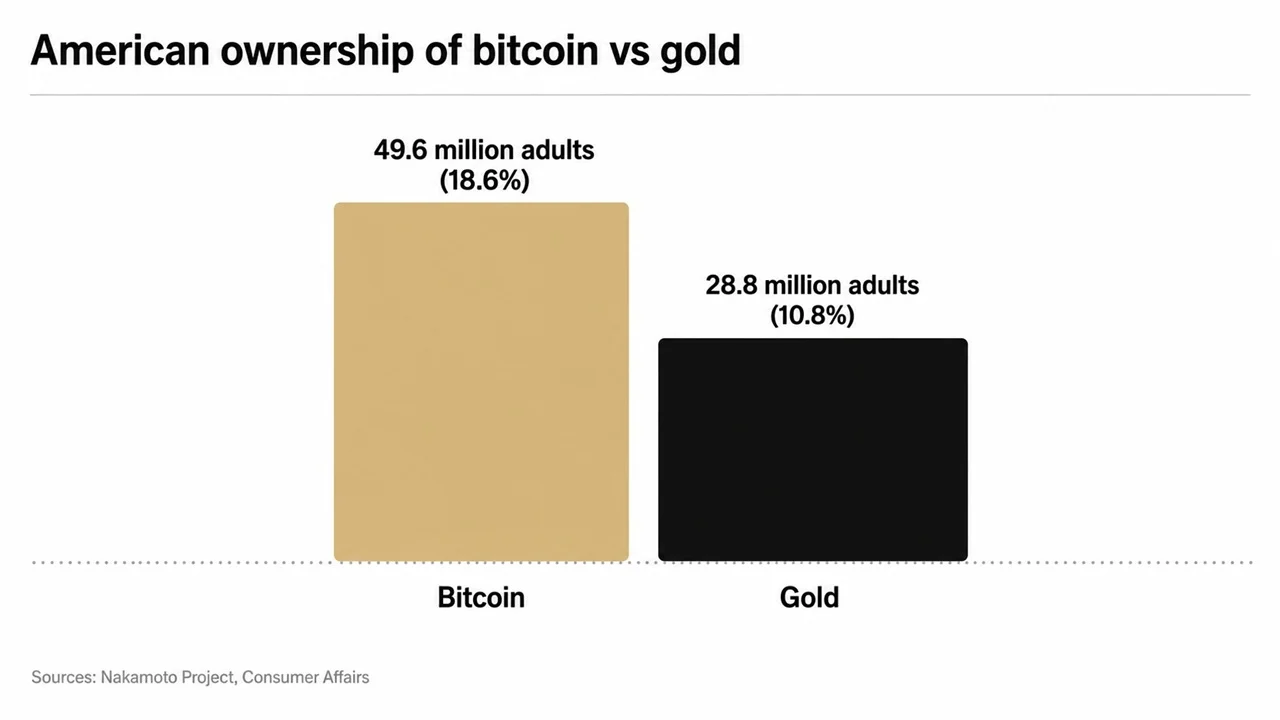
- River’s July report found that 49.6 million Americans hold Bitcoin, compared to 28.8 million who hold gold.
- Bitcoin ownership in the United States increased from an adoption rate of 14.3% to 18.6% in about six months.
- The US government holds 328,372 BTC as lawmakers evaluate a formal strategic reserve.
Bitcoin adoption overtakes 5,000-year-old rival
River, a bitcoin-focused financial services company, released a study earlier this month showing that bitcoin ownership among U.S. adults surpassed gold ownership for the first time on record. The company reported that 49.6 million Americans now hold Bitcoin, or 18.6% of the adult population, while 28.8 million, or 10.8%, own gold.
Gold has served as a store of value for about 5,000 years, while bitcoin has only been around for about 16 years since the Bitcoin network launched in January 2009. River’s findings indicate that an asset with a fraction of the history of gold has already built a larger base of American individual owners than gold after millennia.
River attributed this change to two main forces, namely access and culture. The company said favorable regulation, a low barrier to entry through exchanges and mobile apps, and a U.S. culture geared toward individual investing and financial empowerment have combined to accelerate adoption.
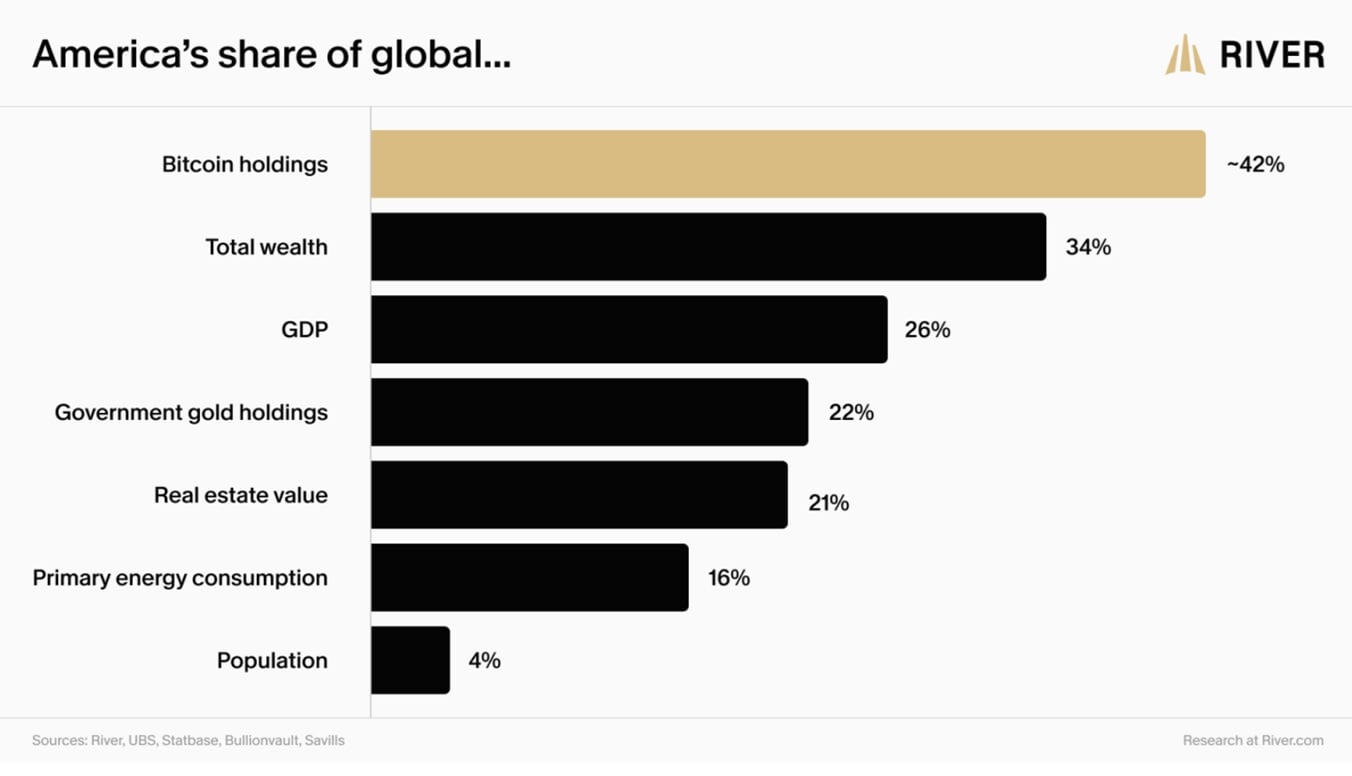
The report also reveals that Americans collectively hold approximately 42% of all bitcoins in circulation worldwide, a concentration described as making the United States the “global bitcoin superpower.”
Government and corporate stakes reinforce this change
According to River, public companies headquartered in the country hold approximately 1.24 million BTC, representing 92.7% of all bitcoins held by publicly traded companies worldwide, a concentration that reflects how dominant U.S.-listed companies have become in corporate bitcoin treasury strategy.
The US government itself holds 328,372 BTC, according to on-chain data confirming the federal crypto stockpile, worth over $23 billion at recent prices. This reserve, built largely through asset seizures, has become the focal point of ongoing legislative efforts, including bills introduced this year to formally codify a strategic Bitcoin reserve with long-term holding requirements and a goal of accumulating up to 1 million BTC.
Mining infrastructure tells a similar story, given that the United States accounts for 37.5% of the global Bitcoin hashrate and more than 150 Bitcoin-related companies, spanning exchanges, custodians, miners and payment processors, now have their headquarters in the country.
A rapidly increasing adoption curve
A separate study found that the bitcoin ownership rate in the United States stood at 14.3% at the start of 2026, meaning the rate increased by more than four percentage points in about six months by River’s latest measurement.
Wall Street’s stance on Bitcoin has changed alongside retail adoption, with River’s report noting that several large U.S. asset managers have opened distribution of Bitcoin exchange-traded funds (ETFs) to their clients this year, putting Bitcoin in front of financial advisors who previously had little reason to discuss the asset with retail clients. This shift in distribution, combined with the increase in direct ownership, means bitcoin is moving from niche status to a more standard part of U.S. household balance sheets.


